Key Takeaways
- Paint the wall behind your headboard first, since it is the natural focal point your eyes find right away.
- Read your room’s light before picking a shade, and always check the color in warm evening light.
- Choose calming, dusky tones like smoky sage or dusty rose over loud trend colors you’ll tire of.
- Test bold colors with large peel-and-stick swatches for three days next to your real bedding.
- Use texture, wood slats, or one-wall wallpaper when you want drama without a heavy color.
- Repeat the accent color once in a small object to tie the whole room together.
- In tiny rooms, pick the wall with the fewest doors and keep the floor in front of it clear.
You stare at four plain walls and feel like something is missing. One bold wall can fix that fast. The right bedroom accent wall adds depth, mood, and a clear focal point without a full remodel. In this guide, you learn exactly how to pick the wall, the color, and the texture that fit your room. You also learn how to test ideas before you commit, so you skip costly do-overs.Whether your space leans calm and airy or warm and cozy, these steps help you choose a feature wall you actually love to wake up to.You’ll move from the right wall and the right light to color, texture, balance, and small-room tricks, so each choice builds on the last. Take it one step at a time and the final wall will feel inevitable, not risky.
1. Start With the Wall Behind Your Bed
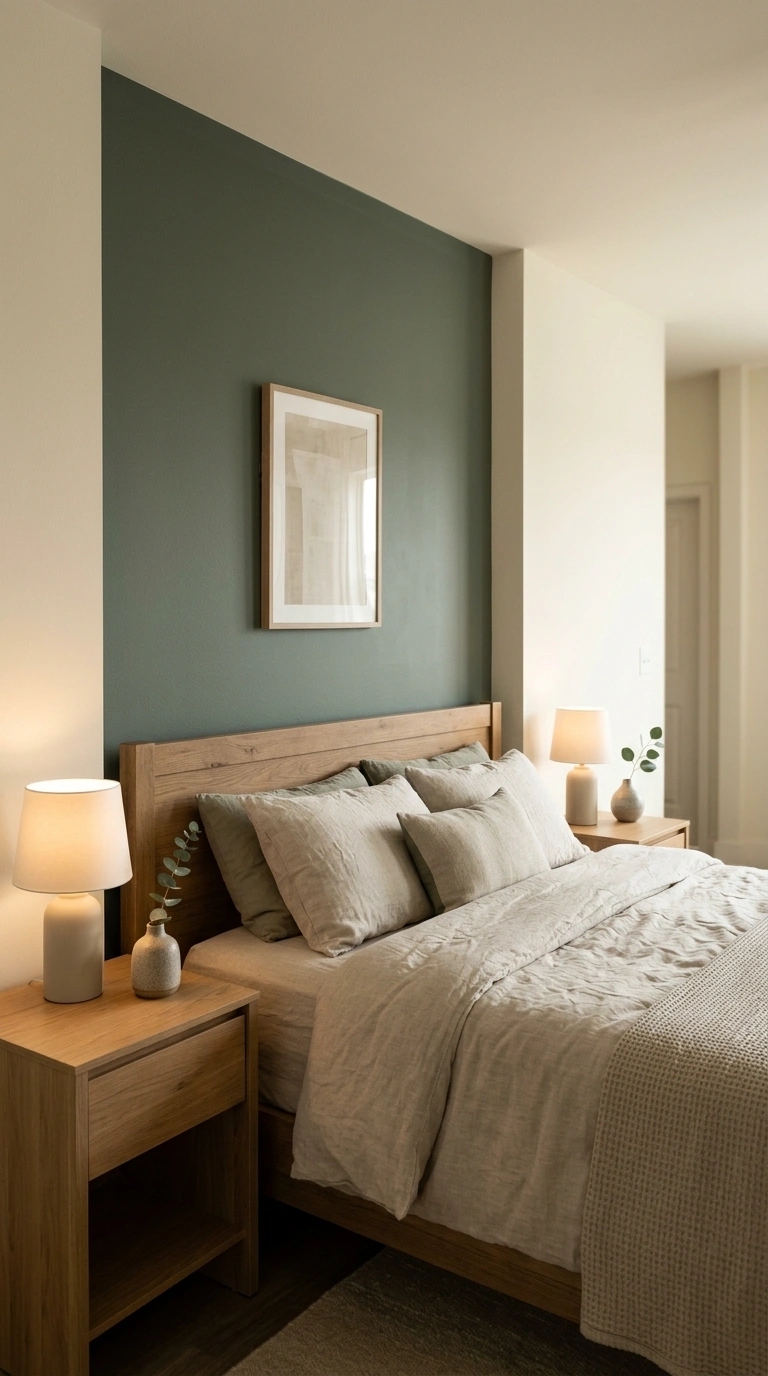
choose the wall behind your headboard first. Your eyes land there the moment you walk in, so it carries the most weight as a natural focal point.Paint it a grounding shade like deep sage green, charcoal slate, or warm clay. The bed frames the color and the color frames the bed, so the two work as one calm scene.Quick tip: hang your art and sconces on this wall too. Keep the other three walls in a soft, neutral tone like warm ivory so nothing competes.Layer the look with a warm oak headboard and matte ceramic sconces. The wood and the deep green read rich together under soft evening light, so the bed feels built into the wall rather than parked against it.Try a tonal scene: a deep sage wall, sage-flecked bedding, and one cream pillow. The near-match feels layered and quiet rather than matchy.
2. Match the Wall to the Room’s Natural Light
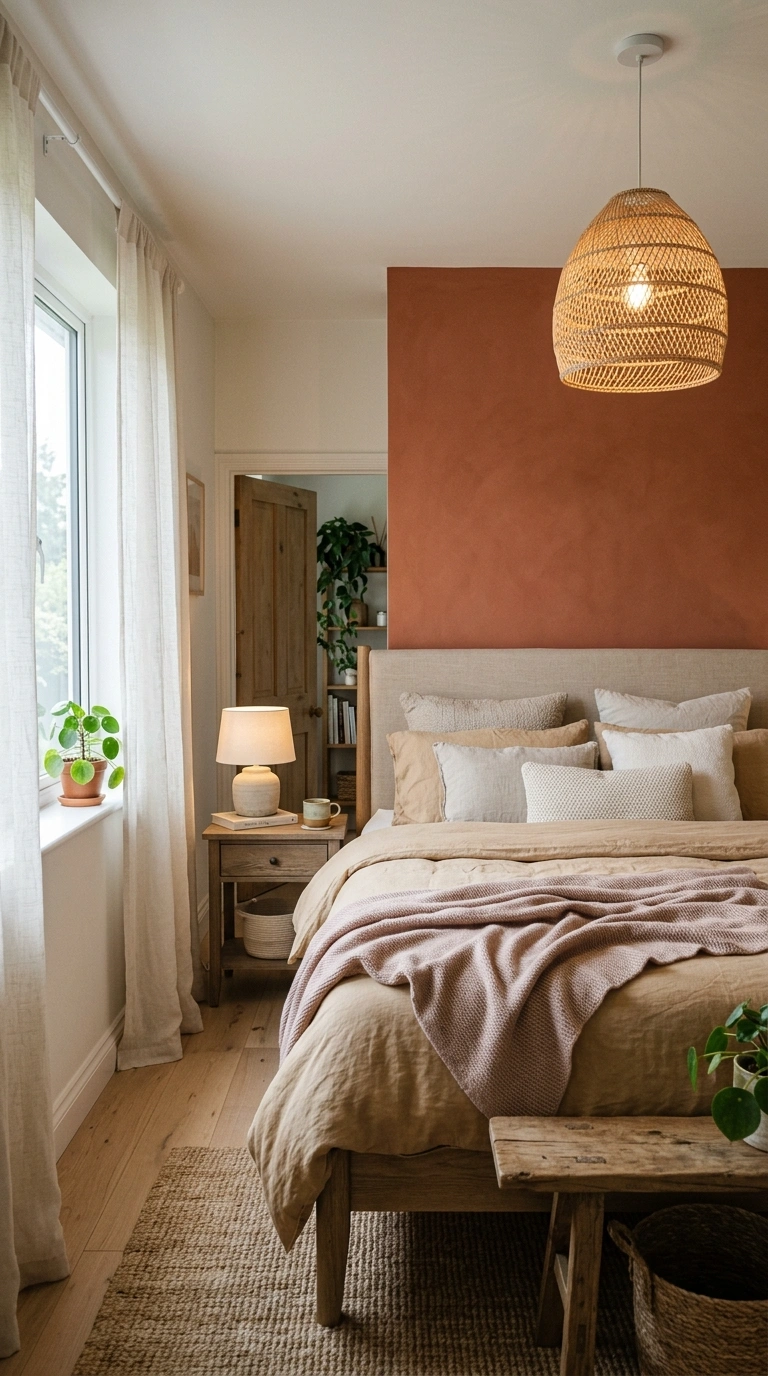
Read your light before you read a paint chip. A north-facing room stays cool and dim, so warm colors like terracotta, honey beige, or muted blush keep it from feeling flat.A bright south-facing room can handle a moody, saturated wall like inky navy or forest green without feeling closed in.
Quick tip: hold the sample on the wall at 8 a.m., noon, and 9 p.m. with the lamp on. Pick the color that still looks good in warm evening light, since that is when you use the room most.Watch the undertones too. Cool light pulls blue out of a gray, while warm light pulls red out of a clay. Take a few sample photos at different hours and compare them side by side before you choose.If your room faces east, the wall glows warm at sunrise and cools by afternoon. Pick a shade you love in both moods so mornings and evenings each feel right.
3. Pick a Color That Calms You, Not Just One That Trends
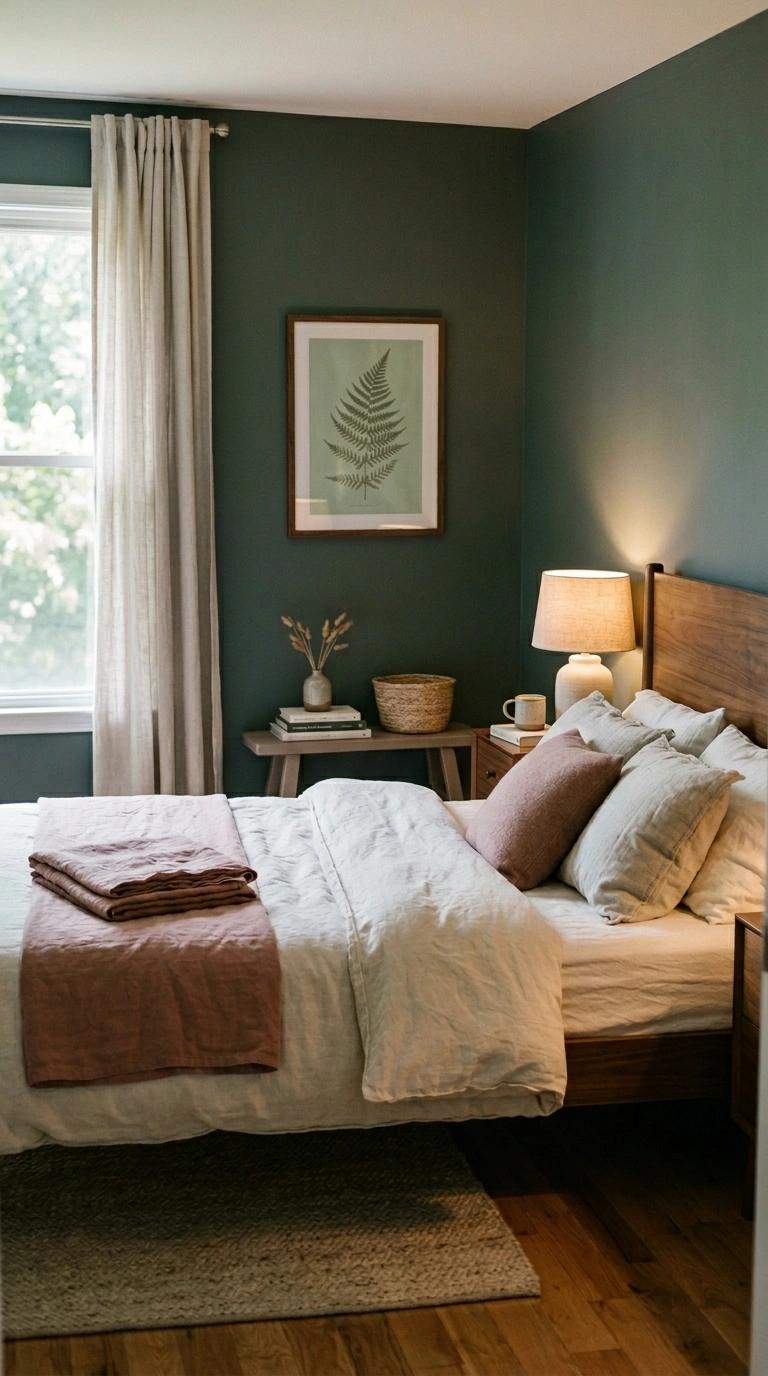
Your bedroom is for rest, so let the accent wall color lower your shoulders, not raise your pulse. Soft, dusky tones do this best.Try smoky sage, dusty rose, mushroom taupe, or a chalky blue-gray. These shades read rich in person but stay gentle on tired eyes.
Quick tip: pull the color from something you already own and love, like a linen throw or a framed print. Matching the wall to a piece you chose for joy keeps the room feeling like you.Skip anything that feels loud or icy. A chalky finish softens the color further and hides small wall flaws, so the wall reads as one calm, even plane behind your pillows.Names help you shop smart. Ask for smoky sage, dusty rose, mushroom taupe, or chalky blue-gray by name, since these dusky tones stay gentle on the eyes.
4. Test Bold Colors With Peel-and-Stick Samples First
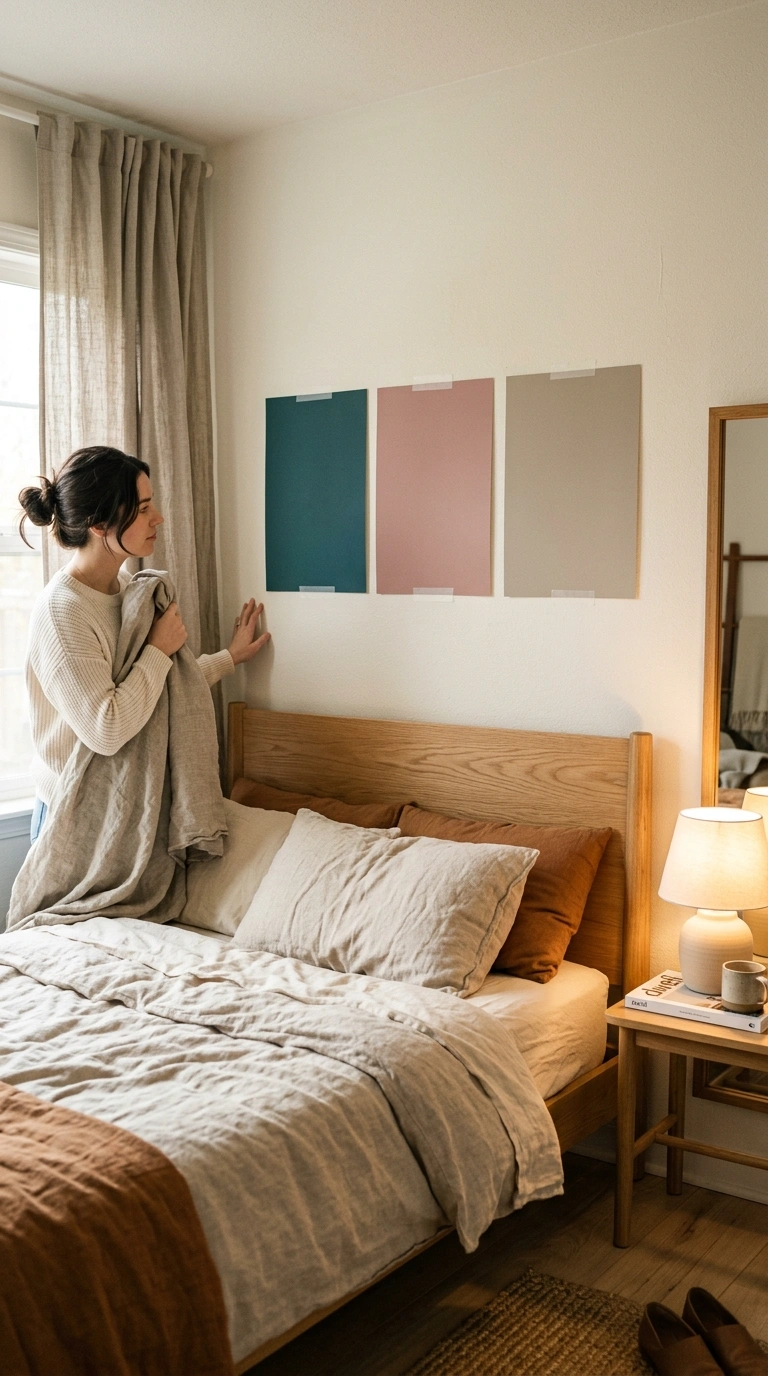
Bold walls win or fail on the test stage, so never skip it. Order large peel-and-stick paint swatches or paint two coats on poster board.Stick the samples on different walls and live with them for three full days. Watch how dusty rose warms up at sunset or how a deep teal turns almost black after dark.
Quick tip: move the sample beside your bedding and curtains. A color can look perfect alone and clash the second your linen duvet sits next to it.Photograph each swatch in the same light every evening. The camera flattens color the way tired eyes do at night, so the photo that still looks restful is usually the safest pick for a bedroom.Order three swatches, not one. Living with options side by side stops second-guessing, and the colors you reject teach you what you actually dislike.
5. Try Texture Instead of Color for a Softer Look
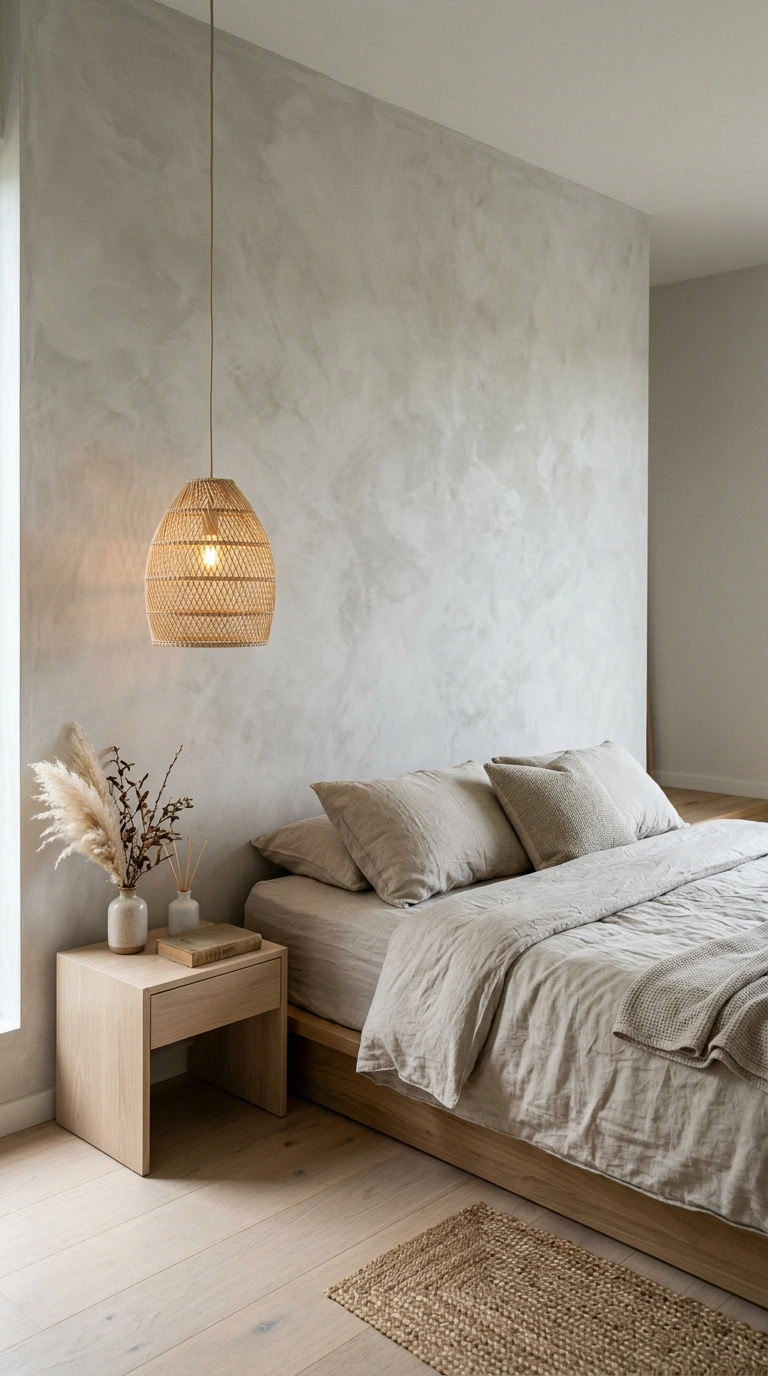
Color is not your only option. A textured accent wall adds quiet drama and still keeps the palette calm and airy.Limewash paint gives a soft, cloudy finish in greige or pale clay. Microcement brings a smooth, matte, spa-like surface. Both catch light in a gentle, moving way.
Quick tip: pair a textured wall with simple linen bedding and a single rattan pendant. The contrast between matte wall and woven light feels rich without trying hard.Limewash shifts gently as the day moves, so the wall never looks dead. Run your hand across a sample board and feel how the soft, powdery surface reads calmer than flat plastic paint.Microcement suits a modern, minimal room, while limewash leans soft and old-world. Match the texture to the mood you already love in the rest of your home.
6. Use Wood Slats for Warmth and Quiet Drama
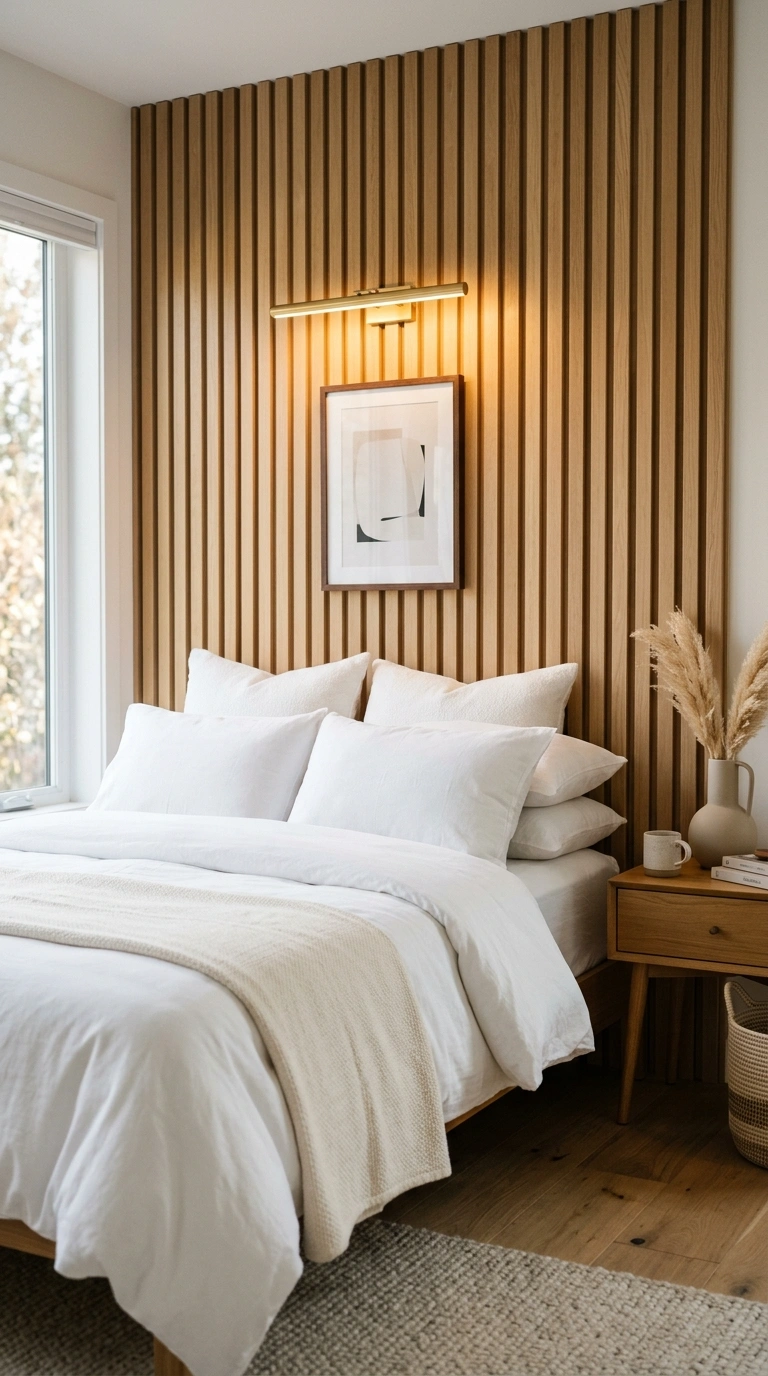
Vertical wood slats turn a flat wall into a warm, architectural feature. The thin shadow lines draw the eye up and make low ceilings feel taller.Choose warm white oak for a Scandinavian, airy mood or walnut for a cozy, grounded one. Run the slats floor to ceiling Behind the bed for the strongest effect.
Quick tip: add a slim brass picture light above the slats. The warm 2700K glow grazes the wood grain and gives the whole corner a soft, editorial finish.Keep the slat spacing even and the wood tone warm, and the wall stays timeless. Add one trailing plant on a floating shelf nearby so the green softens the lines and the corner feels alive.Walnut slats feel cozy and grounded; pale oak feels light and Scandinavian. Choose the wood tone that echoes your floor so the room reads as one warm whole.
7. Let Wallpaper Carry the Pattern (and Keep Everything Else Calm)
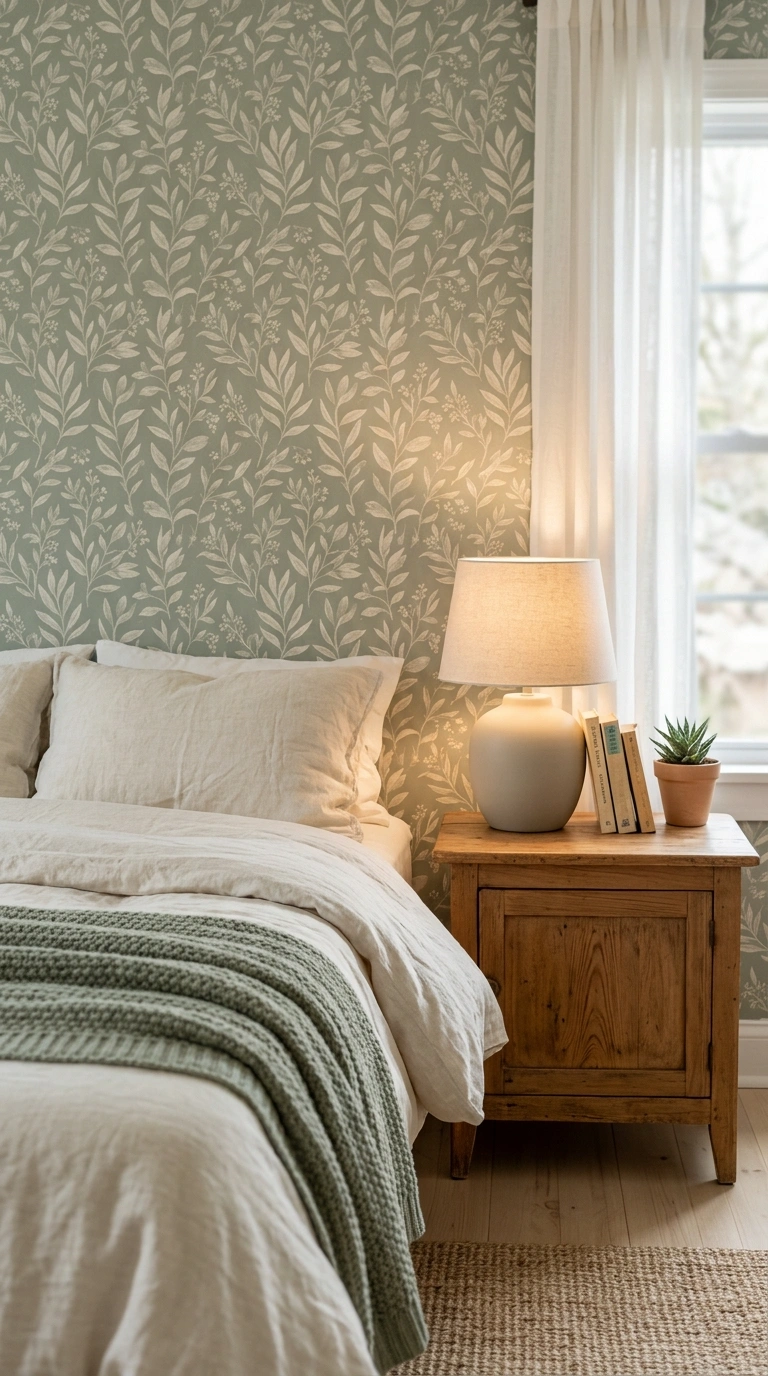
Wallpaper lets you add print without painting the whole room into a corner. Use it on one wall and let it be the loudest thing in the space.Pick a soft botanical in sage and cream, a hand-drawn arch motif, or a subtle grasscloth in oat tones. Skip tiny, busy repeats that buzz on a big wall.
Quick tip: match your bedding to the quietest color in the paper, not the boldest. A creamy duvet against a sage-leaf wall feels balanced and restful.Hang the paper only on the headboard wall and paint the trim a warm white so the print frames the bed cleanly. A grasscloth in oat tones adds quiet texture if you want depth without printed shapes.Measure your wall before ordering rolls, then add ten percent for pattern matching. Running short mid-wall is the fastest way to ruin a clean install.
8. Balance the Accent Wall With Your Bedding and Décor
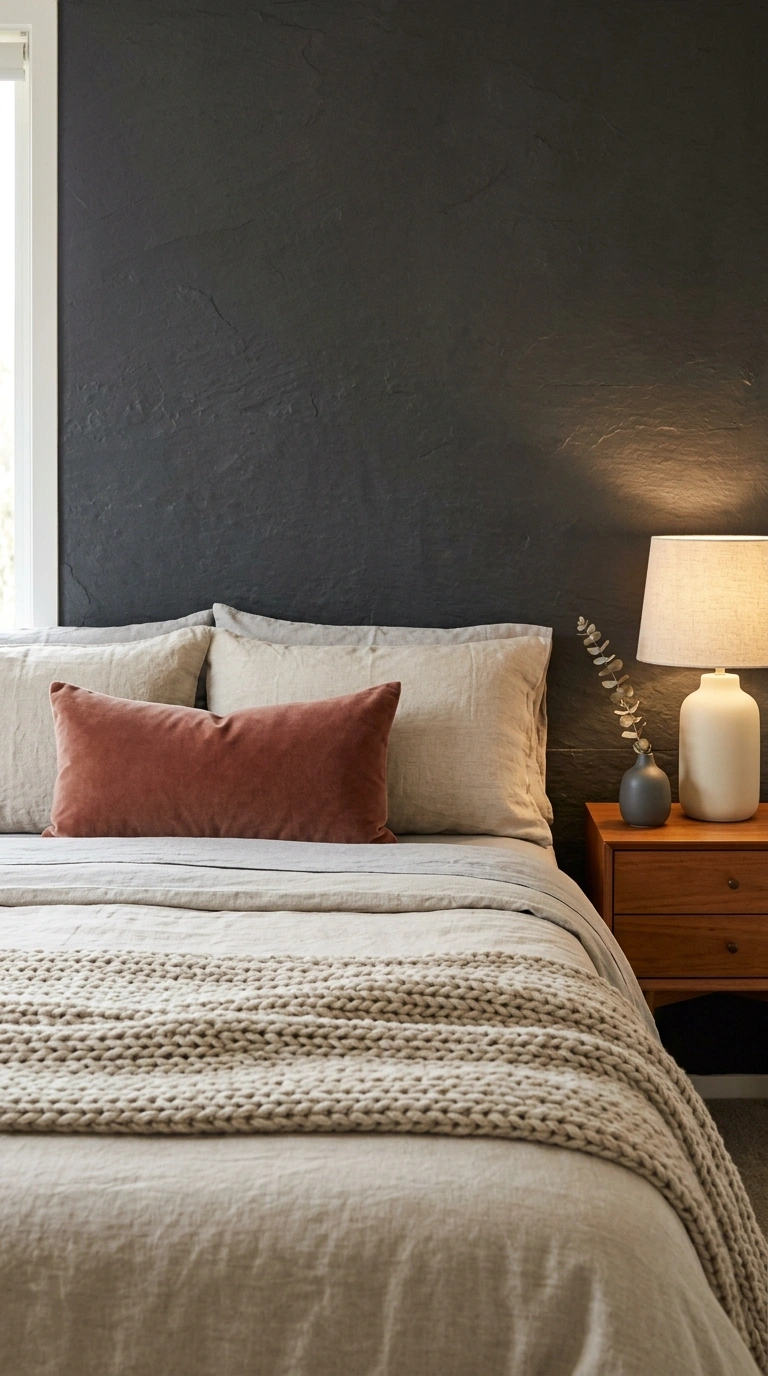
A strong wall needs soft friends. Layer textures across the bed so the bold surface feels intentional, not lonely.Stack a chunky knit throw, two linen pillows, and a velvet lumbar cushion in tones pulled from the wall. Add a warm wood nightstand and a matte ceramic lamp.
Quick tip: repeat the accent color once more somewhere small, like a vase or a book stack. One echo across the room ties the whole look together.Pull two tones from the wall into your textiles and let warm wood carry the rest. The corner then feels gathered and intentional, as if every piece shares the same calm, lived-in mood.A velvet lumbar cushion adds a little shine against matte walls and linen. One touch of sheen keeps an all-matte corner from feeling flat.
9. Size the Wall Right for Small Bedrooms
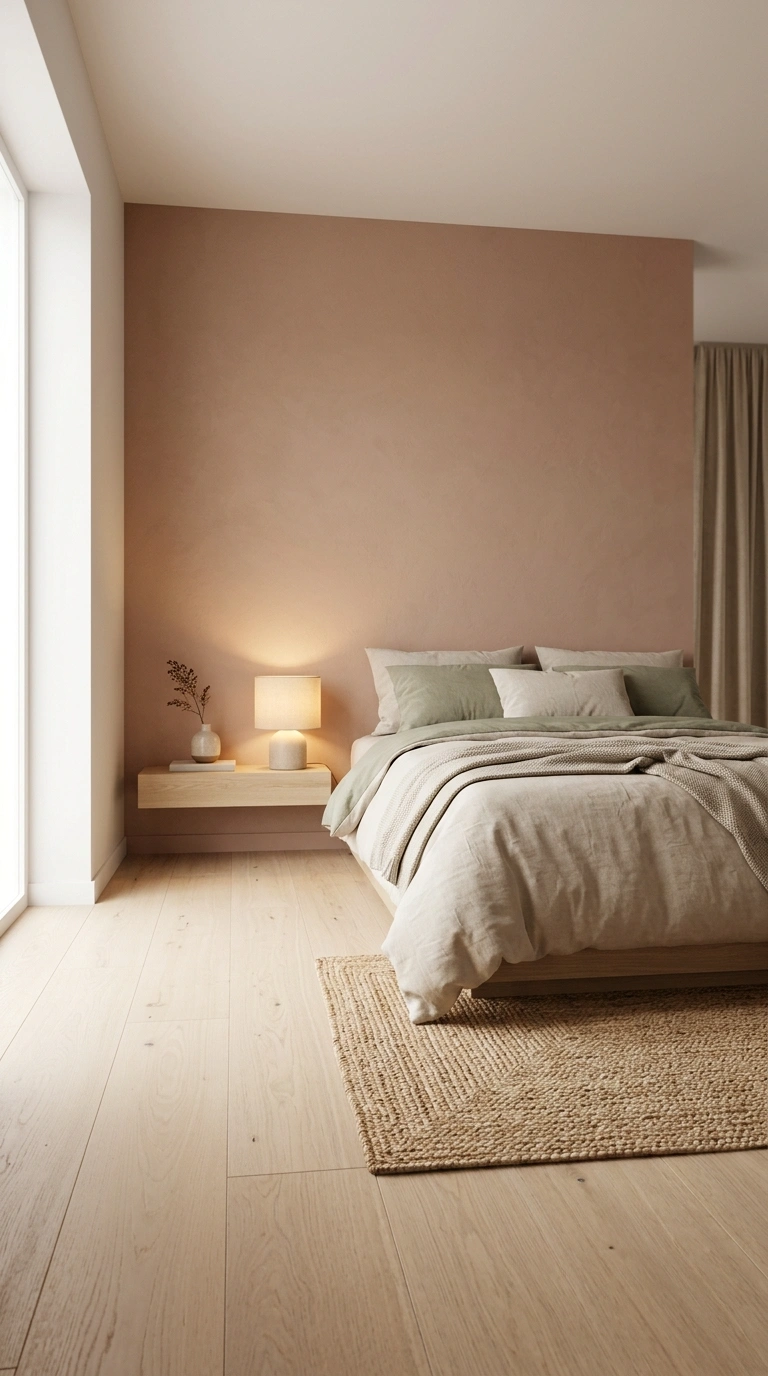
In a tight room, the wall you choose can make space feel bigger or boxier. Pick the wall with the fewest doors and windows so the color reads as one clean block. Lean toward warm, mid-tone colors like soft clay or muted olive in small rooms. Very dark walls can shrink a tiny space unless the room gets strong daylight.
Quick tip: keep furniture low and the floor clear in front of the accent wall. Open floor space and a single bold wall together make a small bedroom feel calm and roomy.Hang a slim arched mirror on a side wall to bounce daylight back across the color. The reflected light keeps even a deep clay wall from feeling heavy in a tight room.Float the bed an inch off the accent wall and let a slim nightstand breathe beside it. Small gaps of open wall make a tight room feel airier.
Final Thoughts
Choosing a bedroom accent wall comes down to three calm choices: the wall behind your bed, a color or texture that soothes you, and a few soft layers that tie it together.Start by taping up a sample this weekend and watching it shift through the day. Save the looks you love to Pinterest, then pick the one wall that makes you breathe out the second you walk in.
Frequently Asked Questions
Q1. Which wall should be the accent wall in a bedroom?
Choose the wall behind your headboard. It is the first wall you see and the natural focal point, so a bedroom accent wall there frames the bed and feels intentional. Avoid walls cut up by doors or large windows.
Q2. What is the best accent wall color for a small bedroom?
Warm mid-tones like soft clay, muted olive, or smoky sage work best in small rooms. They add depth without closing the space in. Save very dark Colors for rooms with strong daylight.
Q3. Is an accent wall still in style?
Yes. A well-chosen feature wall stays timeless when you pick a calm, lasting color or a natural texture like wood slats or limewash. Loud, trend-driven shades date faster, so lean toward soft, grounded tones.
Q4. Should the accent wall be lighter or darker than the other walls?
Usually darker or more saturated, so it stands out as the focal point against lighter neutral walls. A deep sage or charcoal wall reads rich beside warm ivory. Textured walls can be the same tone but add contrast through finish instead of color.
Q5. Do I need special paint for an accent wall?
No special paint is required, though finish matters. A matte or eggshell finish hides flaws and avoids harsh glare, while limewash or microcement adds soft texture. Always test the color on the wall before committing.