Key Takeaways
- Choose a chair with real lower-back support and test it by reading for ten minutes before buying.
- Use an adjustable warm 2700K lamp aimed over your shoulder, not a single harsh overhead light.
- Keep a small surface at chair-arm height so your drink, glasses, and book stay within reach.
- Layer soft warm textures like knit, linen, jute, and sheepskin to hold you in the seat.
- Place the nook away from foot traffic, vents, and drafts so nothing interrupts your reading.
- Keep the floor clear with a clean path so the corner feels relaxing, not cluttered.
- Add a few personal touches and one calming scent so the spot feels truly yours.
You built a pretty reading corner, but You Never sit there long. The problem is usually comfort, not looks. A truly Comfortable bedroom reading corner holds your body, your light, and your focus for an hour without a single ache.
This guide breaks down exactly what makes a reading nook comfortable, piece by piece, so you can fix the weak spots in yours.By the end, you’ll know which details actually matter and which ones only look good In Photos, so you build a corner you return to every night.Work through the eight points below in order, from the chair up to the personal touches, and treat each one as a small upgrade you can make on its own.
1. The Right Chair That Supports Your Back
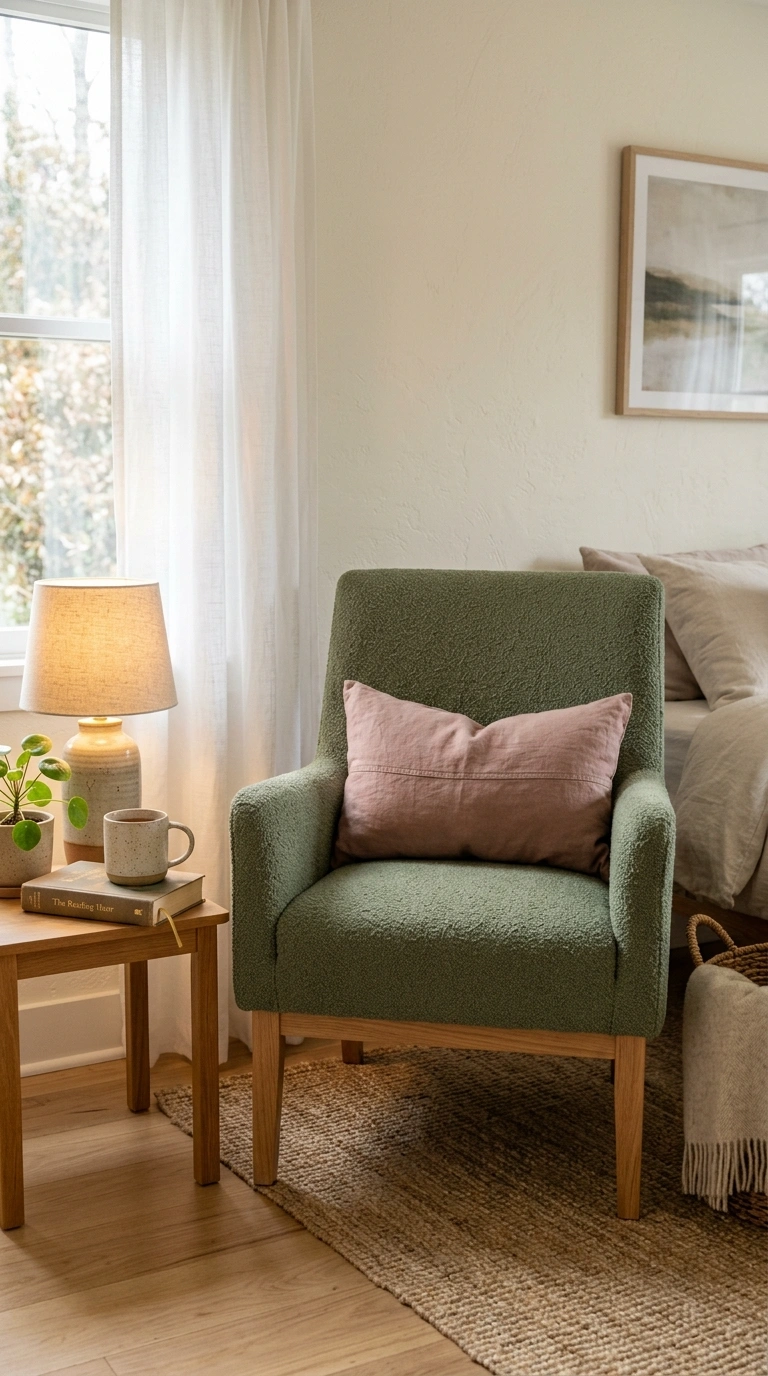
Comfort starts with a seat that holds your spine, not just one that looks soft. Reading slumps the body, so you need real lower-back support.Pick a chair with a slightly upright back, a seat deep enough to bend your knees, and a low arm to rest your elbow. Warm sage bouclé or caramel linen feels inviting and wears well.
Quick tip: sit and read for ten minutes before you buy. If your back aches, add a firm lumbar pillow in dusty rose to fill the curve.Pay attention to seat depth most of all. A seat that runs too deep forces you to slump to reach the back, while one too shallow tips you forward. Aim for a depth where your back meets the cushion and your feet rest flat, then test it in the exact posture you actually read in.Armrest height counts as well. Arms set too high hunch your shoulders, and arms too low leave them unsupported. The Right pair lets your elbows rest while your hands hold a book at an easy angle, so your upper body stays loose for a whole chapter.
2. Lighting You Can Aim Where You Need It
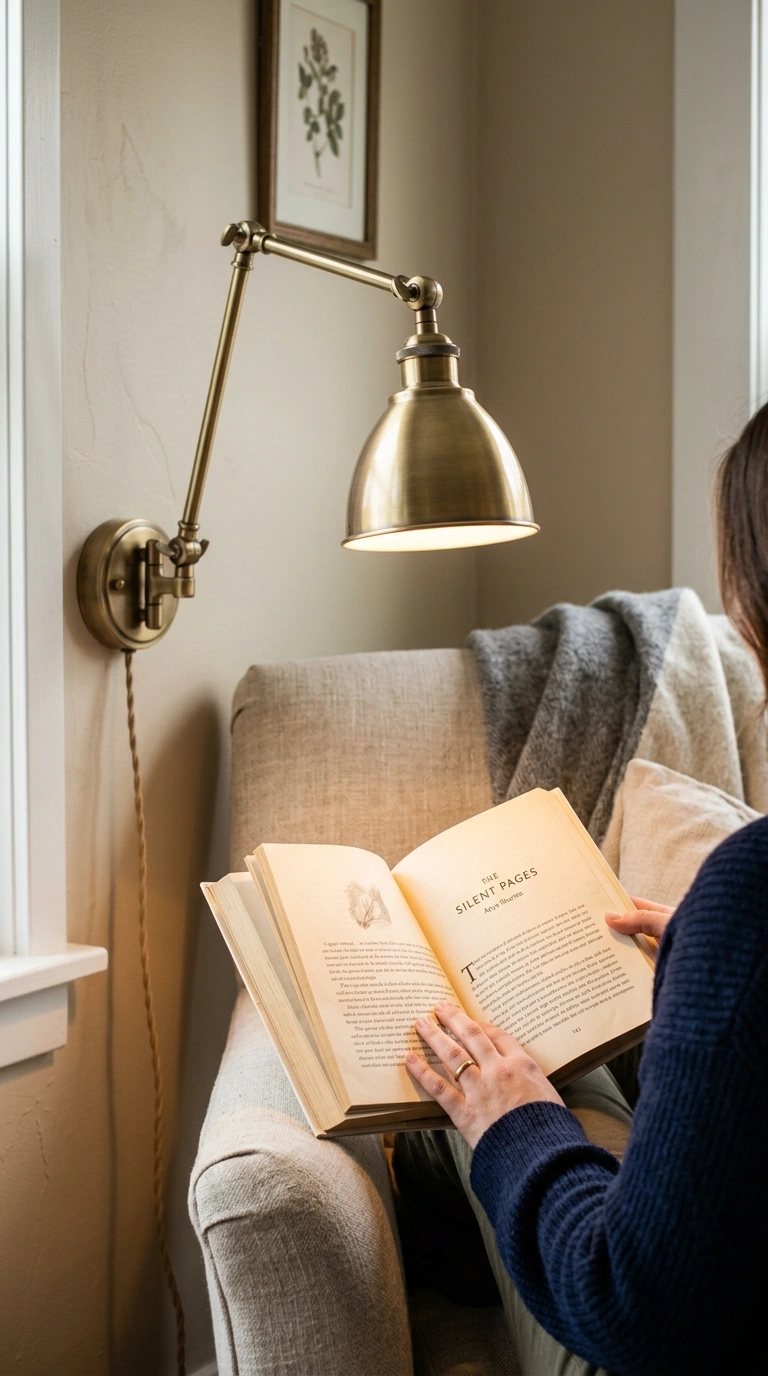
Good light keeps your eyes relaxed, so the corner needs a source you can point right at the page.Use an adjustable swing-arm or clip lamp with a warm 2700K bulb. Aim it over your shoulder onto the book, never into your eyes or flat against the wall.
Quick tip: avoid one bright overhead light alone; it casts shadows on the page. Layer a soft warm lamp at reading height for steady, gentle light.Brightness matters as much as direction. A bulb around 450 to 800 lumens lights a page without flooding the room, so your eyes stay calm and your body still reads the hour as evening. Pair it with a soft linen or paper shade that spreads the glow instead of throwing a hard, narrow beam.Position the lamp so light comes from behind and to one side, never straight ahead. Front light bounces off glossy pages into your eyes, while light over your shoulder lands clean on the paper and keeps the rest of the room softly dim and sleepy.
3. A Surface Within Arm’s Reach
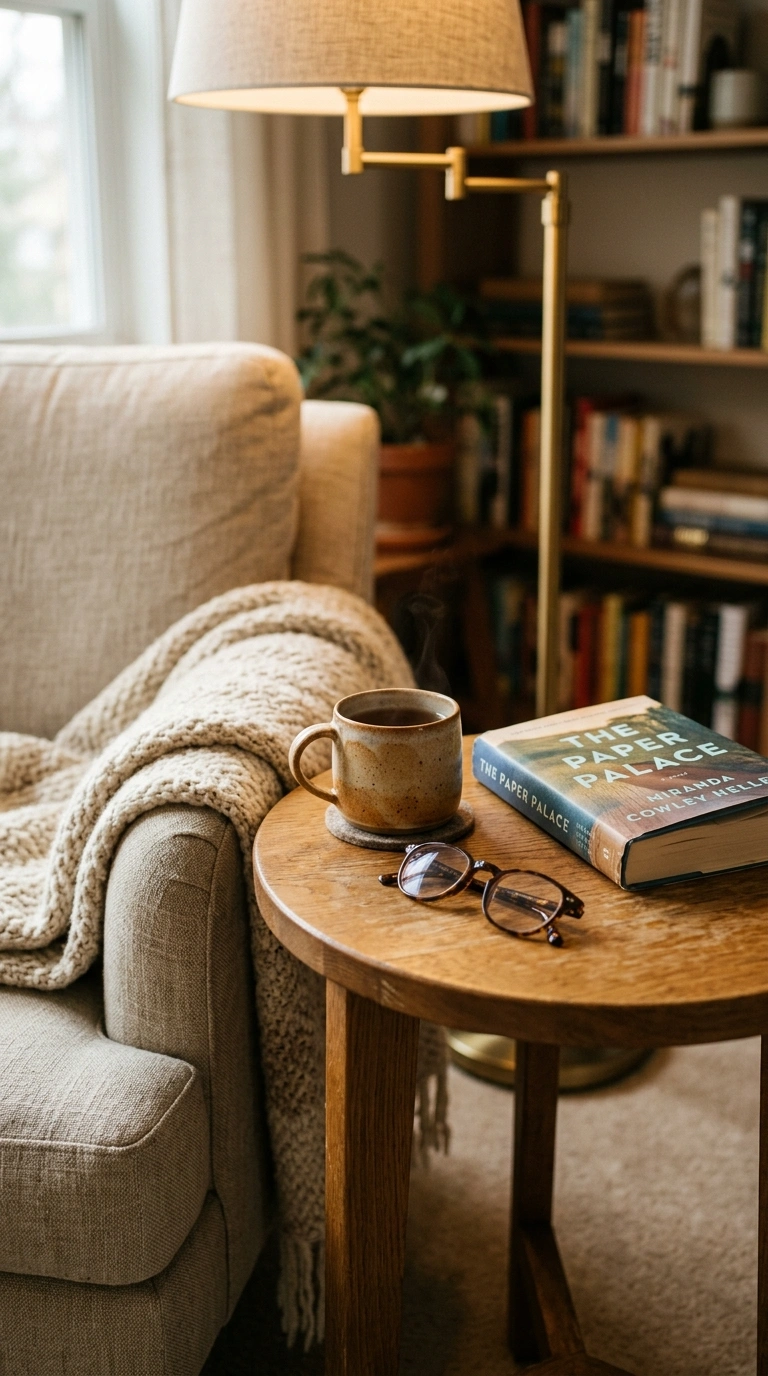
Comfort drops fast when you twist to set down a mug. A small surface at arm height keeps everything close and your body still.Place a round side table or a floating shelf beside the chair, just big enough for a warm drink, your glasses, and the book you set down.
Quick tip: keep the surface at roughly the height of the chair arm so reaching feels natural and easy.Think about what you actually set down while reading: a warm mug, your phone face-down, your glasses, the book itself. A surface roughly ten to fourteen inches wide holds it all without crowding. Keep the top clear so reaching for your tea never knocks anything over in the dark.Height beats width for a reading surface. A table level with the chair arm lets you set a mug down without looking, while a low coffee table makes you lean and bend. Keep your glasses and current book closest to your dominant hand.
4. Soft Textures That Invite You to Stay
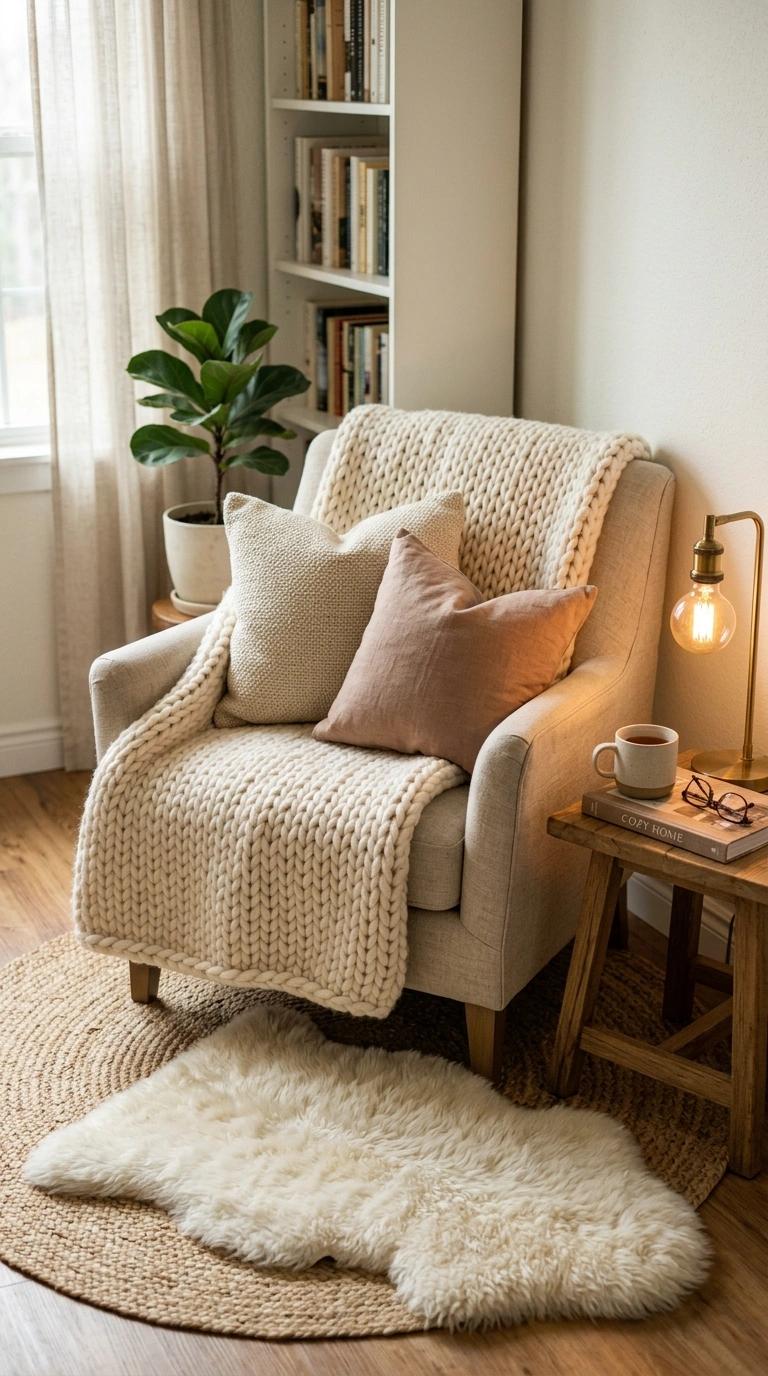
Hard, cold surfaces push you up after five minutes. Layered soft textures hold you in place and warm the whole corner.Add a chunky knit throw, two textured pillows, and a jute rug with a sheepskin on top. Mix linen, wool, and woven fibers in warm oat and clay tones.
Quick tip: keep a folded blanket on the chair arm so warmth is always one reach away on a cool night.Layering also rescues a chair that runs a touch too firm or too cold. A sheepskin softens a hard seat, a wool throw warms a leather one, and a lumbar pillow fixes a back that sits too upright. Build the comfort in layers you can add or peel back as the seasons change.Texture shapes mood, not just comfort. A nubby wool throw and a smooth linen pillow against a soft bouclé chair give your hands different things to touch, and that small variety makes the corner feel rich rather than thrown together.
5. The Right Spot Away From Foot Traffic
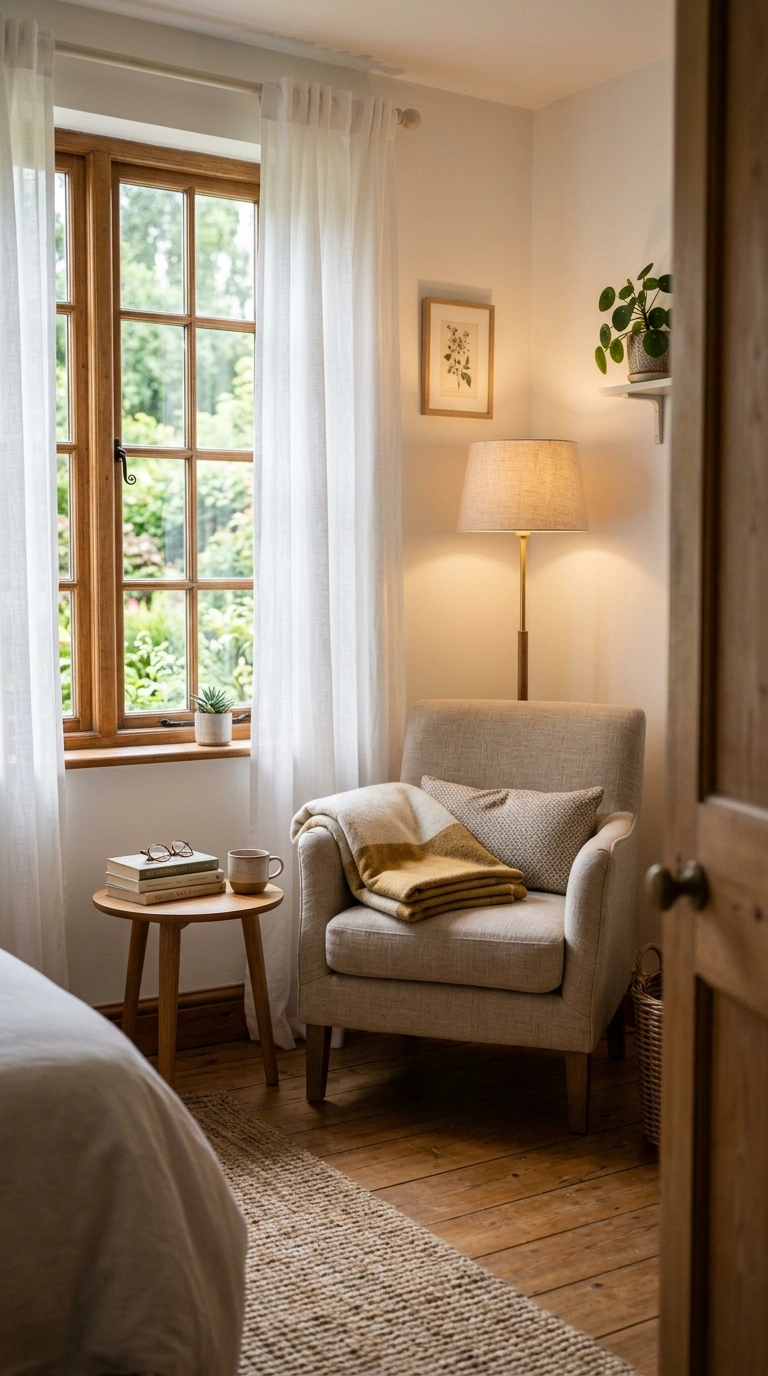
A corner you keep getting up from is never comfortable. Place the nook where no one walks through and nothing interrupts you.Choose a quiet corner away from the door swing and the closet path, ideally near a window for daylight and a calm view.
Quick tip: face the chair slightly away from the bedroom door so the spot feels tucked away and private.Sound matters too. A corner facing a wall or a soft curtain feels quieter than one open to a hallway, and quiet helps you sink into a book faster. In a shared room, a slim curtain or a tall plant gives the spot a gentle border without building a wall.Sight lines matter too. Facing a calm view, a window, a plant, or a quiet wall, rests your eyes between pages, while facing a cluttered dresser keeps your mind half on the mess. Point the chair toward the most peaceful thing in the room.
6. A Temperature and Airflow That Feels Calm
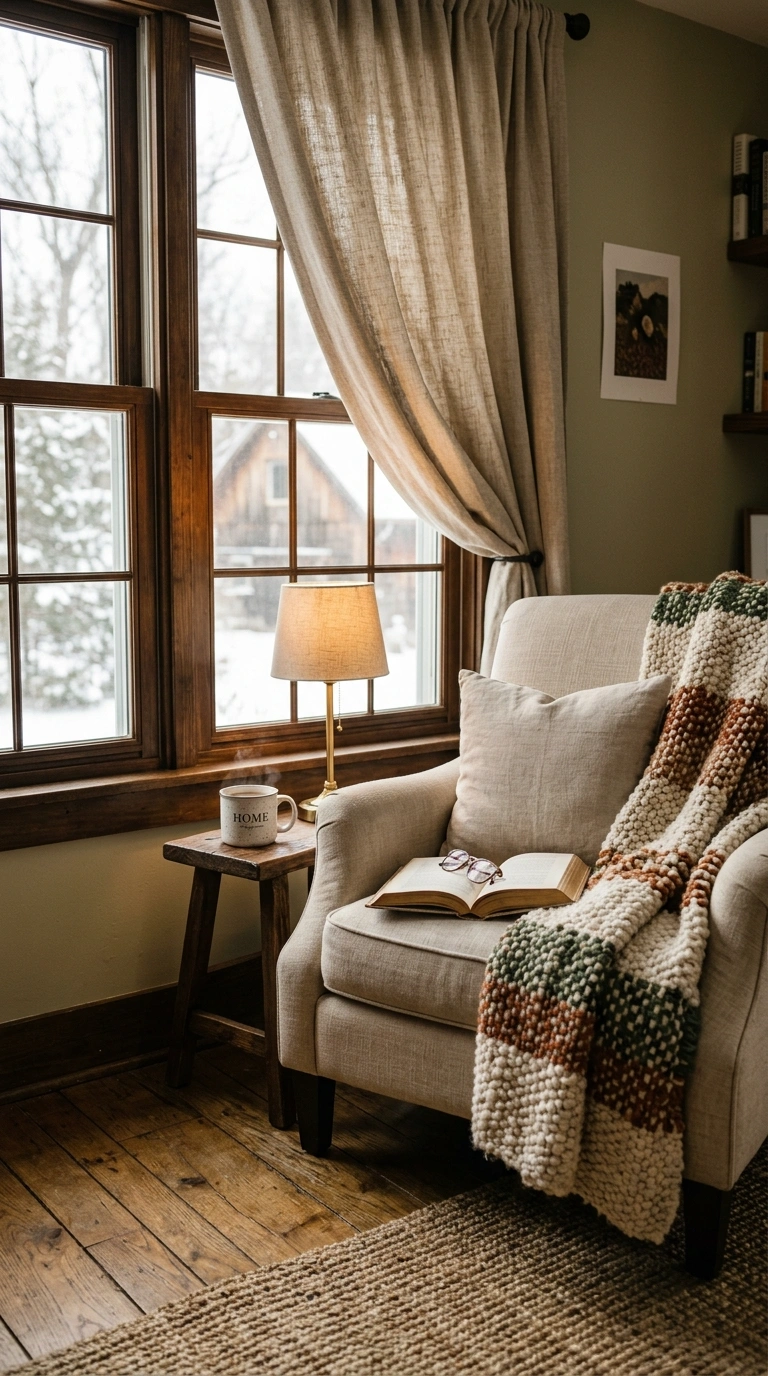
Even the best chair fails if the spot runs hot, cold, or drafty. Comfort means theair around you feels settled.Avoid placing the chair right under a vent or against a cold exterior window in winter. A small woven throw handles minor chills.
Quick tip: if the corner gets a draft, add a heavy linen curtain nearby to soften cold air without blocking your daylight.Your body cools when you sit still to read, so a corner that felt fine while you moved around can turn chilly within twenty minutes. Keep a folded throw on the arm and notice where drafts creep in, then block them with a curtain or a small rug rather than heating the whole room.Daylight and warmth work together. A spot that catches gentle morning sun welcomes a slow read with coffee, while a lamp-lit corner suits winding down at night. Notice which time you read most and tune the corner’s warmth to that hour.
7. A Clear, Uncluttered Floor Around You
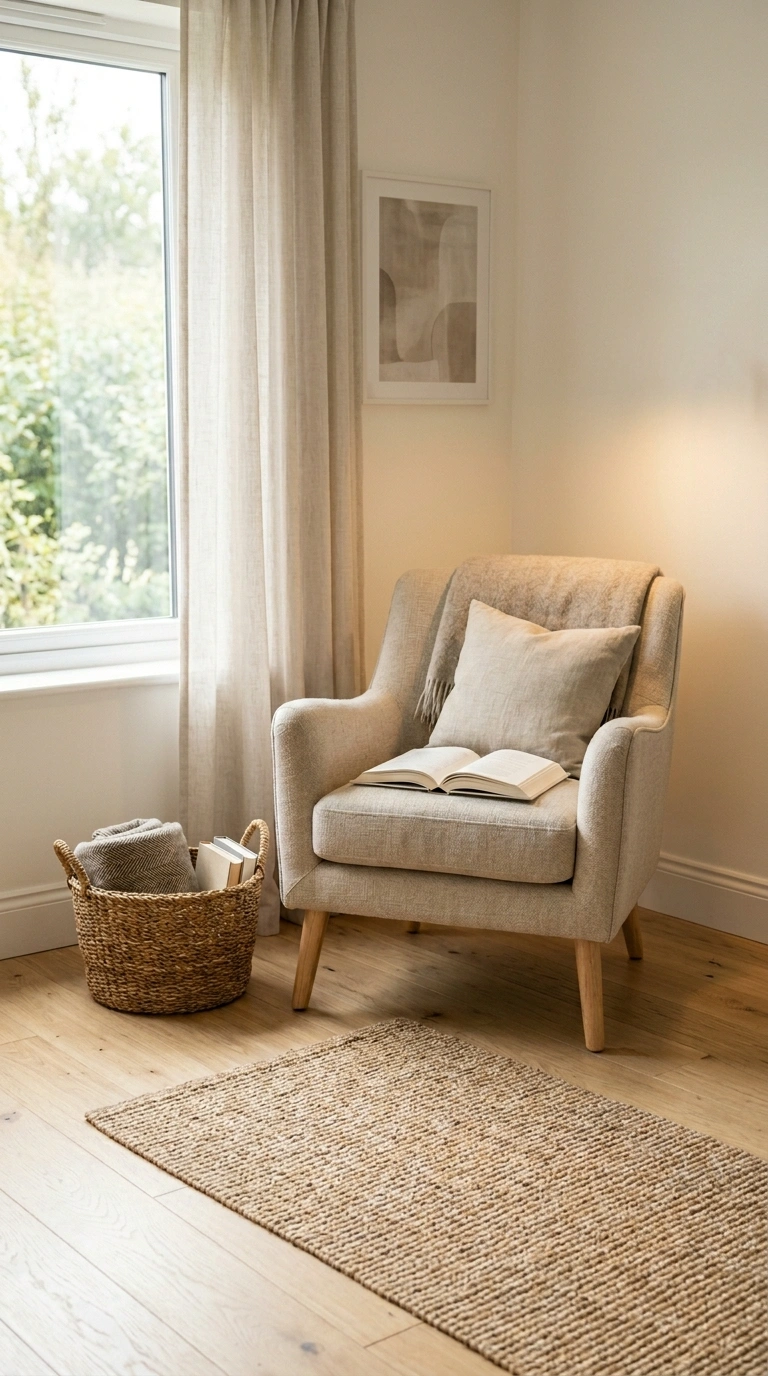
Clutter at your feet makes a corner feel tense, even when the chair is perfect. Open floor space lets your body and mind relax.Keep only a slim rug, your seat, and one small table or basket. Store extra books on a wall shelf, not in piles on the floor.
Quick tip: leave a clear path to the chair so sitting down feels easy and inviting, not like an obstacle course.A tidy floor also keeps you safe when you read at night in low light. Tuck cords along the baseboard, slide loose books onto a shelf, and leave a clear landing spot for your feet so standing up after an hour feels easy and steady.Reach also counts as comfort. Everything you need, the light switch, a throw, a drink, and your book, should sit within an easy arm’s stretch from your seat, so you settle in once and stay put instead of popping up every few minutes.
8. Personal Touches That Make It Yours
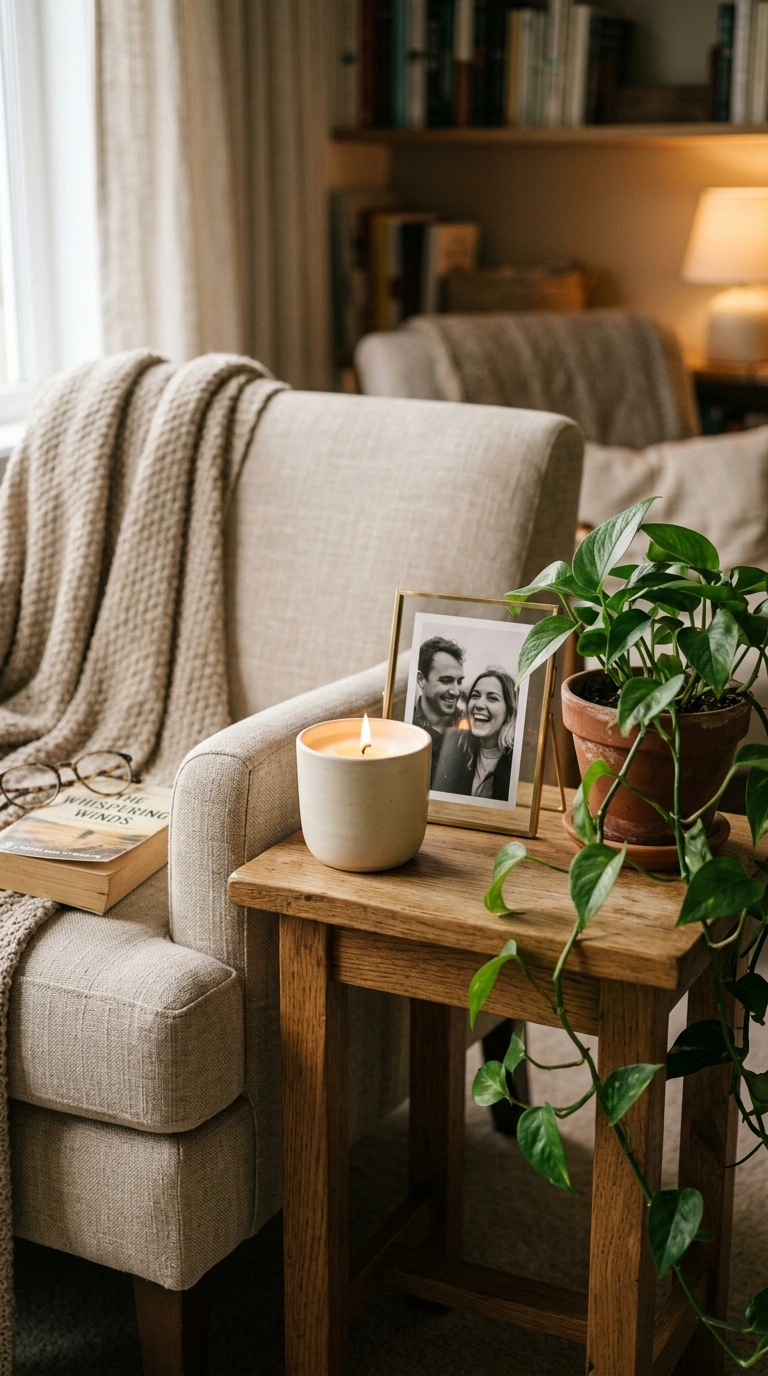
A corner becomes truly comfortable when it feels like yours. Small personal details make you want to settle in.Add a candle you love, a framed photo, a trailing plant, or a pin board with quotes. Keep them few and warm-toned so the spot stays calm.
Quick tip: choose one scent for the corner, like a soft vanilla or cedar candle, so sitting down signals your brain it’s time to relax.These details do quiet work: they tell your brain the corner is for rest, not chores. Keep them few so the spot stays calm, and swap them with the seasons, like a dried branch in autumn or a few fresh stems in spring, so the nook always feels fresh and yours.Let the corner grow with you. Add a small framed print you keep meaning to hang, or a tiny dish for the ring you take off to read. The spot earns its comfort over weeks as it fills with the small things that make it unmistakably yours.
Final Thoughts
A comfortable bedroom reading corner comes down to a back-supporting chair, light you can aim, a surface within reach, soft warm textures, and a quiet, clutter-free spot that feels like yours.
Check your corner against these points tonight and fix the weakest one first. Save the cozy reading nook ideas you love to Pinterest and build the spot you actually want to sit in.
Frequently Asked Questions
Q1. What makes a reading corner comfortable?
A comfortable bedroom reading corner needs a chair that supports your back, light you can aim at the page, a surface within arm’s reach, soft layered textures, and a quiet spot away from foot traffic. Together these let you read for an hour without aches or interruptions.
Q2. What is the best chair for a reading nook?
Pick a chair with a slightly upright back, a seat deep enough to bend your knees, and a low arm for your elbow. Warm bouclé or linen in a calm tone feels inviting. Add a firm lumbar pillow if your lower back needs more support.
Q3. How should I light a reading corner?
Use an adjustable swing-arm or clip lamp with a warm 2700K bulb and aim it over your shoulder onto the book. Avoid relying on one bright overhead light, which casts shadows on the page and feels harsh in a bedroom at night.
Q4. Where should a reading corner go in a bedroom?
Place it in a quiet corner away from the door swing and any walking path, ideally near a window for daylight. Keep it clear of vents and cold drafts so the spot stays calm and comfortable to sit in for a while.
Q5. How do I make my reading corner cozier?
Layer soft textures like a chunky knit throw, textured pillows, and a sheepskin over a jute rug, then add warm 2700K lighting and a personal touch like a candle or plant. Warm tones and a clear floor make the reading nook feel calm and inviting.