Key Takeaways
- Warm up the white with honey wood, jute, and 2700K lighting so the room feels cozy instead of clinical.
- Protect Negative Space by choosing fewer, slim-legged pieces and leaving clear floor around them.
- Swap a single harsh overhead light for layered floor lamps, table lamps, and candles for true hygge.
- Layer chunky knits, sheepskin, wool, and linen so the calm palette gains depth and warmth.
- Choose natural materials like oak, wool, leather, and linen over glossy flat-pack to lift the whole room.
- Keep color soft and tonal, add greenery in natural pots, and let restraint do the work.
You bought the white sofa, the pale rug, and the leggy wood chair, yet your room still feels more waiting area than warm retreat. The look is close, but something is off.Real Scandinavian living rooms feel calm, cozy, and quietly rich, never cold. The difference rarely comes from buying more. It comes from fixing a few small habits that quietly drain the warmth out of the room.
This guide walks you through the 7 Scandinavian living room mistakes that ruin the look, and the exact fix for each one. You will learn how to add warmth, texture, and that lived-in hygge glow without losing the clean, airy feel that makes Scandi style so loved. Each mistake comes with a fast, practical fix you can try the same day. Repair even two of these and your room will feel more expensive overnight.
1. Making the Room Cold and Clinical
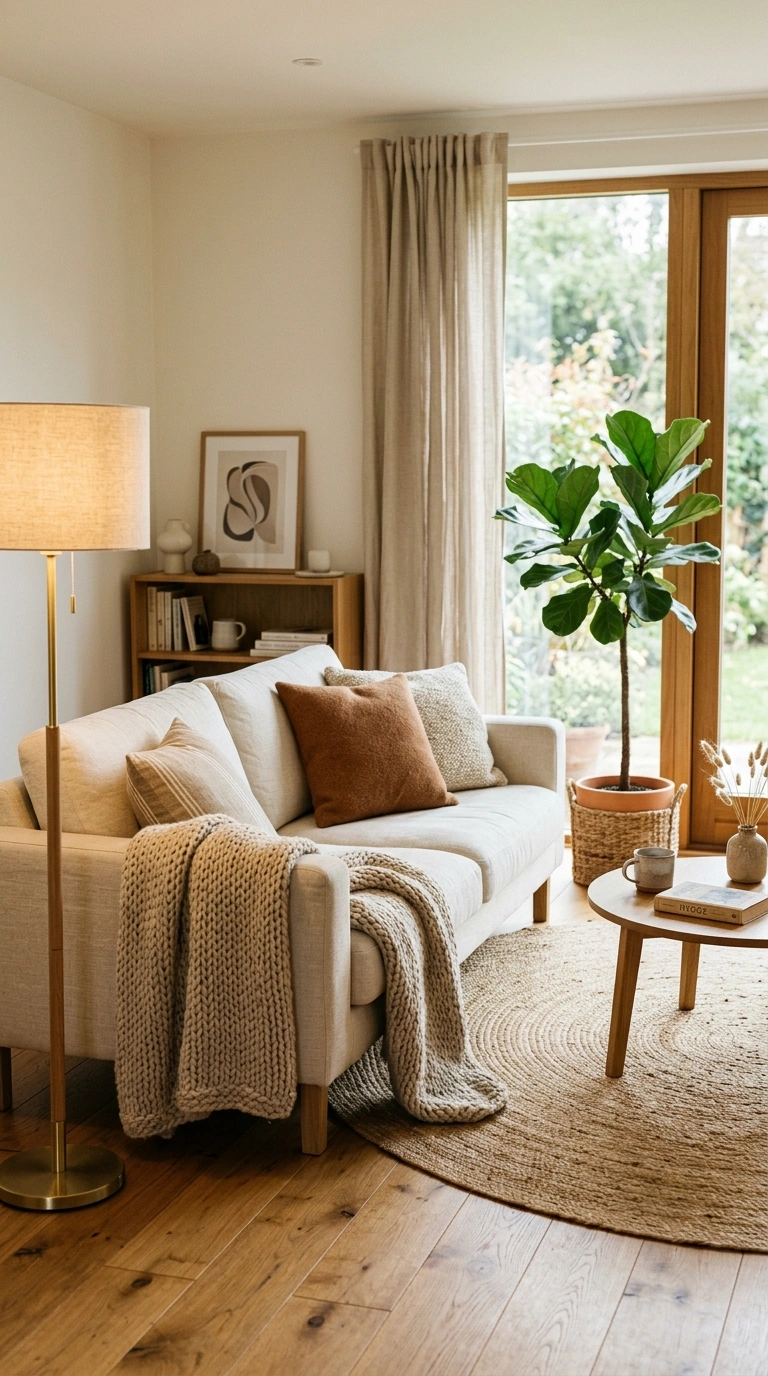
The biggest Scandinavian living room mistake is going all-white with nothing to warm it up. A room of bright white walls, white sofa, and grey floor reads like a clinic, not a home, and it is the error people make most.Scandi style leans on white as a backdrop, then layers warmth on top. Add honey-toned wood, a jute rug, and warm 2700K lighting. Bring in soft cream, oat, and putty tones beside the white. Those warm neutrals turn a sterile box into a calm, inviting space.
Fix it fast by warming three surfaces at once: swap a cool grey rug for natural jute, add a light oak coffee table, and drape a cream wool throw over the sofa arm. Those three moves balance the white and the whole room softens within an hour. Aim for warm against cool in every corner, and avoid pairing a cool grey floor with cool grey walls, since that combination is what tips a room into looking like a showroom.
2. Cramming in Too Much Furniture
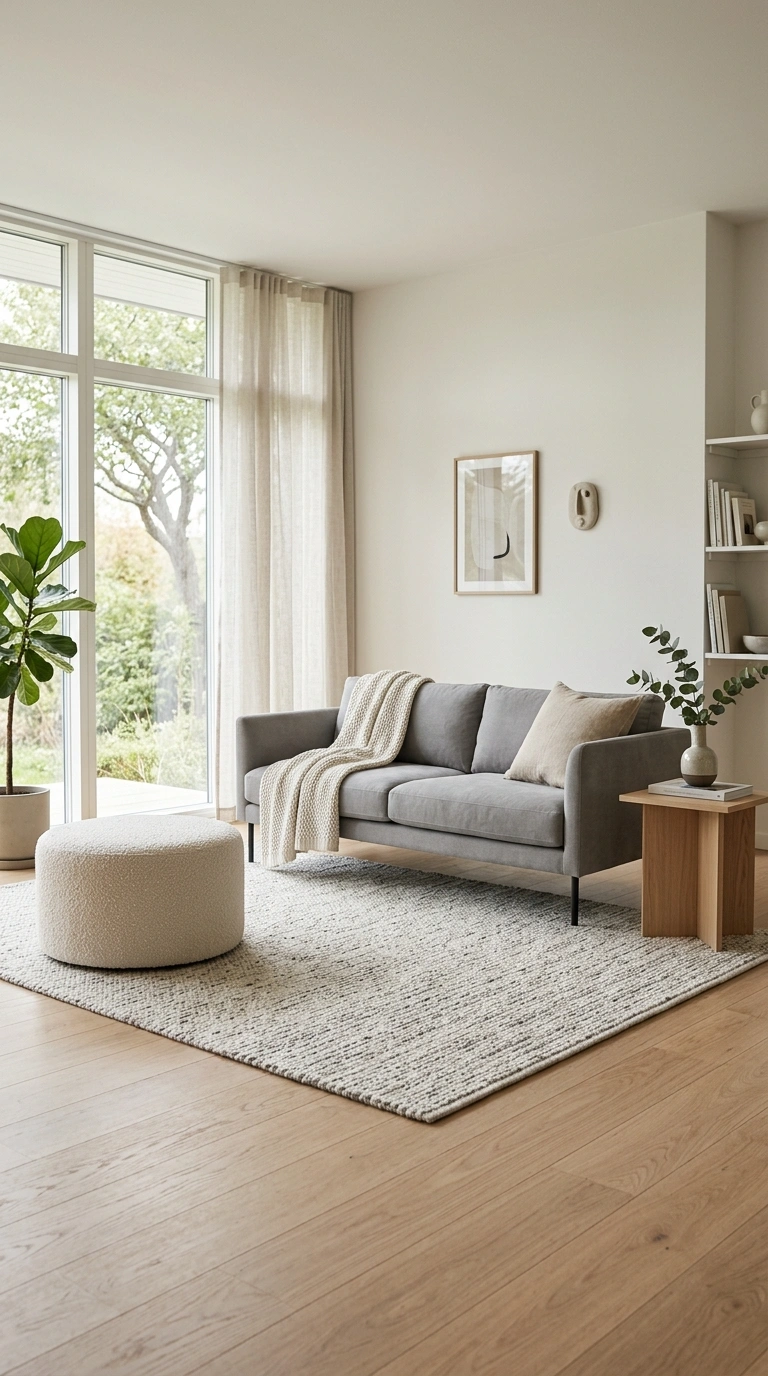
Scandinavian design breathes through empty space. Crowding the room with a big sectional, two side tables, a console, and three poufs kills that calm at once and makes a bright room feel busy.Negative space is the look, not a gap to fill. Choose fewer, better pieces with slim legs that let light pass underneath. Leave clear floor around the sofa and pull furniture slightly off the walls. The room feels larger, lighter, and far more intentional.
Try the one-in, one-out rule as you style. For every piece you add, remove something that is not earning its place. Keep the coffee table nearly bare, with just a stack of two books and a small ceramic bowl. That restraint reads as confident, not empty, and lets the few pieces you love stand out.
3. Relying on One Harsh Overhead Light
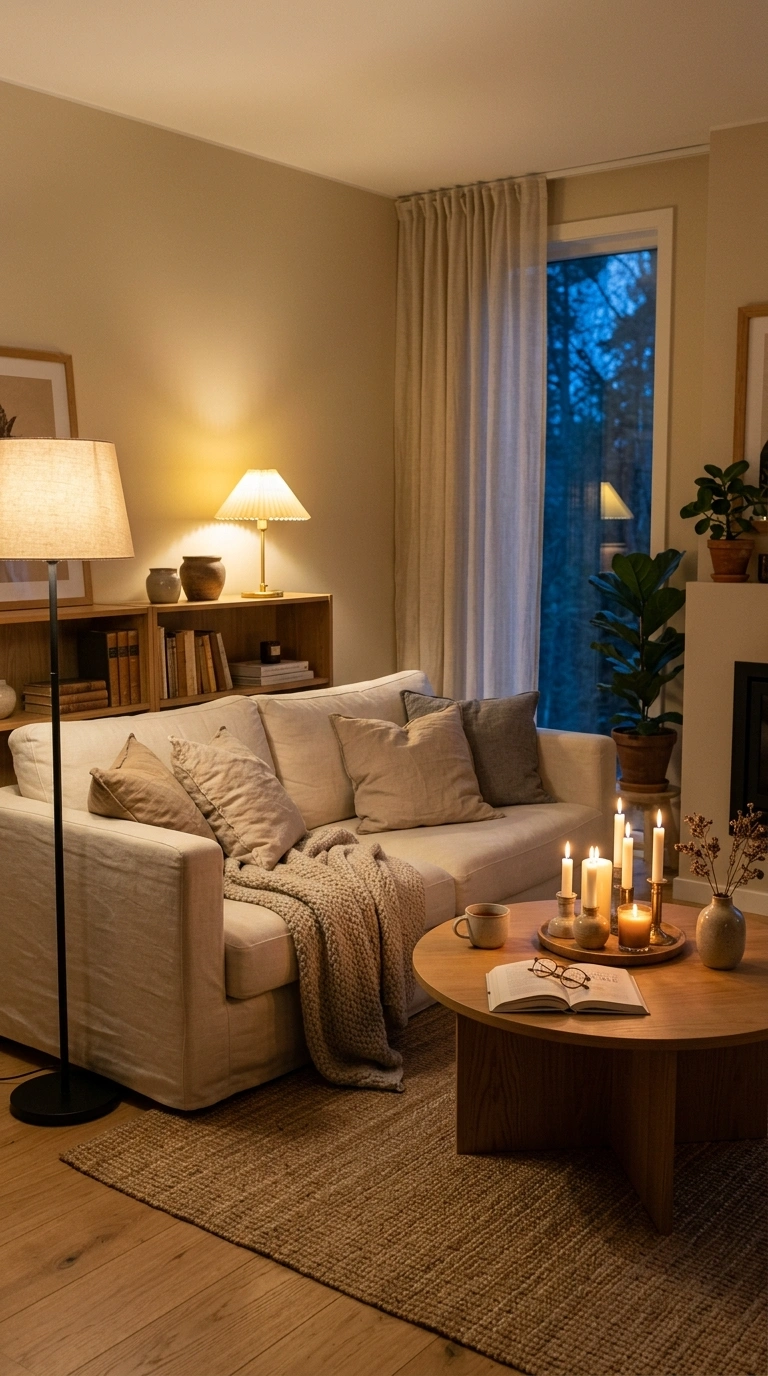
A single bright ceiling light flattens a Scandinavian living room and erases all the cozy mood. Cold blue-white bulbs make even the prettiest space feel hard and unwelcoming after dark.Scandinavians chase hygge with many small pools of warm light. Add a floor lamp, a table lamp, and a few candles. Switch every bulb to warm 2700K and put the overhead on a dimmer. Layered low light gives the room its soft, golden evening glow.
Place at least three light sources at different heights: a tall floor lamp Behind the sofa, a low table lamp on a side table, and candles or a small lamp on a shelf. Never light a Scandi room from one point overhead. This layering is the quiet trick behind every cozy Scandinavian photo you save. Warm wall sconces and a paper or linen lamp shade soften the glow even further, and a single dimmer lets you drop the whole room into a calm evening mood with one turn.
4. Forgetting to Layer Texture
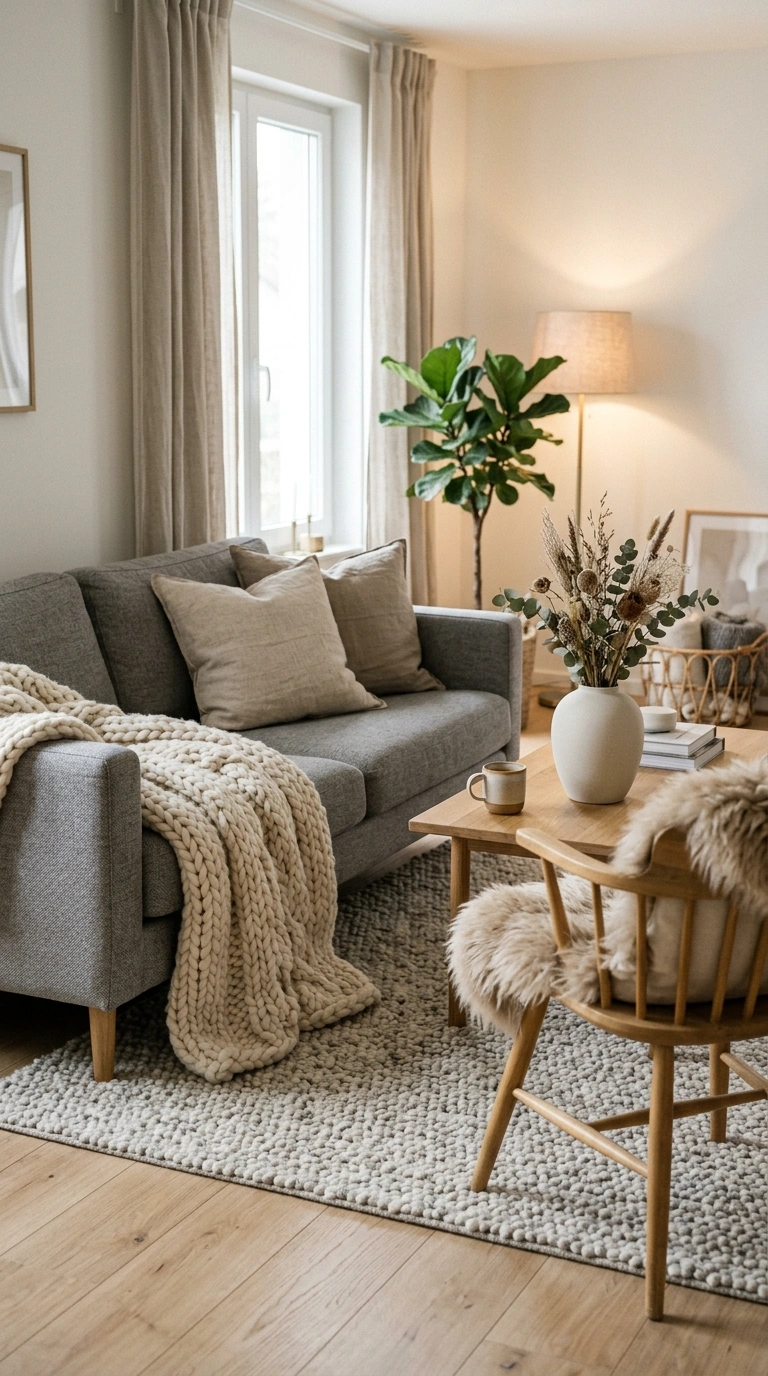
Without texture, a pale room looks flat and cheap no matter how nice the furniture. Smooth walls, a flat sofa, and a thin rug give the eye nothing to hold onto. Texture is how Scandi style stays warm while keeping its quiet color palette. Pile on a chunky knit throw, a sheepskin over the chair, a nubby wool rug, and linen cushions. Mix smooth ceramic with rough jute and soft boucle. The contrast adds depth and rich, tactile comfort.
Layer at least four textures in one seating area to get it right. Start with a wool or jute rug, add a boucle or linen sofa, top it with a chunky knit throw, and finish with a sheepskin on a chair. The colors can stay almost the same, since the texture, not the color, does the work here. Rough against smooth is the key pairing, so set a nubby woven cushion beside a smooth ceramic lamp and let the contrast carry the room.
5. Choosing Flimsy Flat-Pack Over Natural Materials
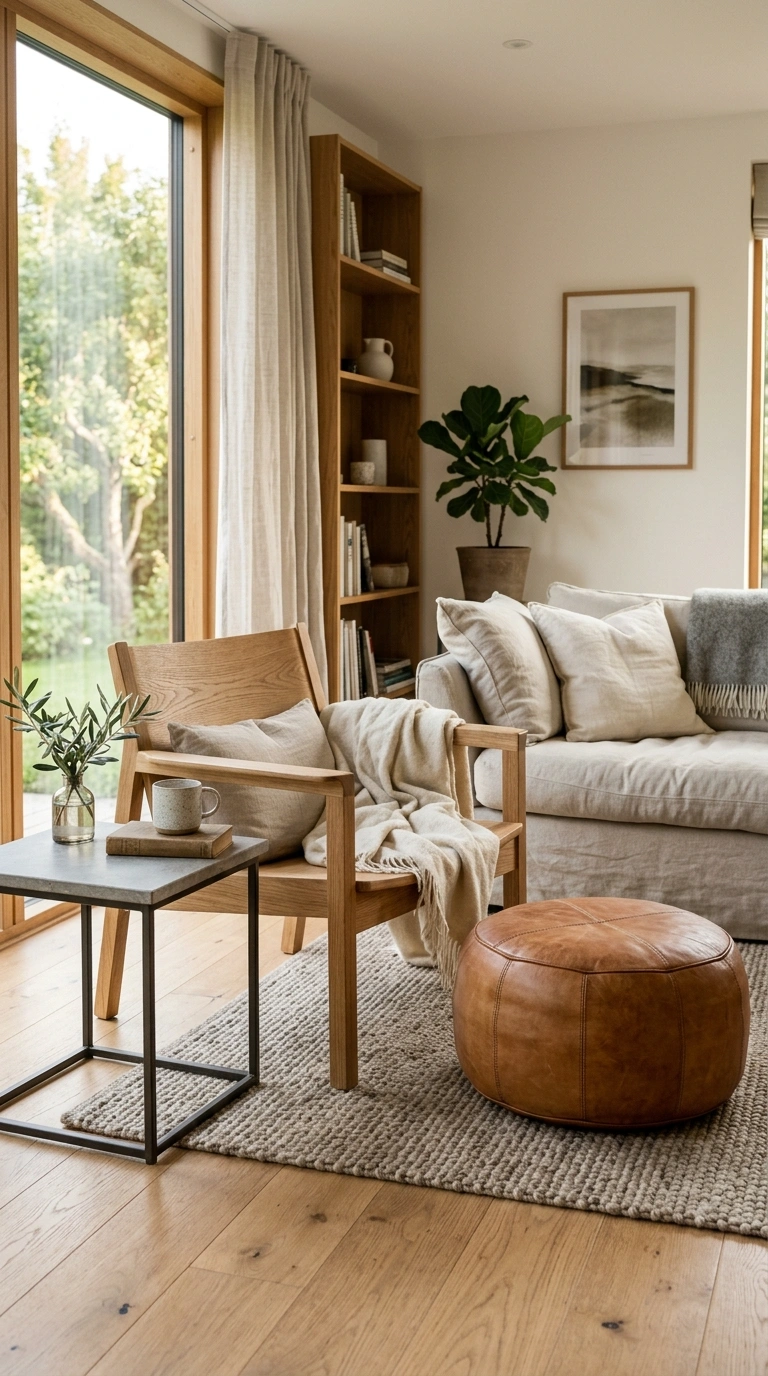
Filling the room with shiny plastic and printed fake-wood pieces is a quick way to ruin the look. Scandinavian style is rooted in honest, natural materials that age well.
You do not need a big budget, just better choices. Pick solid or veneered light wood like oak, ash, or beech. Add real wool, leather, linen, and stone where you can. One well-made wood chair beats three glossy particle-board pieces and instantly raises the whole room. Spend on the pieces you touch and see most, like the sofa, the main chair, and the coffee table, then save on the rest. Look for natural-wood legs instead of chrome, matte finishes instead of high gloss, and woven or stone accents over plastic. Honest materials are what give Scandi rooms their quiet,expensive calm. Even small swaps help: trade a plastic tray for a carved wood one, or a shiny vase for matte stoneware, and the room reads more grounded at once.
6. Drowning the Palette in Loud Color and Pattern
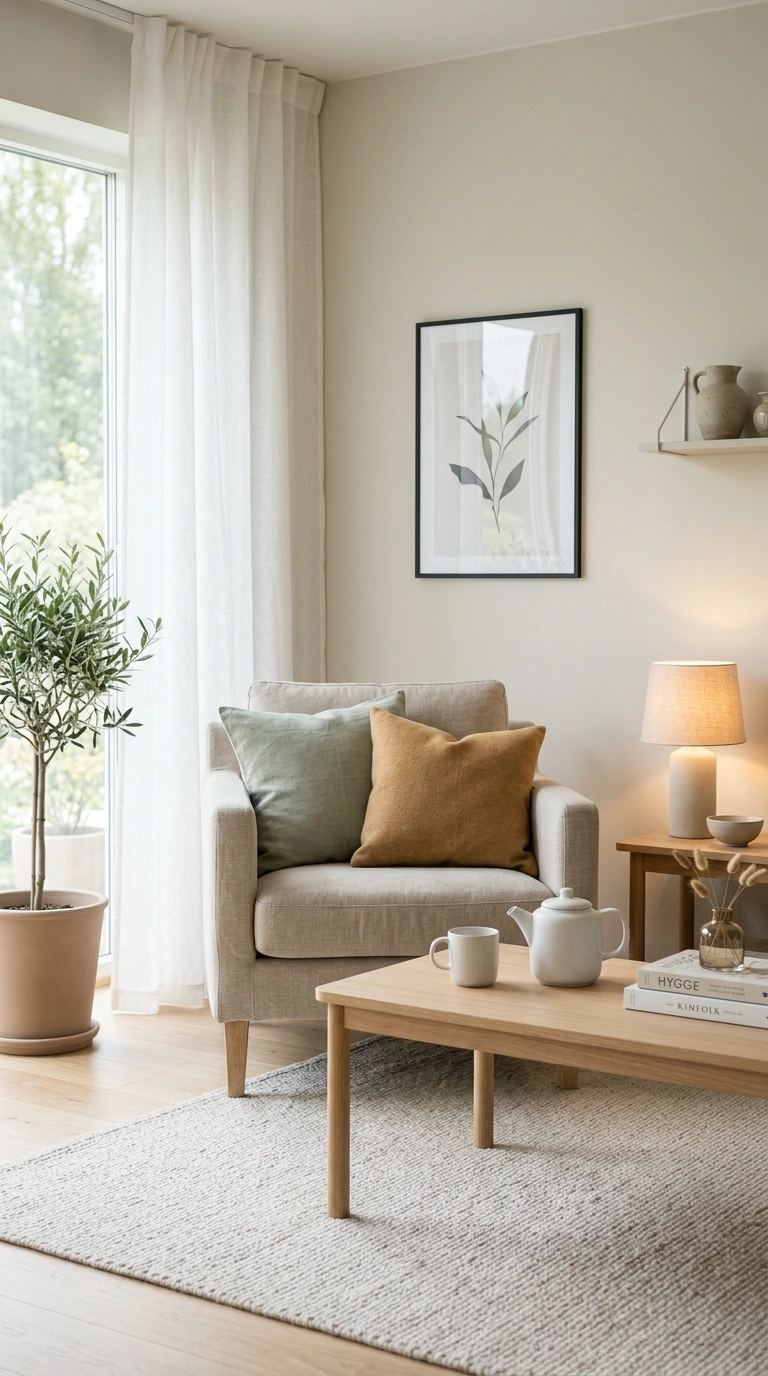
Bold accent walls, busy prints, and clashing brights fight the calm that defines Scandi design. Too much color turns a serene room into a noisy one that never quite settles.The Scandinavian palette stays soft and tonal: white, grey, oat, soft sage, dusty blue, and warm wood. Add color in small, muted doses, like a single ochre cushion or a soft black frame. Keep patterns simple and few. Restraint is what makes the look feel polished and expensive.
Follow a simple ratio to stay on track: keep about 80 percent of the room in soft neutrals, 15 percent in warm wood tones, and just 5 percent in one muted accent color. Choose one or two gentle patterns at most, like a thin stripe or a soft check. The calm palette is the whole point of the look. If a color feels loud against the white, mute it one step toward grey or beige and it will settle into the room instead of fighting it.
7. Leaving Out Plants and Living Greenery
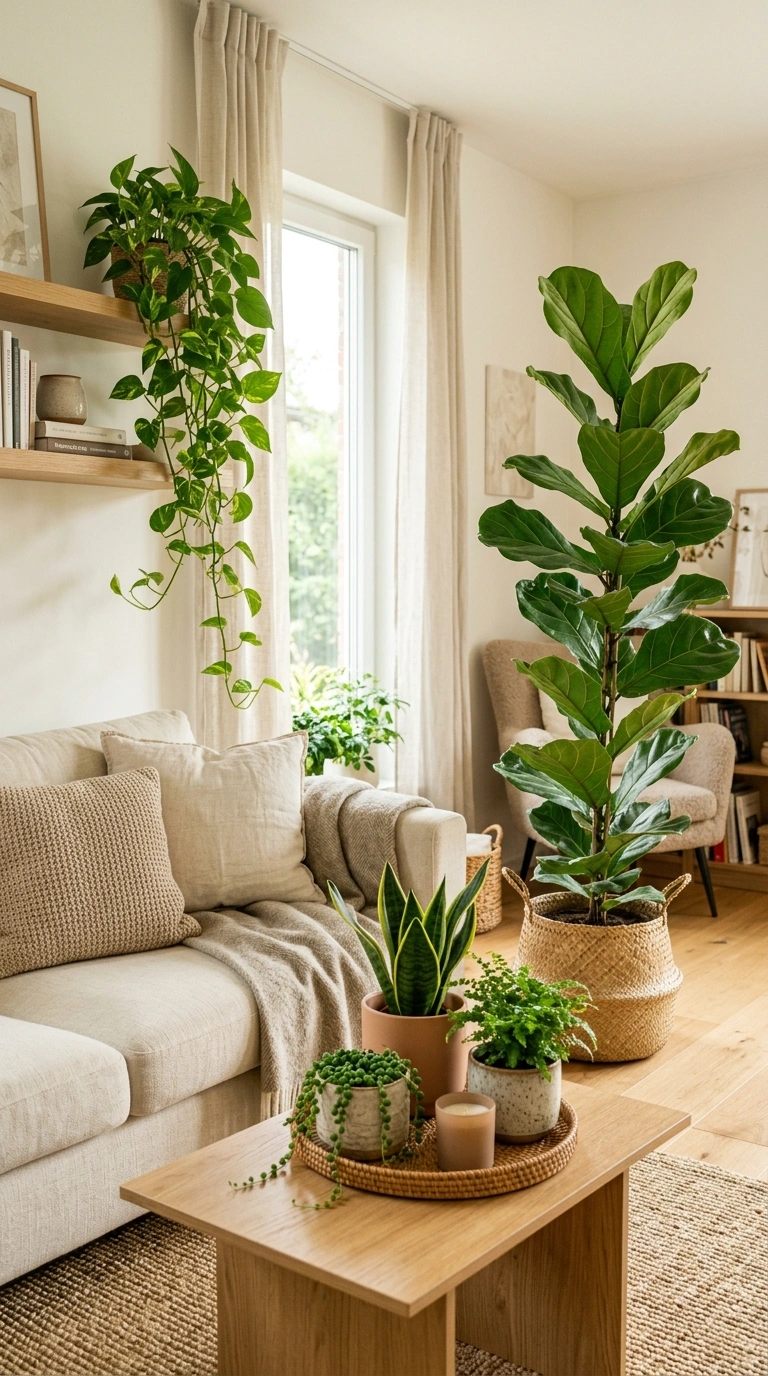
A Scandinavian living room without greenery feels lifeless and staged. Nature is central to the whole philosophy, and skipping it flattens the mood right away.Plants add the one bit of organic color the palette welcomes. Set a tall fiddle-leaf fig in a corner, trail a pothos from a shelf, and group small pots on the coffee table. Use simple ceramic or woven pots in natural tones. The living green softens hard lines and makes the room feel alive.
Vary the height and habit of your greenery so it feels natural, not arranged. Combine one tall floor plant, one trailing plant up high, and a small potted herb or eucalyptus stem on the table. If light is low, a few dried branches in a stoneware vase keep the same calm, nature-led feel with no upkeep. Odd numbers tend to look more relaxed than pairs, so group three small pots rather than two when you style a shelf or table.
The Final Word
A great Scandinavian living room is not about owning the right white sofa, it is about balance: warmth against the white, texture against the calm, and breathing room around every piece. Fix the cold lighting, layer in natural texture, and let a little greenery and empty space do the rest.Work through these mistakes one at a time rather than all at once. Most rooms only suffer from two or three of them, and the warm lighting and texture fixes alone make the biggest visible difference.
Pick the one mistake that sounds most like your room, fix it this week, and save the looks you love to Pinterest as you go.
FAQs
Q1: Why does my Scandinavian living room look cold?
A1: Your Scandinavian living room likely looks cold because it leans on white and grey with no warmth layered on top. Add honey-toned wood, a jute or wool rug, warm 2700K lighting, and soft oat tones to fix the clinical feel fast.
Q2: What makes a living room look truly Scandinavian?
A2: A truly Scandinavian living room balances a soft, light palette with natural materials, layered warm lighting, plenty of texture, and breathing space. Wood, wool, linen, and a few plants give it the calm, cozy hygge feel that defines the style.
Q3: Can Scandinavian style use color?
A3: Yes, but in small, muted doses. The Scandinavian palette stays soft and tonal, so a single ochre cushion, a dusty blue throw, or a soft black frame works well. Loud accent walls and busy patterns are the mistake that ruins the calm look.
Q4: How do I add warmth to a minimalist Scandinavian room?
A4: Add warmth with texture and light. Pile on chunky knit throws, a sheepskin, and a wool rug, then switch to warm 2700K bulbs and add table and floor lamps. Wood furniture and a few plants finish the cozy, lived-in feel.
Q5: How much furniture belongs in a Scandinavian living room?
A5: Less than you think. Scandinavian design relies on negative space, so choose a few well-made pieces with slim legs and leave clear floor around them. An uncrowded room feels larger, lighter, and far more intentional.