Key Takeaways
- Dusty, muted lavender shades read as sophisticated and calm in adult bedrooms, while pale, sweet lavender tones can feel nursery-like if overused.
- Pairing lavender with warm gray, terracotta, or gold accents keeps the color from feeling cold, since lavender leans cool on its own.
- Test any lavender paint sample at night under lamp light — the shade often shifts cooler once daylight fades.
- Keep lavender to one dominant layer in bedding or one wall in paint; using it everywhere flattens the effect instead of strengthening it.
- Rug sizing matters as much as color choice — a lavender rug that’s too small for the bed reads as an afterthought, not a design decision.
- High-contrast pairings like lavender and charcoal work best in bedrooms with good natural light, since dark tones amplify a dim room’s shadows.
- Low-commitment options, like accent pillows or a dried lavender bouquet, let you test the color for under $50 before investing in paint or furniture.
Lavender walks a fine line other bedroom colors don’t have to. Go too pale and a lavender bedroom reads as a nursery. Go too saturated and it can feel cold instead of calming. Get the shade and pairing right, and it becomes one of the Most genuinely relaxing colors you can put in a bedroom.
This guide covers 23 real lavender bedroom ideas, and each one includes something practical: an exact shade comparison, a pairing ratio, a cost range, or a styling formula, so you can build a calm space instead of guessing at a paint chip.
Pick one or two ideas to start. Lavender is a color that rewards restraint more than most.
Quick Idea Overview
| # | Idea | Best For | Commitment |
| 1 | Lavender Accent Wall | Testing the color first | Medium |
| 2 | Lavender and Warm Gray Palette | Sophisticated, muted look | Low |
| 3 | Lavender Velvet Headboard | Statement furniture | Medium-High |
| 4 | Dried Lavender Bouquets | Budget styling | Low |
| 5 | Lavender and Cream Bedding | Soft, layered comfort | Low |
| 6 | Lavender Ombre Wall | Bold, artistic statement | Medium |
| 7 | Lavender Linen Curtains | Airy, soft light | Low-Medium |
| 8 | Lavender and Sage Green Combo | Nature-inspired calm | Low |
| 9 | Lavender Accent Pillows | Renters, low commitment | Low |
| 10 | Lavender Painted Ceiling | Dramatic small rooms | Medium |
| 11 | Lavender Botanical Wallpaper | Pattern lovers | Medium |
| 12 | Lavender and Gold Metallic Accents | Elegant, glam touch | Low |
| 13 | Lavender Reading Chair Nook | Book lovers | Medium |
| 14 | Lavender Tufted Bench | Foot-of-bed styling | Medium |
| 15 | Lavender and White Striped Wall | Graphic, airy rooms | Medium |
| 16 | Lavender Area Rug | Grounding a neutral room | Low-Medium |
| 17 | Lavender Aromatherapy Styling | Sensory calm | Low |
| 18 | Lavender Lampshade | Ambient evening glow | Low |
| 19 | Lavender and Charcoal Contrast | Bold, moody balance | Medium |
| 20 | Lavender Floral Ceiling | Statement fifth wall | Medium-High |
| 21 | Lavender Macrame Wall Hanging | Textural, bohemian touch | Low |
| 22 | Lavender Vanity Nook | Dedicated styling corner | Medium |
| 23 | Lavender and Terracotta Contrast | Warm-cool balance | Low |
Now let’s break down each idea, with the details You Need to try it well.
1. Soft Lavender Accent Wall
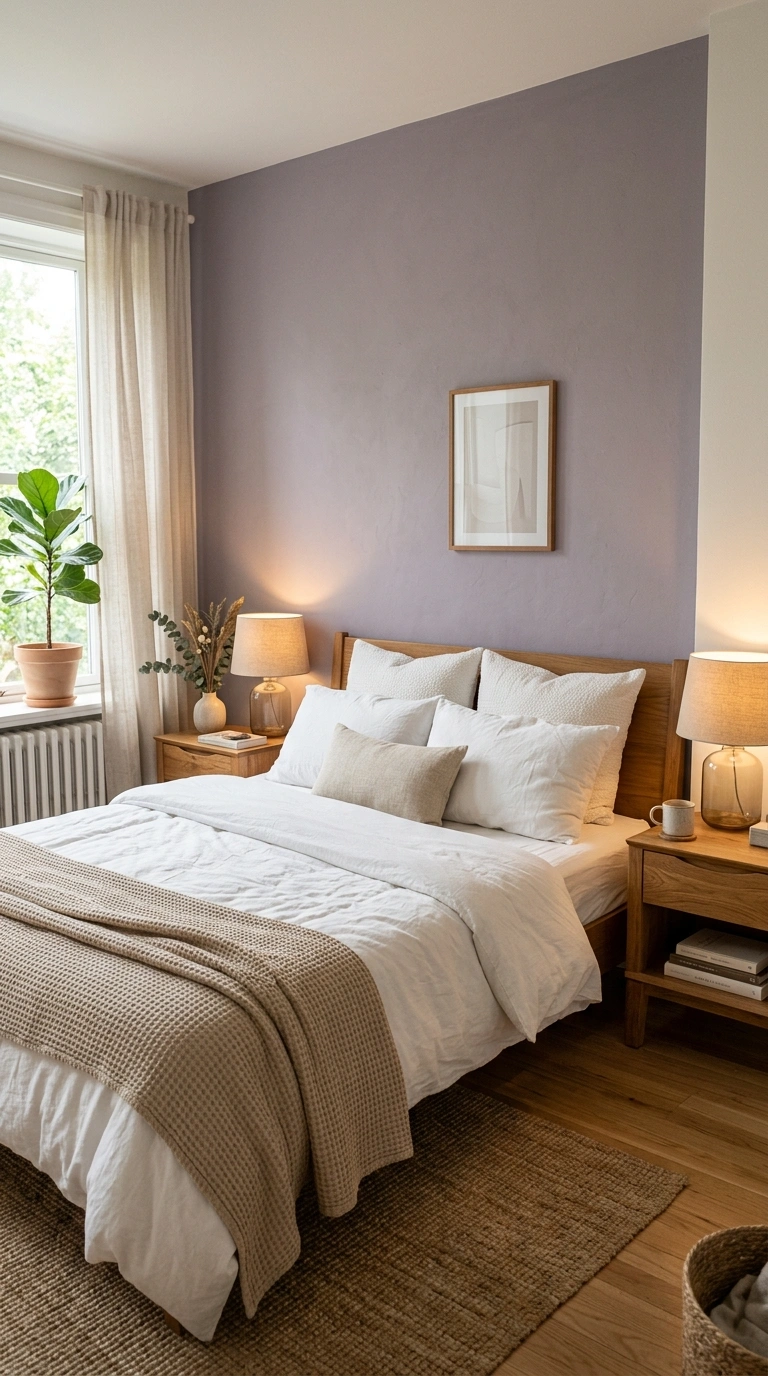
A single lavender wall, usually behind the bed, lets you try the color without committing your whole room to it, but “lavender” covers a wide range, and the exact shade changes the entire mood.
| Shade Family | Mood It Creates |
| Pale, milky lavender (high white content) | Soft, airy, can read nursery-like if overdone |
| Dusty, muted lavender (grayed-down) | Sophisticated, calm, works well in adult bedrooms |
| Deep, saturated lavender | Moody, dramatic, needs strong contrast to avoid feeling heavy |
For a genuinely cozy adult bedroom, dusty or muted lavender tones almost always outperform pale, sweet ones. Test your chosen shade at night under lamp light, since lavender can shift noticeably cooler once daylight fades.
2. Lavender and Warm Gray Palette
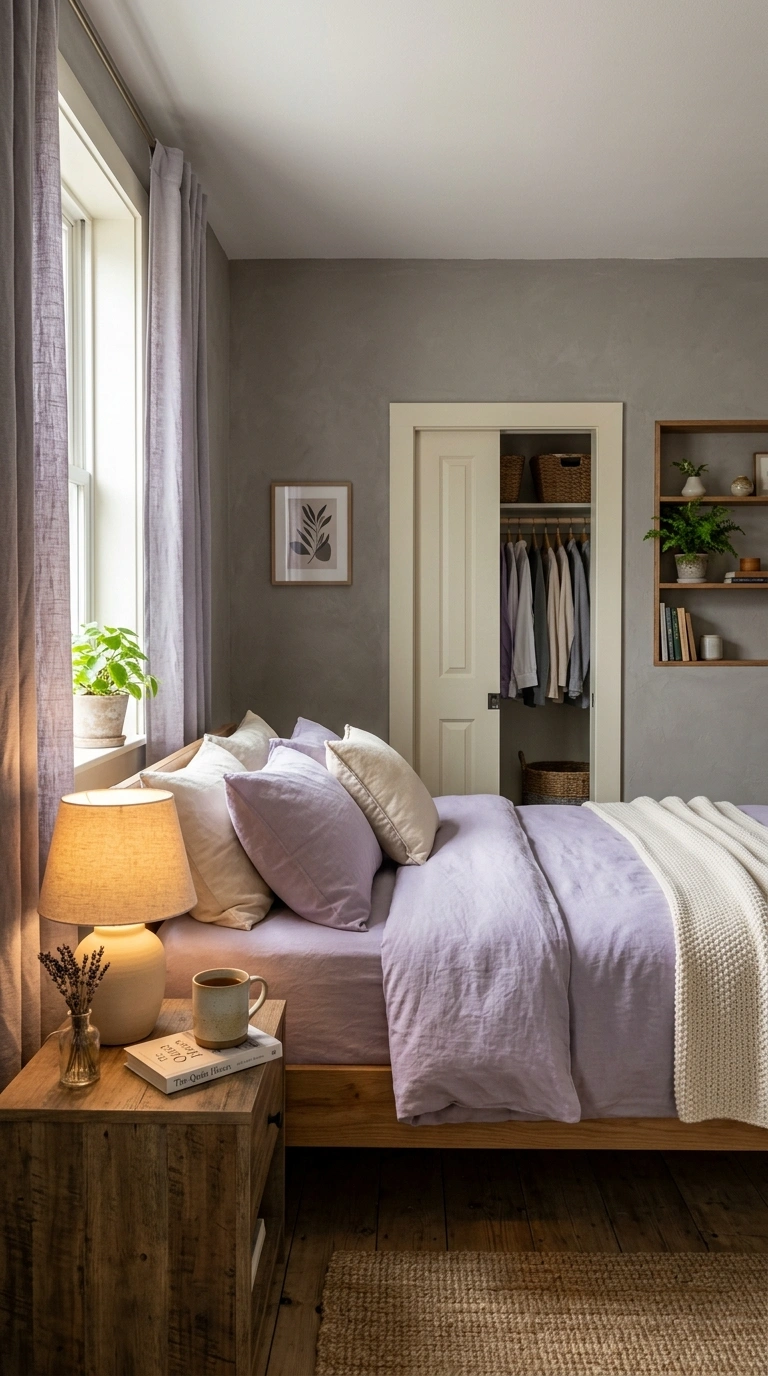
Pairing lavender with warm gray, rather than cool gray, keeps the combination from feeling cold or clinical. The gray grounds the lavender, while the lavender keeps the gray from feeling flat.
A simple starting ratio:
- 60% warm gray (walls, large furniture)
- 30% lavender (bedding, one accent wall, or curtains)
- 10% a warm neutral like cream or soft wood tone (trim, frame accents)
Warm gray specifically means grays with a hint of beige or taupe undertone, not the cooler, blue-leaning grays that can push the whole room toward feeling clinical instead of calm.
3. Lavender Velvet Headboard
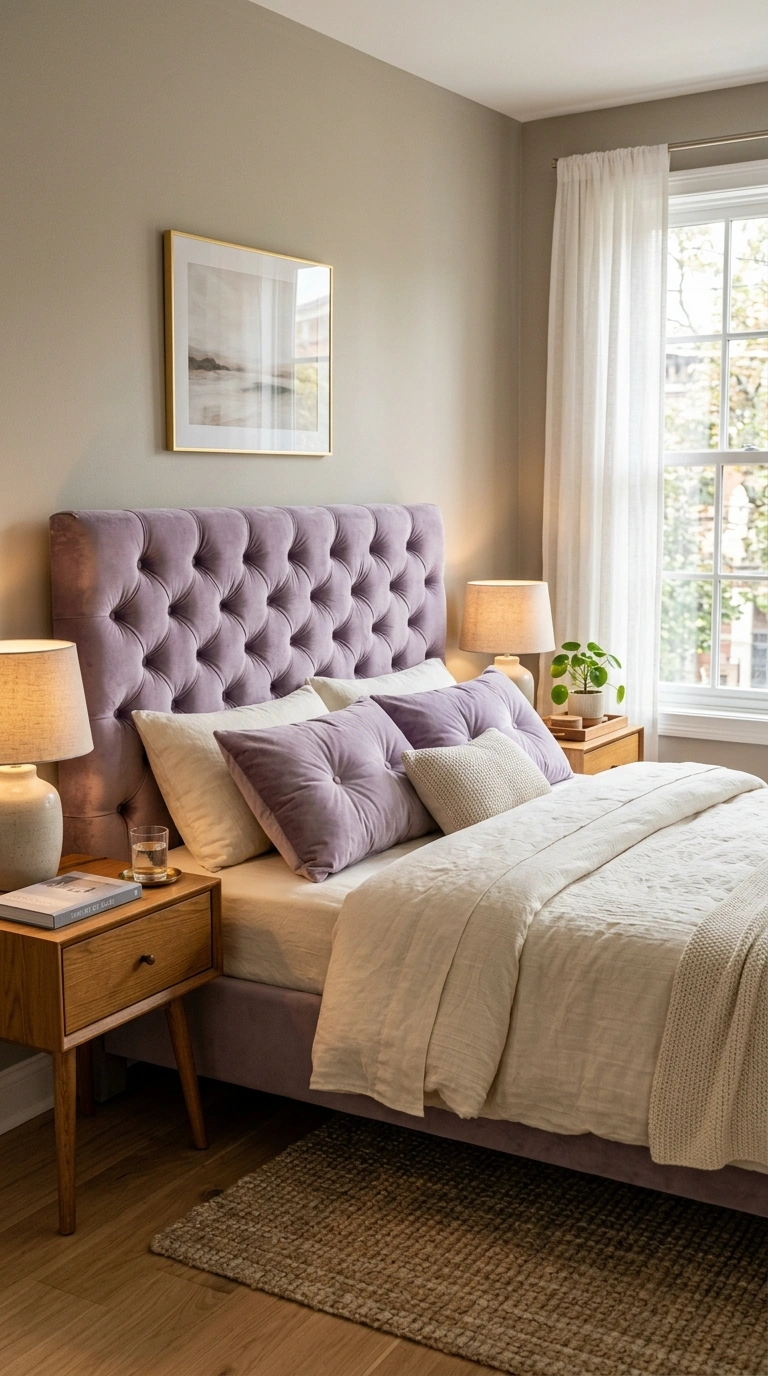
A lavender velvet headboard turns the color into the room’s focal furniture piece rather than a wall treatment, and velvet’s texture makes the color feel richer than the same shade in flat paint.
| Tier | What You Get | Approx. Cost |
| Budget | Headboard slipcover in lavender velvet-look fabric | $60-$150 |
| Mid-Range | Upholstered headboard, standard velvet | $250-$500 |
| Investment | Custom tufted or channel-stitched velvet headboard | $600-$1,500+ |
The slipcover option lets you try a lavender headboard without committing to new furniture, and it’s easily swapped out later if your taste changes.
4. Dried Lavender Bouquets
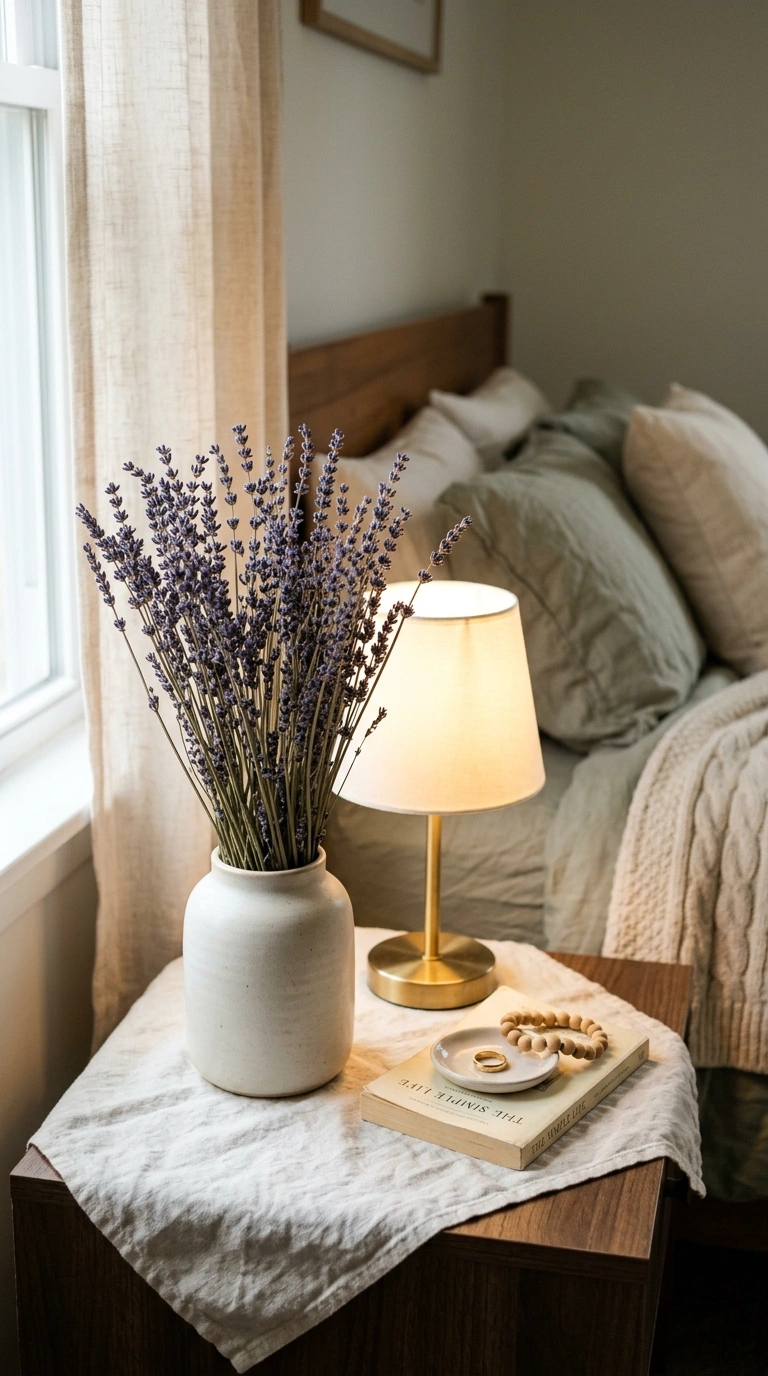
Real dried lavender bouquets bring genuine texture, subtle color variation, and a light natural scent that no paint or fabric can replicate. This is one of the lowest-cost ways to bring the trend into a room.
How to Style dried lavender well:
- Source bundles from a florist, farmers market, or online in bulk for the best price per stem.
- Trim stems to varying lengths before arranging, so the bouquet doesn’t look uniformly flat.
- Display in a simple ceramic or glass vase, on a nightstand or dresser, not scattered across multiple surfaces.
Replace bundles every 6-12 months, since dried lavender loses both color vibrancy and scent over time.
Cost range: $8-$25 for a generous bundle, depending on source and quantity.
5. Lavender and Cream Bedding Layers
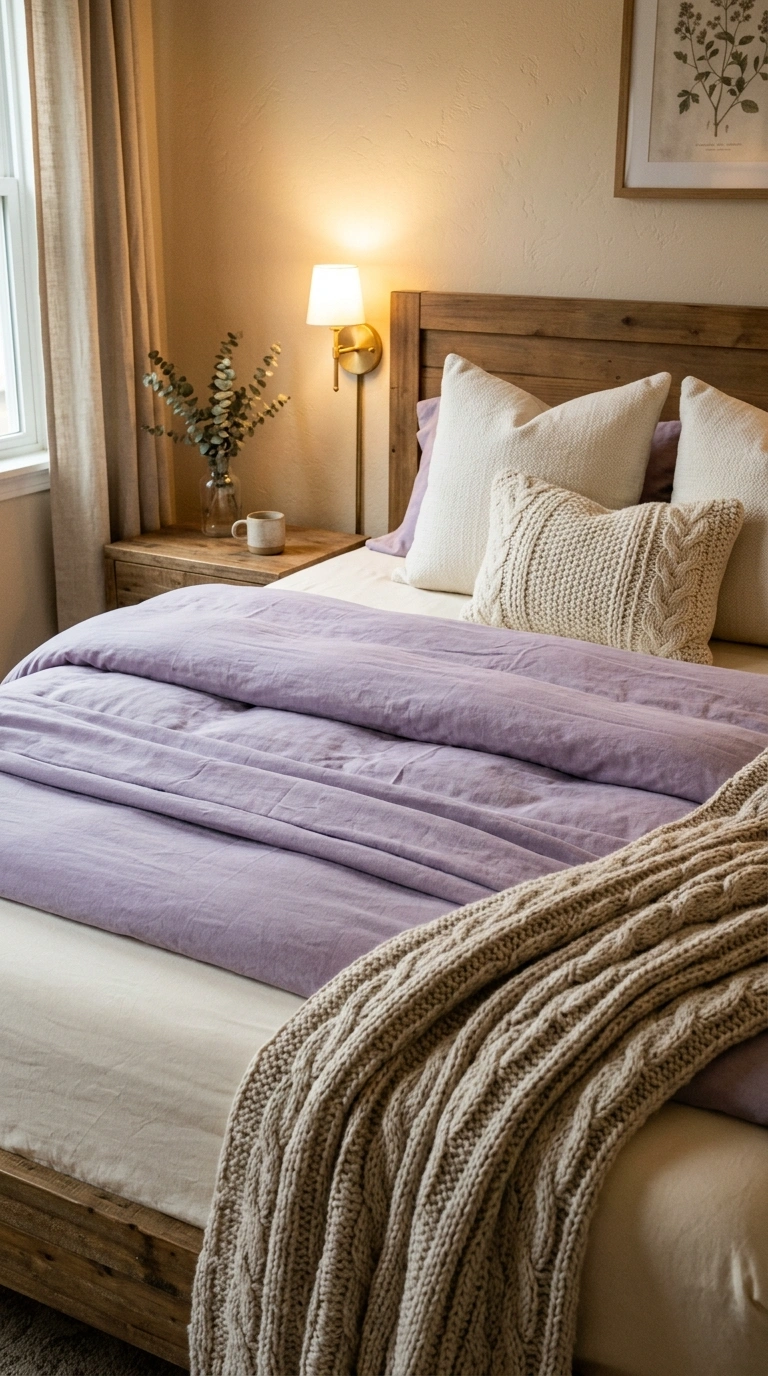
Layering lavender bedding with cream and white tones keeps the color soft and restful rather than overwhelming, especially important since bedding sits closest to your body and eyes each night.
A simple layering formula:
- Cream or white fitted sheet as the base layer
- Lavender duvet cover or quilt as the middle layer
- One or two cream or ivory throw pillows to break up the lavender
- A single textured accent, like a knit throw blanket, in a third neutral tone
Keeping the lavender to one layer, rather than lavender sheets AND a lavender duvet AND lavender pillows, prevents the bed from feeling flat or overly matched.
6. Lavender Ombre Wall
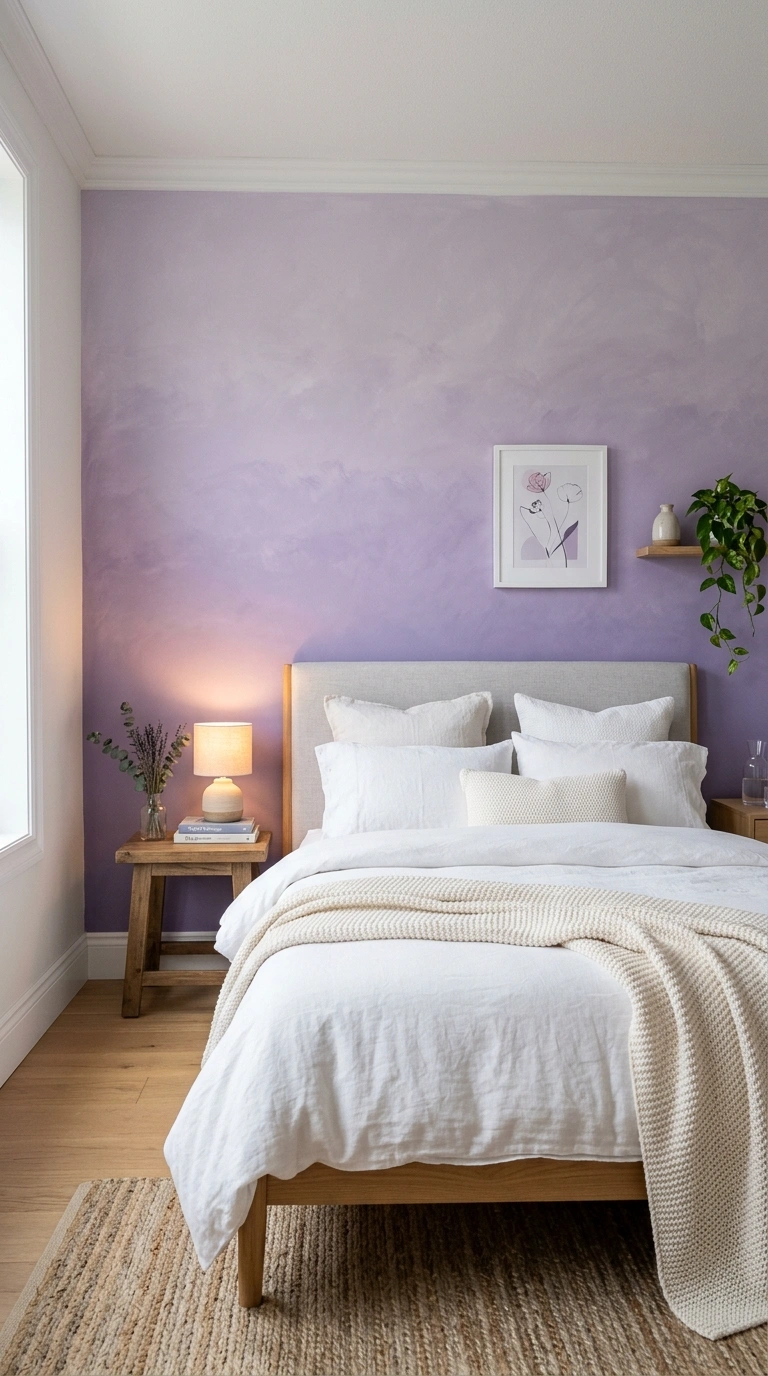
An ombre wall, fading from deep lavender near the floor to pale lavender or white near the ceiling, creates a soft, dreamy gradient that a flat single-color wall can’t achieve.
Basic technique steps:
- Choose three shades of the same lavender family: darkest, medium, and lightest (or white).
- Divide the wall into three horizontal sections and paint each base color first.
- While paint is still wet, blend the transition zones with a dry brush or sponge in overlapping, feathered strokes.
- Work quickly in manageable sections, since blending only works while the paint is still workable.
This technique takes longer than a standard paint job and rewards patience over speed, so budget a full weekend rather than a single afternoon.
7. Lavender Linen Curtains
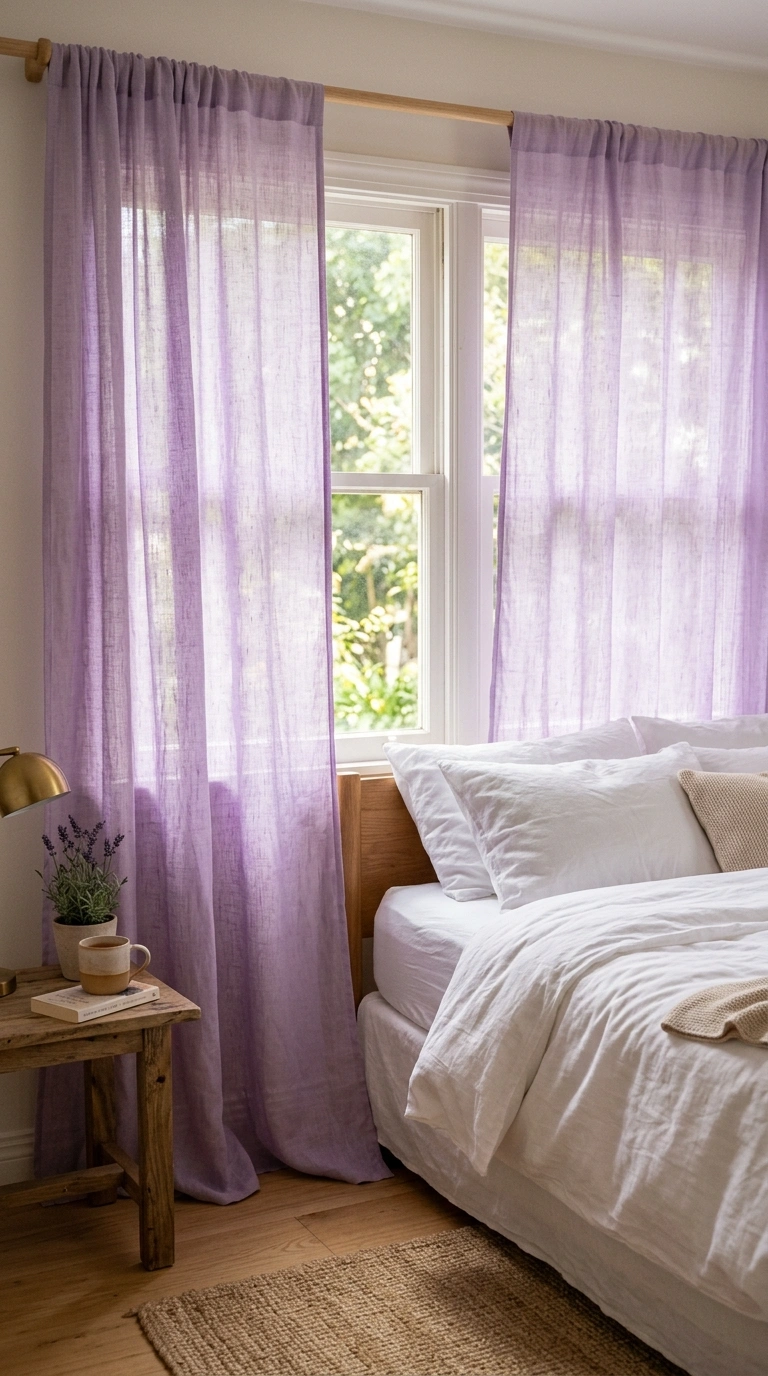
Sheer or semi-sheer lavender linen curtains filter daylight with a soft violet tint, adding color to the room without needing a full paint job or new furniture.
Cost range: $40-$120 per panel, depending on fabric weight and curtain length.
A quick care note: linen wrinkles more visibly than synthetic curtain fabrics and can fade faster in direct, intense sunlight. In south- or west-facing windows with strong afternoon sun, consider a linen-blend fabric, which holds color better over time than 100% natural linen.
8. Lavender and Sage Green Combo
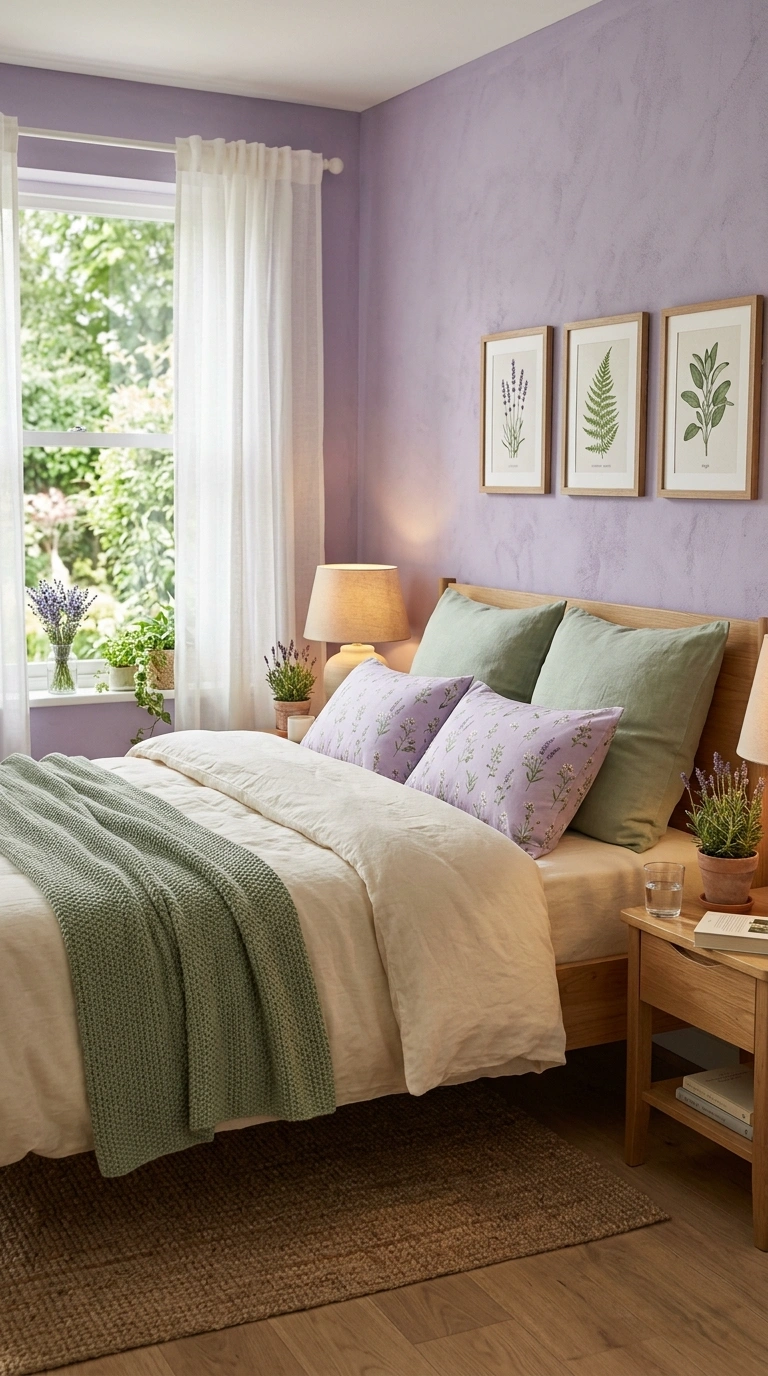
Lavender and sage green both read as muted, nature-inspired tones, and together they create a calming palette without leaning too sweet or too cold.Works well if: you want a garden-inspired, botanical feel without literal floral patterns — the color pairing alone does that work.
Consider a different combo if: you already have warm wood tones dominating the room, since sage and lavender both lean cool and can feel slightly at odds with warm honey or walnut furniture without a bridging neutral like cream or warm white.
Use lavender as the dominant tone (walls or bedding) and sage as the smaller accent (one pillow, a throw, or a single piece of art) for the most balanced result.
9. Lavender Accent Pillows on a Neutral Bed
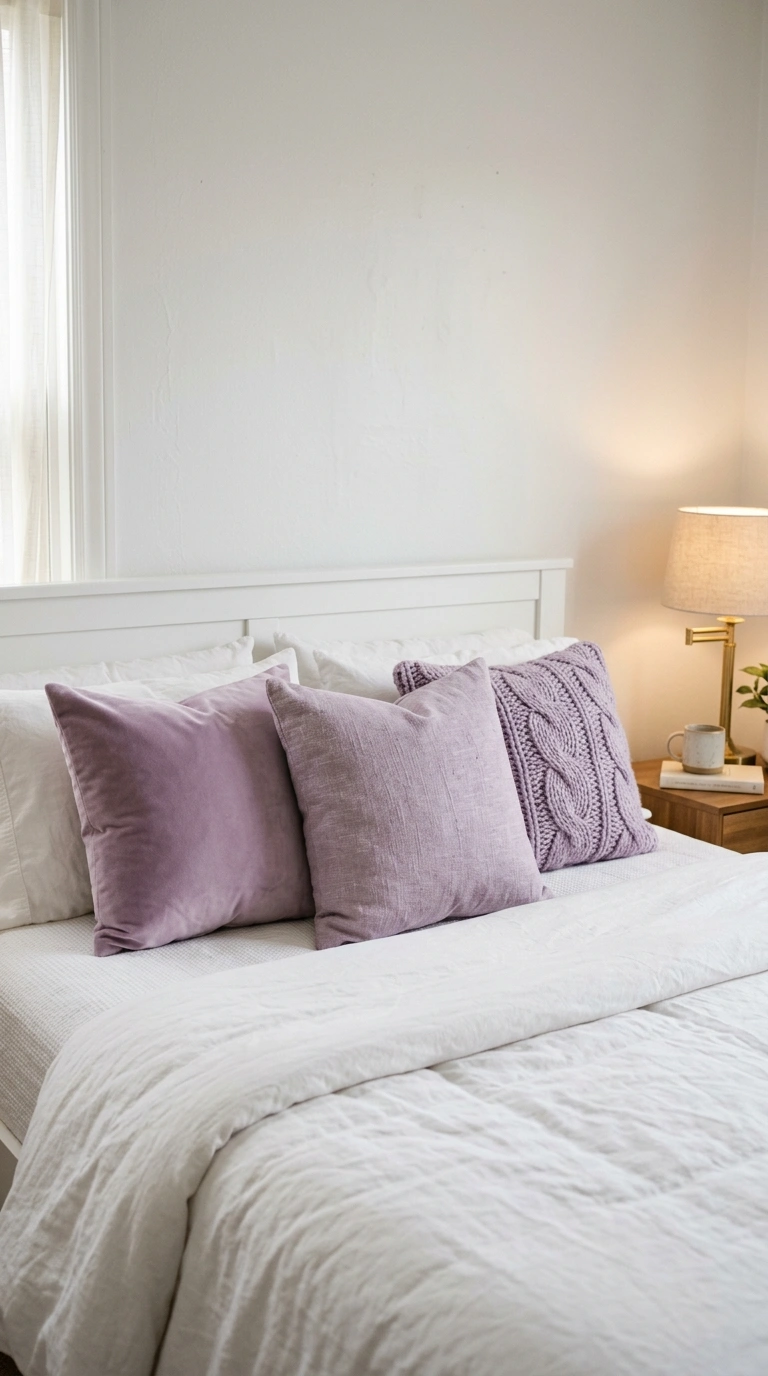
If you’re not ready to commit to paint, furniture, or curtains, lavender throw pillows on an otherwise neutral bed is the lowest-risk way to test the color.
Your starter checklist:
- ☐ 2-3 lavender pillows in varying textures (velvet, linen, knit) rather than matching identical pillows
- ☐ A neutral base bedding (white, cream, or warm gray) so the pillows read as an intentional accent
- ☐ One pillow in a complementary tone (sage, warm gray, or cream) to keep the grouping from feeling one-note
Cost range: $15-$40 per pillow, making this a full room refresh for under $100 in most cases.
10. Lavender Painted Ceiling
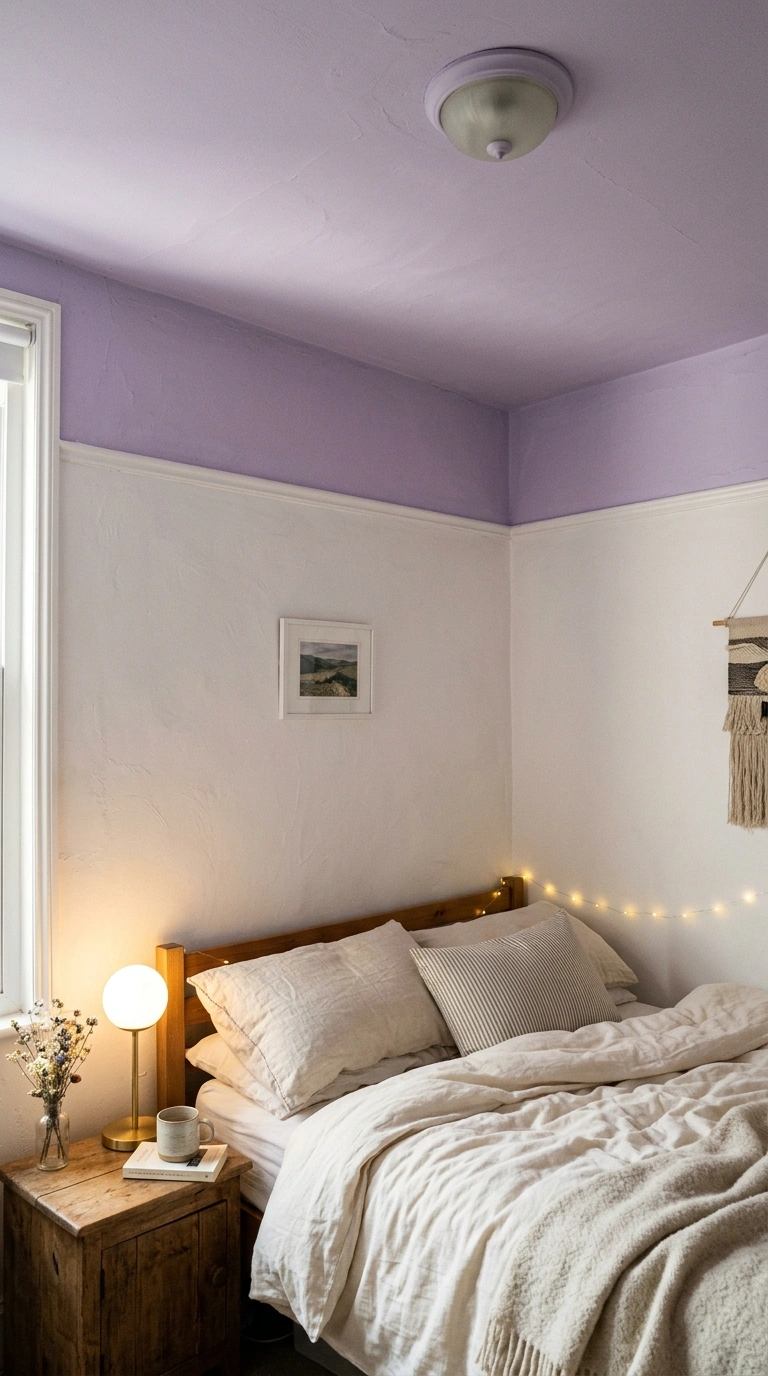
A lavender ceiling, paired with white or cream walls, adds color from an unexpected direction and can make a small bedroom feel enveloping rather than boxed in.
The most common mistake here is choosing a shade that’s too saturated for a ceiling, since color overhead reads more intensely than the same shade on a wall, due to how light bounces differently off a horizontal surface.
Fix it: choose a shade one or two levels lighter than you’d use on a wall, and always test a sample directly on the ceiling itself, not just on a wall swatch, before committing to a full can.
11. Lavender Botanical Wallpaper
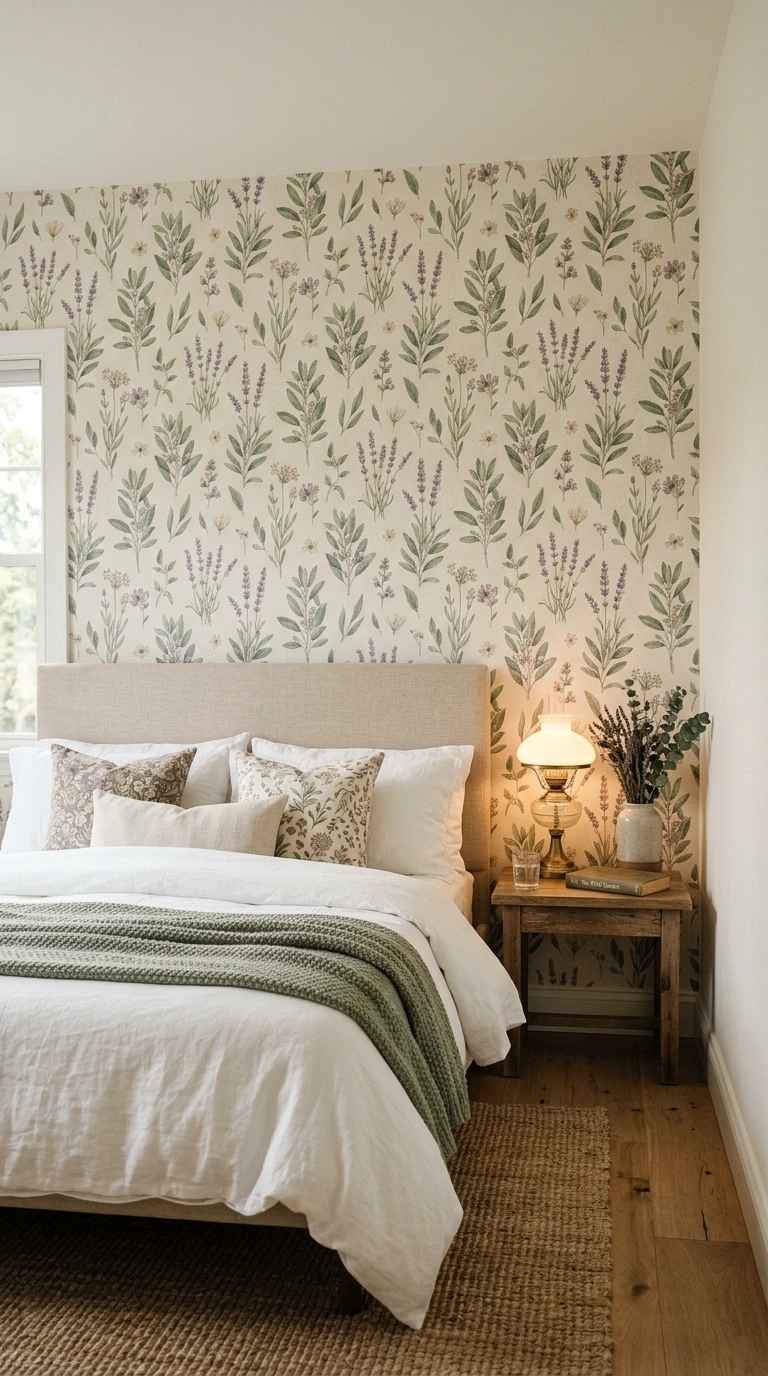
Botanical print wallpaper in lavender and sage or lavender and cream brings a softer, more organic pattern into the room than a solid painted wall.
| Room Size | Best Print Scale |
| Small bedroom (under 120 sq ft) | Large-scale print on one wall — reads as a feature, not clutter |
| Medium bedroom (120-200 sq ft) | Medium-scale print, full room or single wall |
| Large bedroom (200+ sq ft) | Either scale works — consider a plain accent wall to balance a busy pattern |
As with most patterned wallpaper, a single accent wall behind the bed almost always outperforms wrapping an entire small room in a bold botanical print.
12. Lavender and Gold Metallic Accents
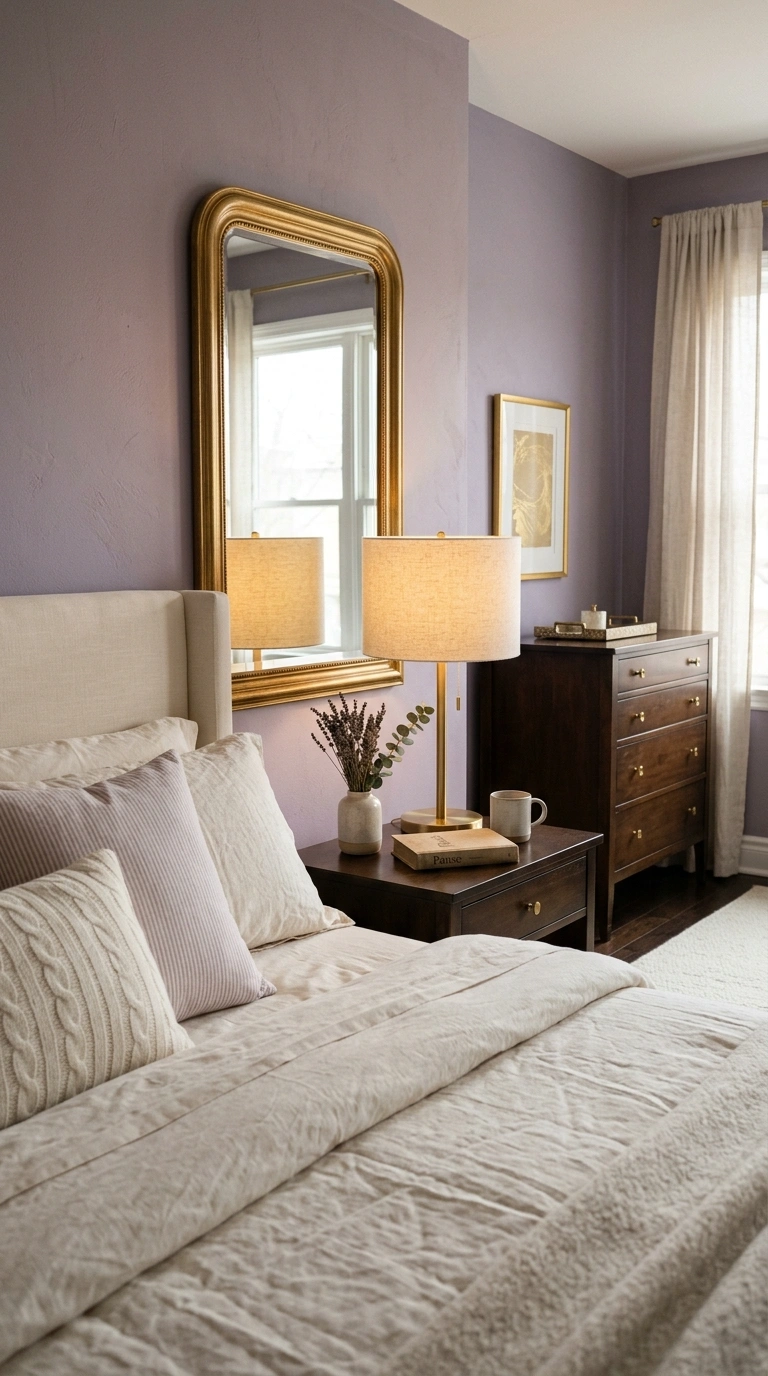
Gold or brass hardware and accents against lavender walls or bedding add warmth and a touch of elegance to a color that can otherwise lean cool.
The 60-30-10 approach for this pairing:
| Element | Percentage | Where to Use |
| Lavender | 60% | Walls, bedding, or curtains |
| Neutral (cream/white) | 30% | Remaining walls, base bedding layer |
| Gold or brass | 10% | Lamp bases, mirror frames, drawer pulls |
Keeping gold to accents and hardware, rather than large gold furniture pieces, keeps the room feeling elegant rather than overly ornate.
13. Lavender Reading Chair Nook
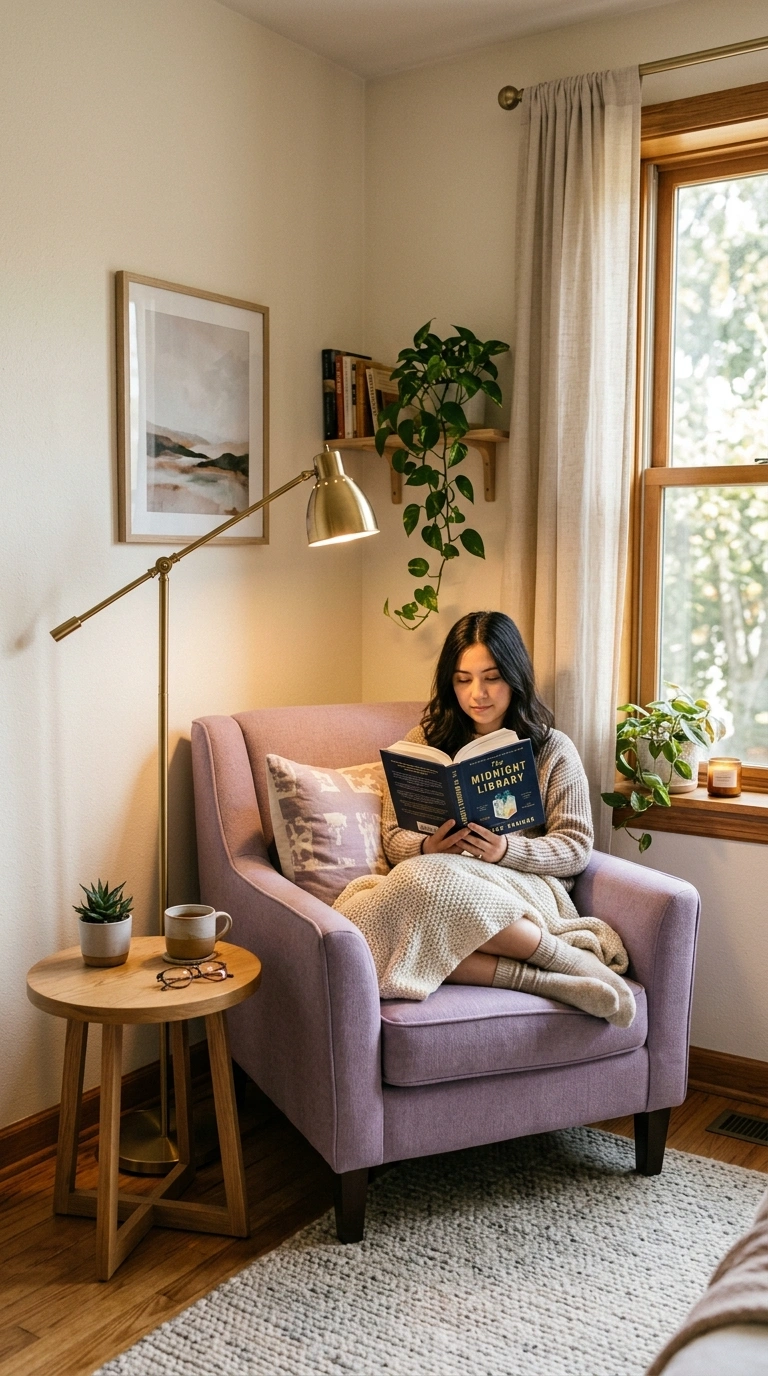
A small reading corner with a lavender upholstered chair turns unused bedroom space into a genuine relaxation spot, separate from the bed itself.
Measuring your space before you shop:
- Look for a clear floor area of at least 3×3 feet for the chair plus walking room around it.
- Check for a nearby outlet if you plan to add a reading lamp.
- Measure your chosen chair’s dimensions against the space, including arm width, before ordering.
- Leave at least 18 inches between the chair and any nearby furniture for Comfortable movement.
Cost range: $200-$600 for a quality upholstered accent chair in lavender fabric.
14. Lavender Tufted Bench
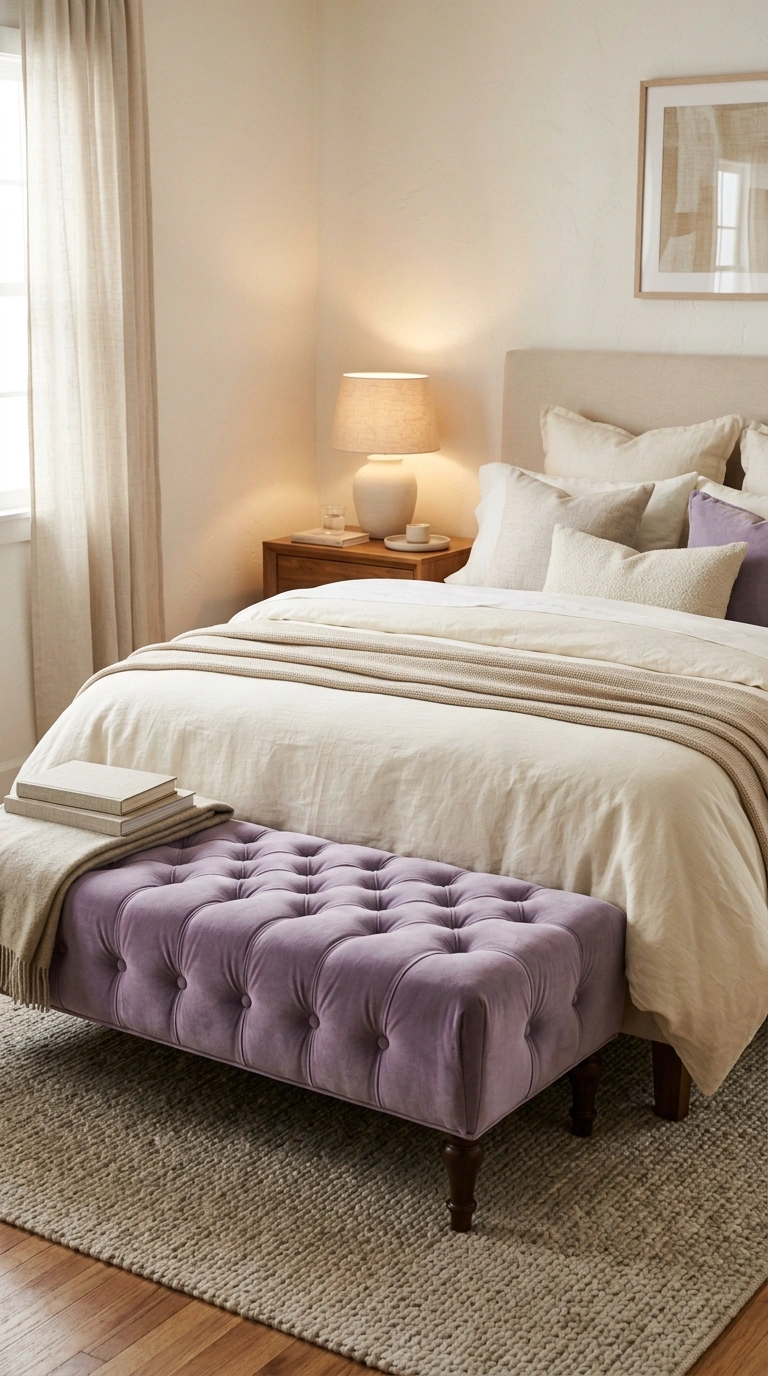
A tufted bench in lavender velvet or linen at the foot of the bed adds both function (a spot to sit while dressing) and a soft color accent low in the room’s visual field.
| Tier | What You Get | Approx. Cost |
| Budget | Small ottoman-style bench, basic upholstery | $80-$150 |
| Mid-Range | Tufted bench, standard velvet or linen | $180-$350 |
| Investment | Custom-sized tufted bench, premium fabric | $400-$800+ |
A bench at the foot of the bed also visually “grounds” a lavender color scheme, since it sits low and balances color used higher up on walls or headboards.
15. Lavender and White Striped Wall
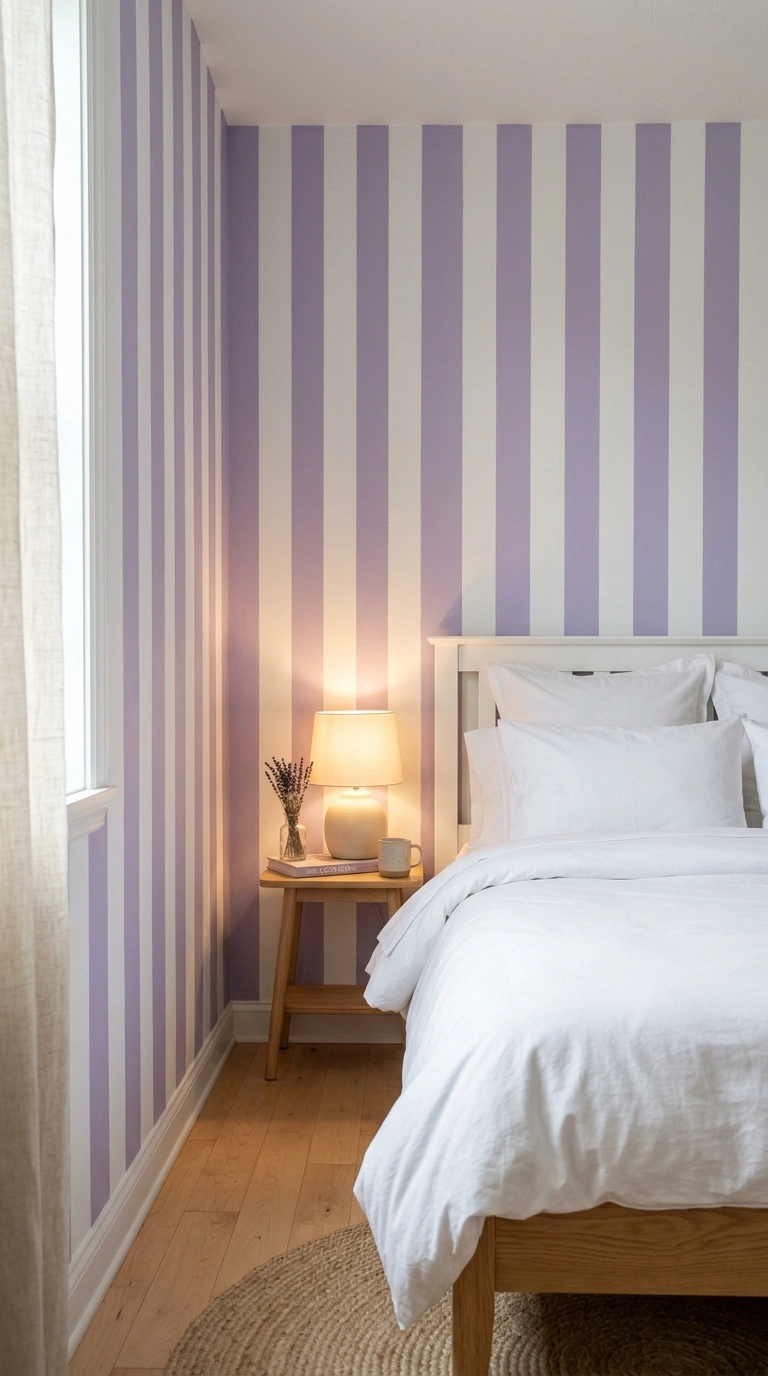
Soft lavender and white vertical stripes bring graphic interest without the intensity of a solid lavender wall, and the stripe width changes the room’s whole feel.
Do:
- Use thinner stripes (2-4 inches) for a classic, elegant look
- Use wider stripes (6-8 inches) for a more modern, bold statement
- Keep the rest of the room simple so the striped wall stays the focal point
Don’t:
- Pair striped walls with heavily patterned bedding or curtains
- Use stripes on more than one wall in a small bedroom
- Choose high-gloss paint for stripes, which can emphasize any uneven taping lines
16. Lavender Area Rug
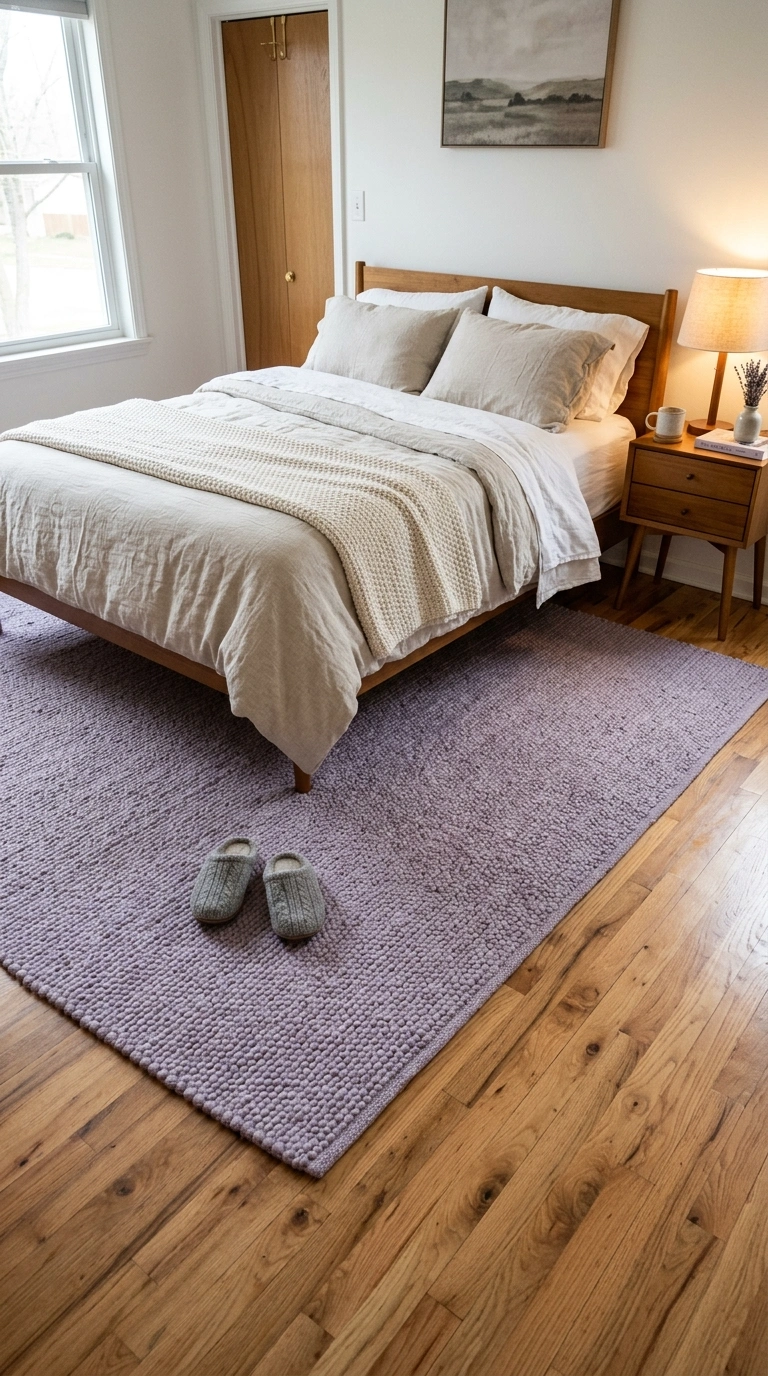
A lavender area rug adds color at floor level, which is often the easiest place to introduce a bold shade since it’s below eye line and doesn’t compete with wall art or bedding patterns.
Sizing guide relative to your bed:
| Bed Size | Recommended Rug Size |
| Twin/Full | Rug should extend at least 18-24 inches beyond the sides of the bed |
| Queen | 8×10 ft rug, centered under the bottom two-thirds of the bed |
| King | 9×12 ft rug, centered under the bottom two-thirds of the bed |
A rug that’s too small for the bed is one of the most common bedroom styling mistakes, and it makes an otherwise well-chosen lavender rug look like an afterthought rather than a deliberate choice.
17. Lavender Aromatherapy Styling
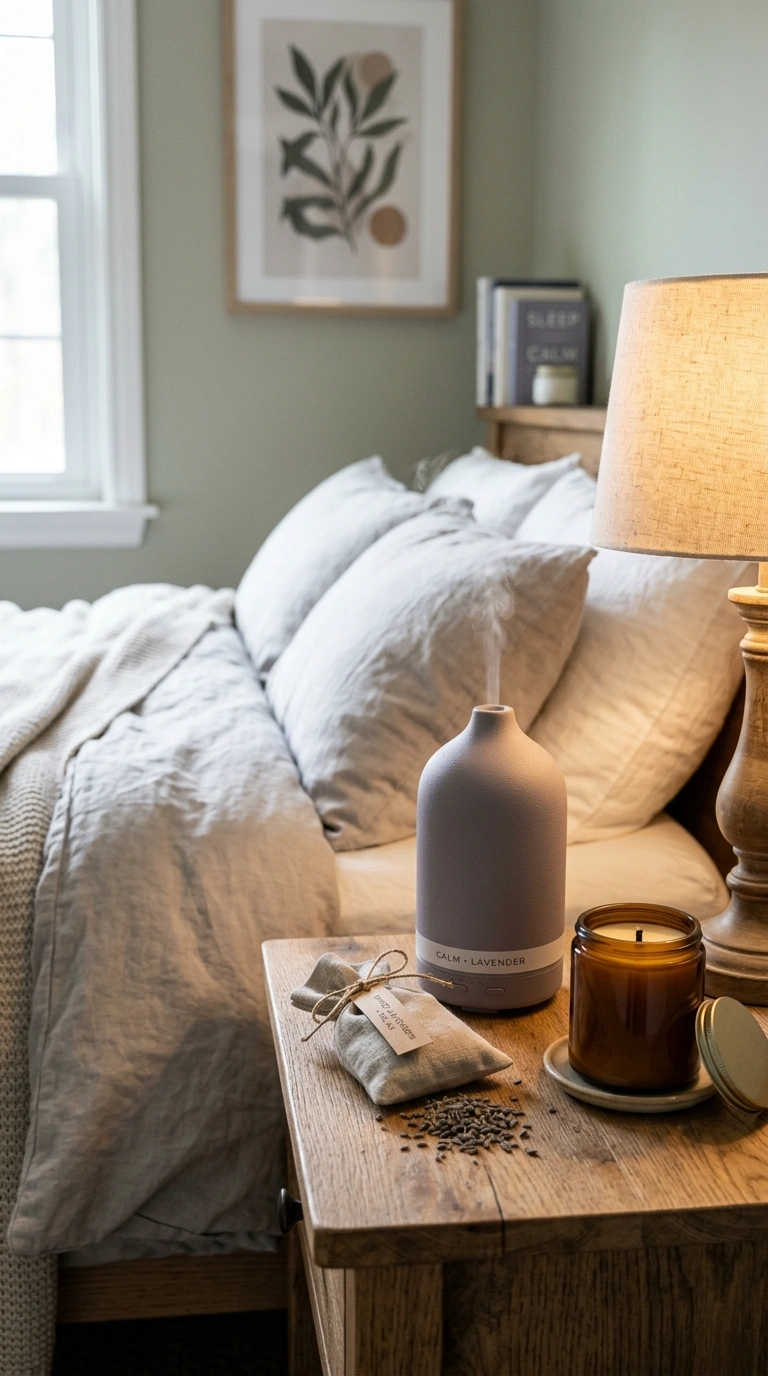
Since lavender is associated with calm and relaxation as a scent, not just a color, pairing the visual palette with actual lavender aromatherapy elements ties the whole sensory experience together.
Your styling checklist:
- ☐ A lavender essential oil diffuser on a dresser or nightstand
- ☐ Dried lavender sachets tucked into a linen closet or drawer
- ☐ An unscented or lavender-scented candle, kept well away from curtains or bedding
- ☐ A lavender-scented linen spray for pillows, used sparingly
A safety note: always keep any open flame, including candles, at least 12 inches from curtains, bedding, or dried lavender bouquets, and never leave a lit candle unattended in the bedroom.
18. Lavender Lampshade
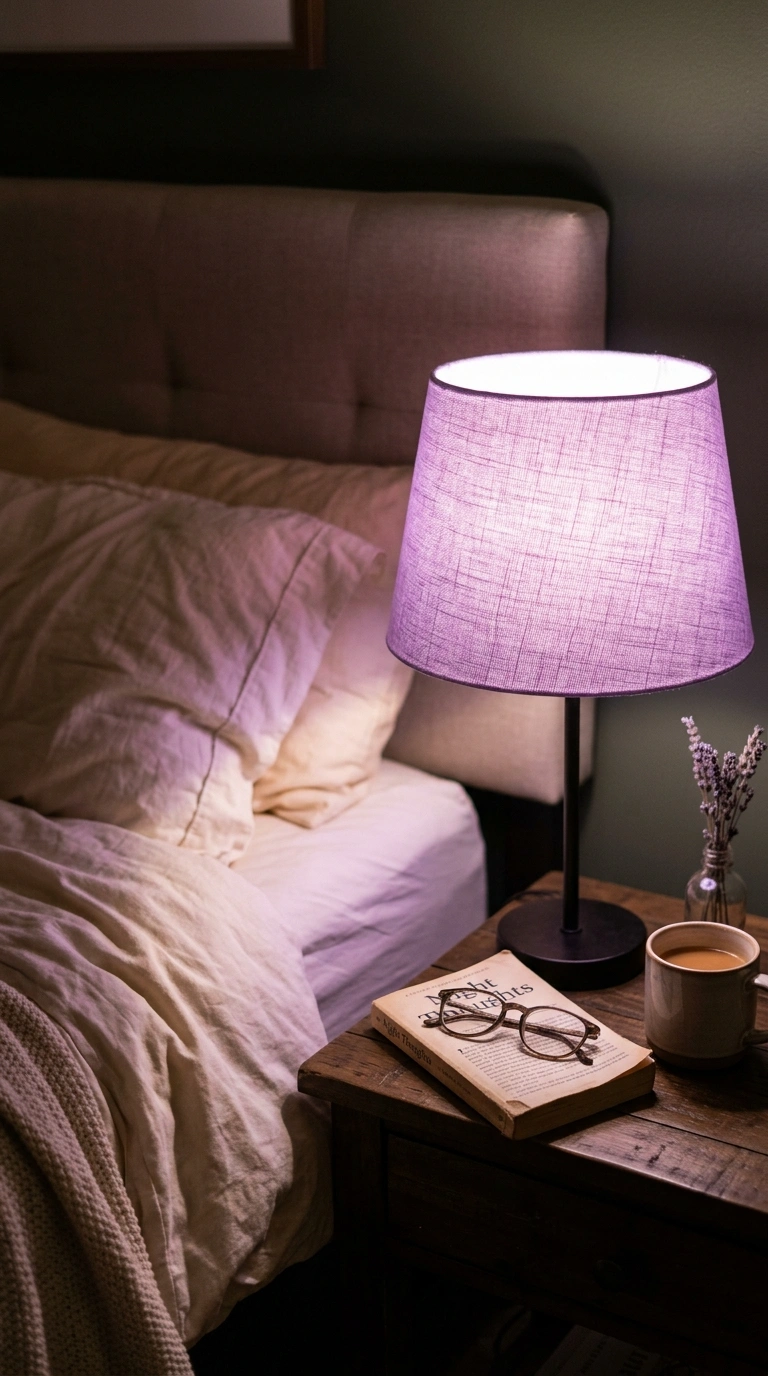
A lavender fabric lampshade tints the light itself, casting a soft violet glow across the room at night, which is a subtler way to bring in color than a wall or furniture piece.
Cost range: $20-$60 for a quality fabric shade, or $15-$30 to recover an existing lamp base with new lavender fabric. Pair it with a warm 2700K bulb rather than a cool white bulb; a cool bulb through a lavender shade can read oddly blue-toned rather than warm and cozy.
19. Lavender and Charcoal Contrast
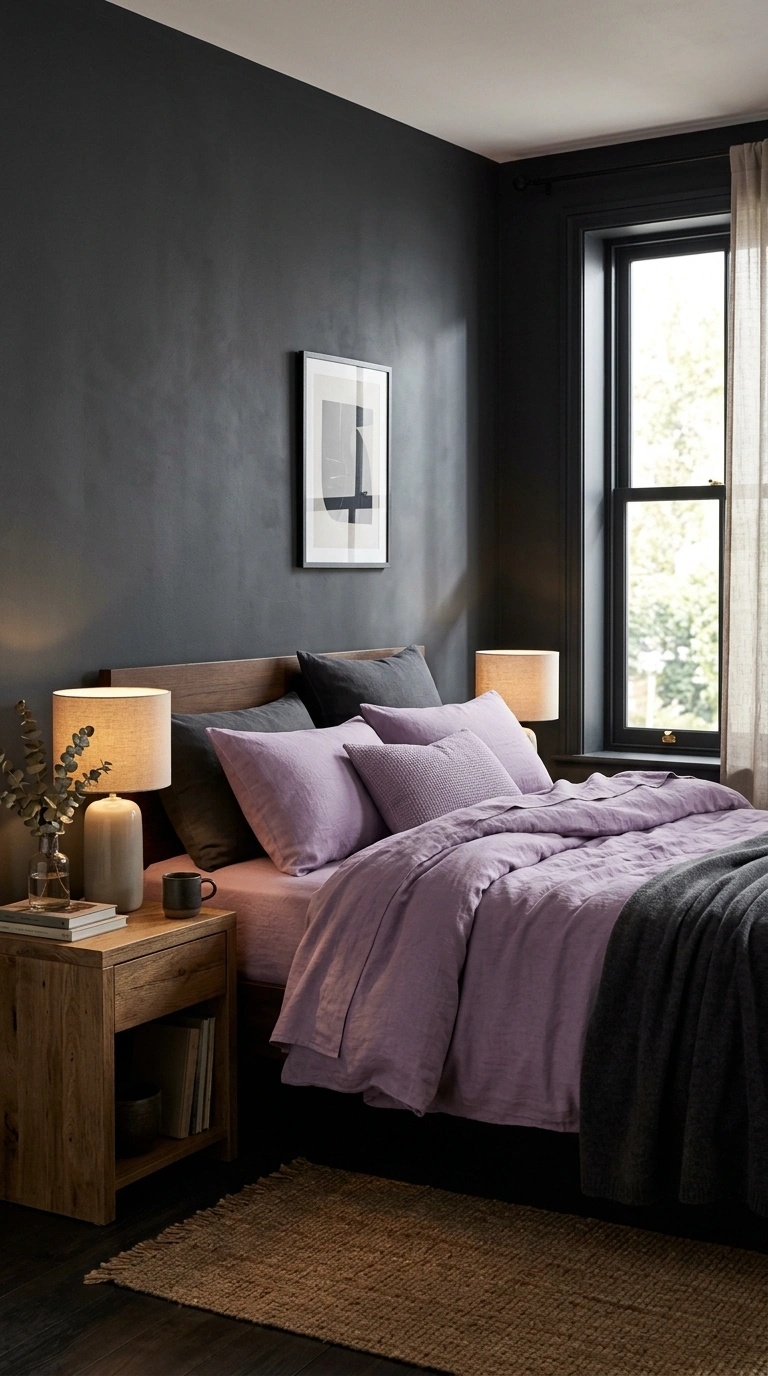
Pairing soft lavender with deep charcoal creates a bold, moody balance, but like other high-contrast pairings, it’s worth checking whether it fits your room before committing.
Works well if:
- Your bedroom gets good natural light to offset the darker charcoal tones
- You want one clearly dominant color (charcoal) with lavender as the accent, not a 50/50 split
- You already gravitate toward moodier, editorial-style rooms
Skip it if:
- Your bedroom is small and naturally dim
- You want an all-over soft, pastel feel rather than contrast and drama
If it’s a yes, keep charcoal on the larger surfaces (an accent wall or bedding) and lavender on smaller accents (pillows, a lamp, or art) for the most balanced result.
20. Lavender Floral Ceiling
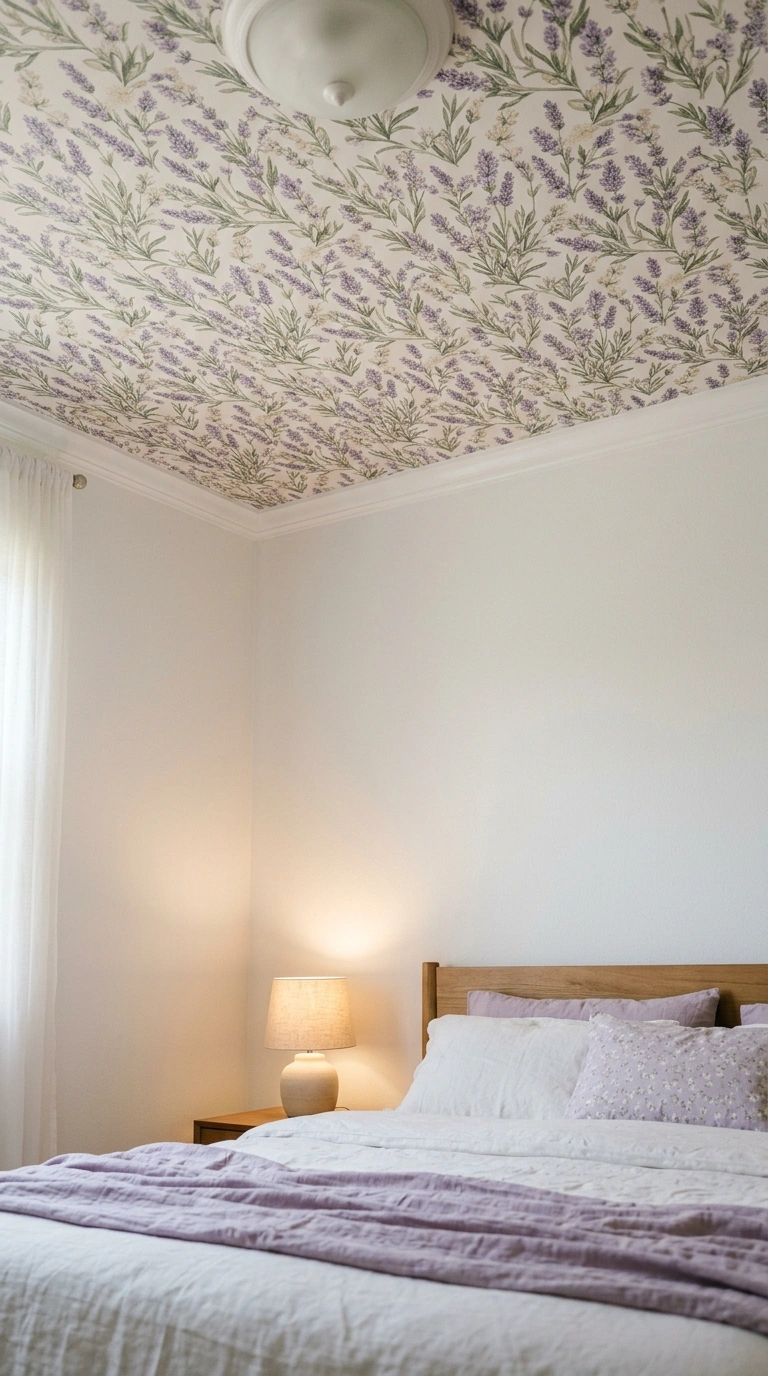
Wallpapering the ceiling in a lavender floral print, rather than the walls, turns the “fifth wall” into the room’s main statement, while keeping wall space free for furniture and art.
Where this makes the most sense:
| Room Type | Recommendation |
| Small bedroom with plain walls | Ideal — the ceiling becomes the sole pattern focus |
| Bedroom with an already-patterned wall | Skip — too many competing patterns |
| Bedroom with low ceilings (under 8 ft) | Use a lighter-background floral to avoid a closed-in feeling |
Cost impact: ceiling wallpaper typically adds 15-20% to installation cost over the same wallpaper on a wall, due to the more difficult overhead application.
21. Lavender Macrame Wall Hanging
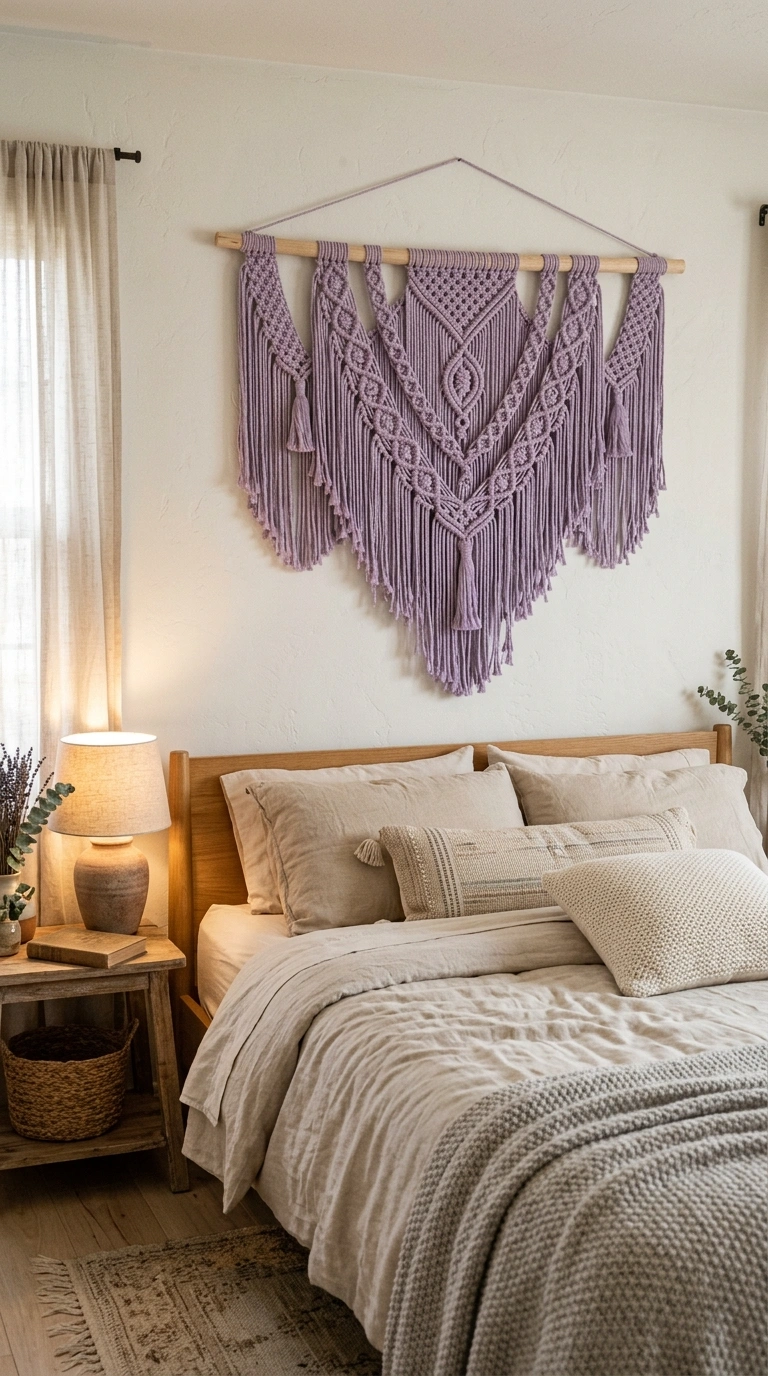
A macrame wall hanging with lavender-dyed cotton cord adds bohemian texture above the bed or in a reading corner, without needing paint or new furniture at all.
| Option | Pros | Cons |
| Buy pre-made | Fast, consistent quality, wide style range | Higher cost for larger pieces |
| DIY macrame | Cheaper, fully customizable size and pattern | Time investment, learning curve for beginners |
If you’ve never tried macrame before, a small starter piece (12-18 inches) is a reasonable weekend project, while a large statement piece over a headboard is better left to a purchased option unless you’re already experienced.Cost range: $15-$40 for DIY materials, or $40-$150 for a pre-made piece, depending on size.
22. Lavender Vanity or Dressing Nook
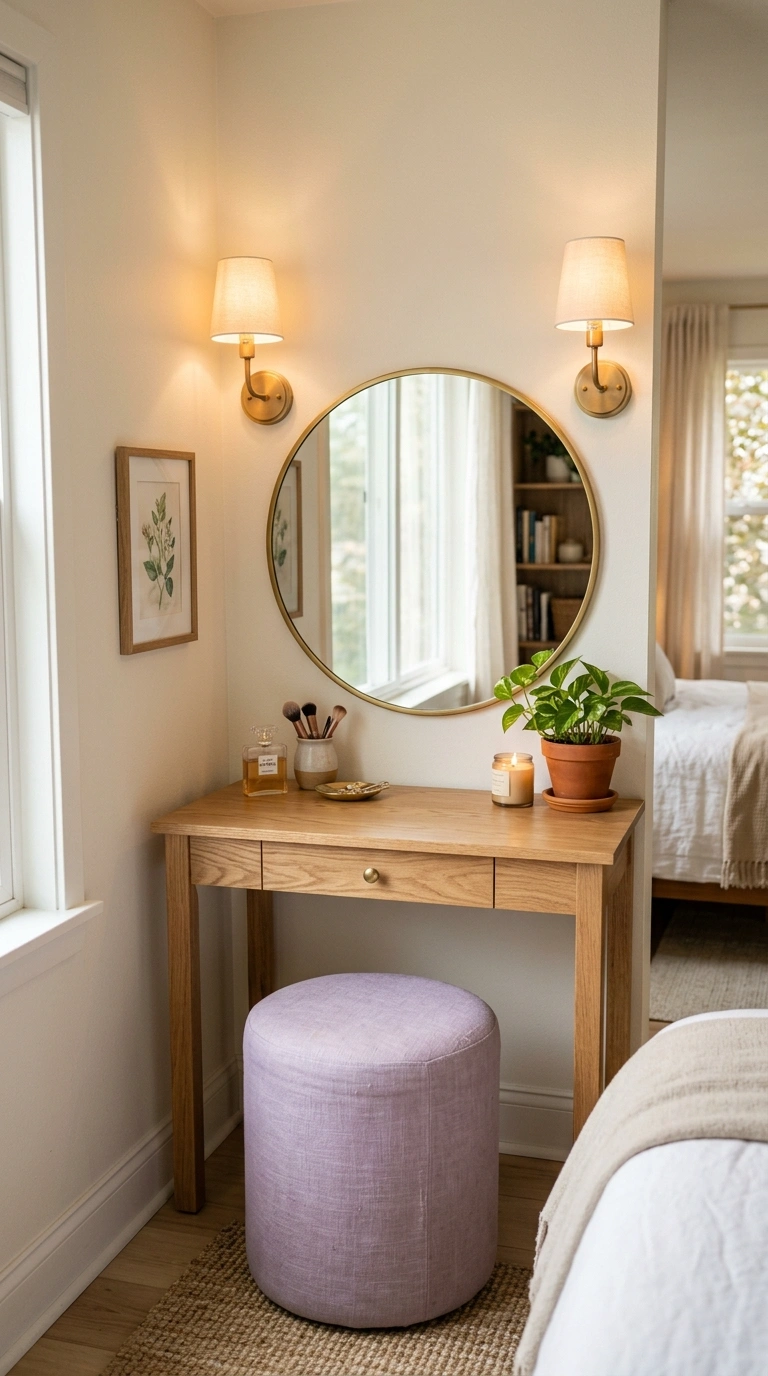
A small vanity area with a lavender-upholstered stool or chair creates a dedicated corner for getting ready, tying the room’s color scheme into a functional daily space.
Essentials checklist:
- ☐ A compact vanity table or repurposed desk, sized to your available wall space
- ☐ A lavender-upholstered stool or chair for the seat
- ☐ A mirror with warm-toned lighting on either side, not just overhead
- ☐ A small tray or dish for jewelry and daily accessories
Cost range: $150-$500 for a complete nook using a mix of new and secondhand pieces.
23. Lavender and Terracotta Contrast
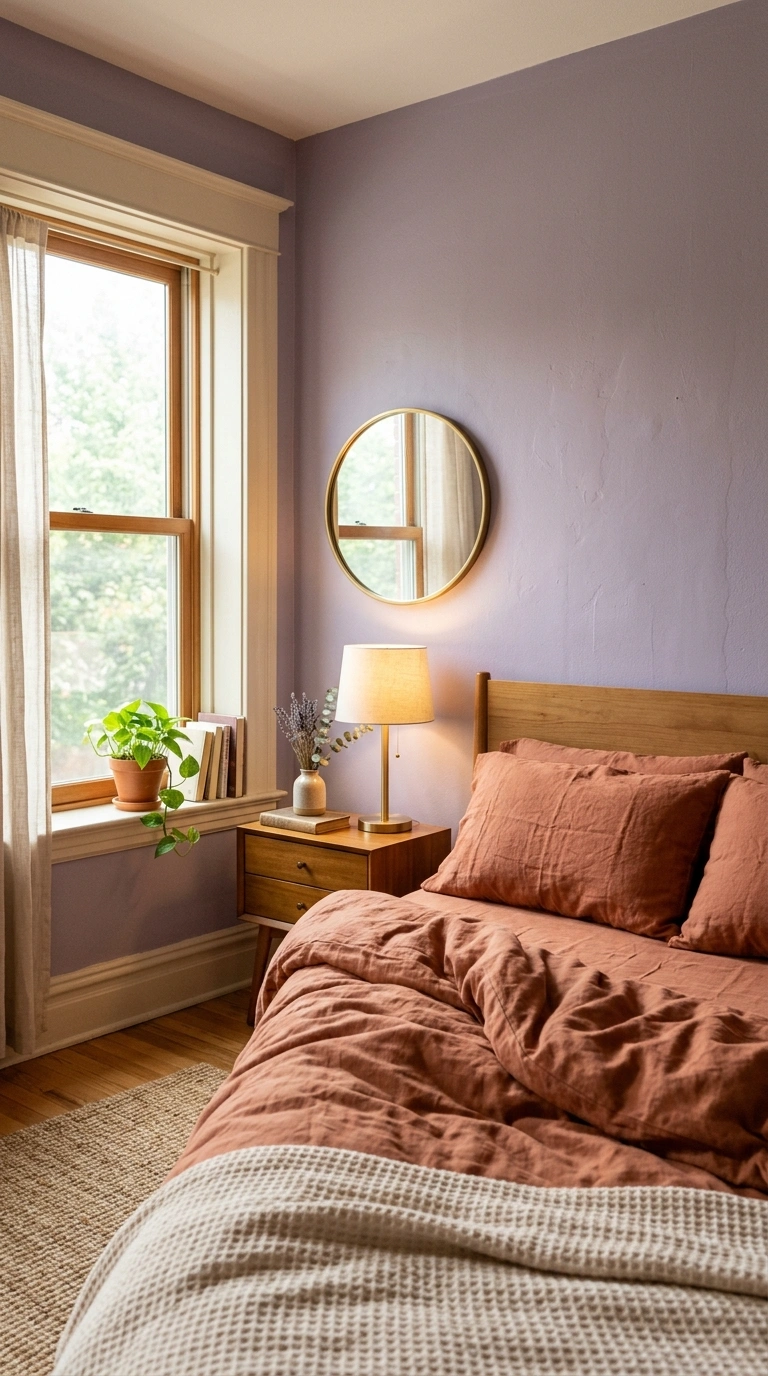
Pairing cool lavender with warm terracotta creates an unexpected but genuinely calming contrast, since the warmth of terracotta keeps lavender from feeling too cold or pastel on its own.
A simple starting palette:
| Element | Color |
| Walls | Soft, dusty lavender |
| Bedding or curtains | Warm terracotta accent |
| Small accessories | Cream or warm white |
| Metal accents | Brushed brass or warm gold |
This pairing works especially well for readers who love the lavender color family but worry it will feel too soft or “pretty” on its own — the terracotta grounds it immediately.
Pick one or two lavender ideas that match your room’s light and your comfort with color, and use the shade guide or ratio in that section before you buy paint or fabric. Lavender is genuinely one of the most calming bedroom colors, but only when the specific shade and its pairing are chosen with some intention, not picked at random from a paint chip wall.
Save your favorite lavender bedroom ideas to Pinterest so you have them ready when you’re ready to shop.
FAQs
Q1: What shade of lavender works best for a bedroom? A1: Dusty or muted lavender tones, rather than pale or highly saturated shades, tend to work best in a lavender bedroom because they read as calm and sophisticated rather than overly sweet or heavy.
Q2: What colors pair well with lavender in a bedroom? A2: Warm gray, sage green, terracotta, and gold or brass accents all pair well, since they balance lavender’s cool undertone and prevent the room from feeling cold, which is a common concern with lavender bedroom decor.
Q3: Is lavender a good color for a small bedroom? A3: Yes, especially in lighter or dusty shades, and especially when used on just one wall or the ceiling rather than the whole room, since an all-over saturated lavender can make a small space feel more closed in.
Q4: How do I try a lavender bedroom without repainting? A4: Start with lavender throw pillows, a lampshade, or a dried lavender bouquet, all of which cost under $50 total and let you live with the color before committing to paint or new furniture.
Q5: Does lavender work in a masculine or gender-neutral bedroom? A5: Yes, particularly when paired with charcoal, warm gray, or terracotta rather than cream and gold, which lean the palette toward calming bedroom colors with a more grounded, less overtly feminine feel.