Key Takeaways
- Warm 2700K bulbs are the cheapest, fastest change and soften every color in the bedroom instantly.
- Mounting curtains four to six inches below the ceiling makes windows and walls look dramatically taller.
- Layered bedding works with three textures and three colors, never more, for a styled but calm bed.
- An eight-by-ten rug placed two-thirds under a queen bed anchors the whole room properly.
- Free changes like clearing nightstands, hiding cords, and rearranging pillows deliver visible results in under an hour.
- One oversized art piece or a leaning floor mirror adds more calm than a busy gallery wall.
- Sheers layered behind blackout curtains give you glowing daytime privacy and true nighttime darkness.
Your bedroom can feel brand new without buying a single piece of large furniture. The rooms you save on Pinterest usually win on details, not budgets, and those details are easy to copy. These 19 small bedroom changes cover lighting, bedding, walls, and storage, and most take under an hour to finish. Each idea includes the exact colors, textures, and placement tips that make it work in real homes, not just in photos. Some cost nothing, like rearranging your pillows or clearing your nightstand, while others stay under fifty dollars. Work through the list one weekend at a time and watch your bedroom makeover happen in small, satisfying steps. By the end, the room will look styled, feel calmer, and finally match the version you picture in your head.
1. Swap Your Bulbs for Warm 2700K Light
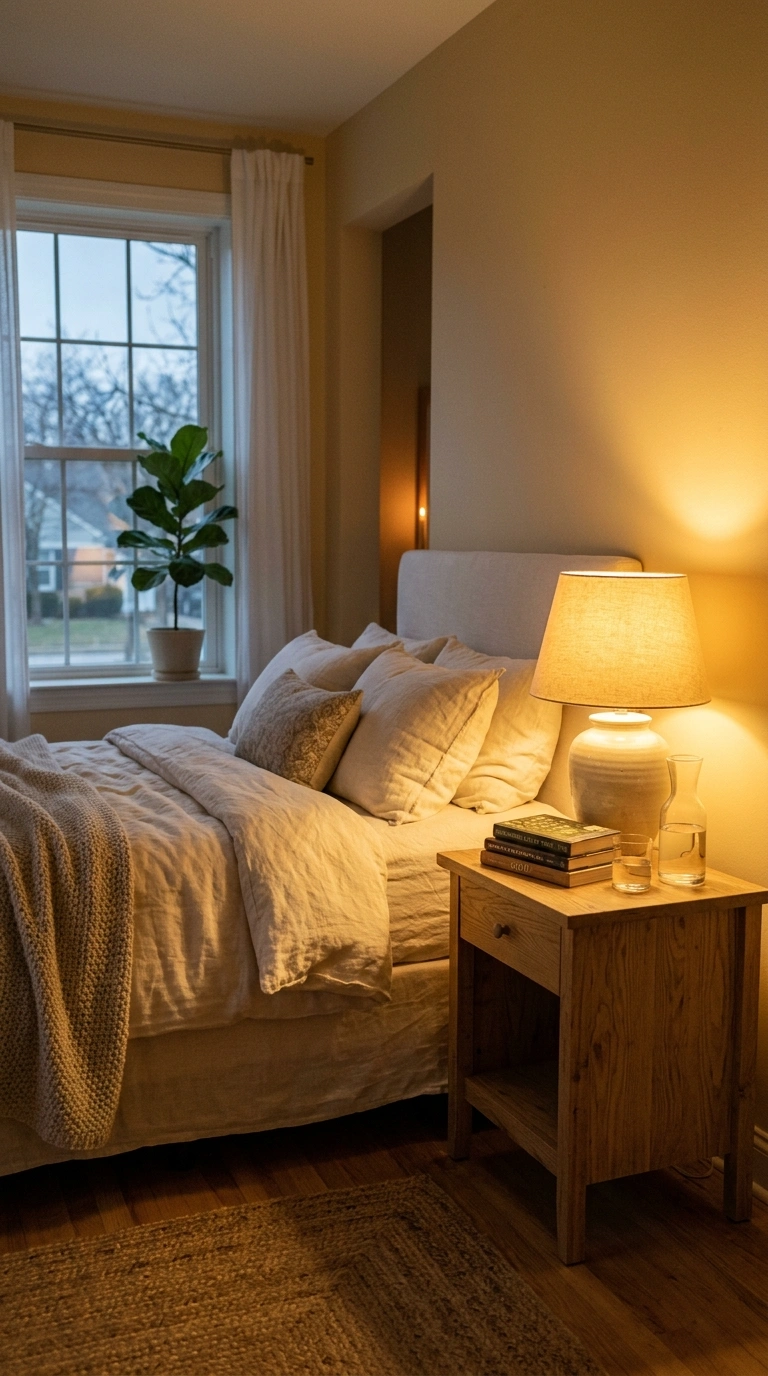
Changing your light bulbs is the fastest bedroom upgrade that exists, and it costs less than a coffee run. Most bedrooms suffer under cool white bulbs that make skin look gray and walls look flat. Replace every bulb with a warm 2700K version, which glows like candlelight and softens every color in the room. Your white walls shift toward cream, your wood furniture turns honeyed, and your bedding looks instantly more inviting. Choose dimmable bulbs if your fixtures allow it, because lowering the light at night signals your brain to wind down. Frosted bulbs spread the glow more evenly than clear ones, which throw harsh shadows across the ceiling. Quick tip: hold your phone camera up to a lit bulb and check the color on screen, since the lens shows the true tone better than your eyes.
2. Add an Upholstered Headboard
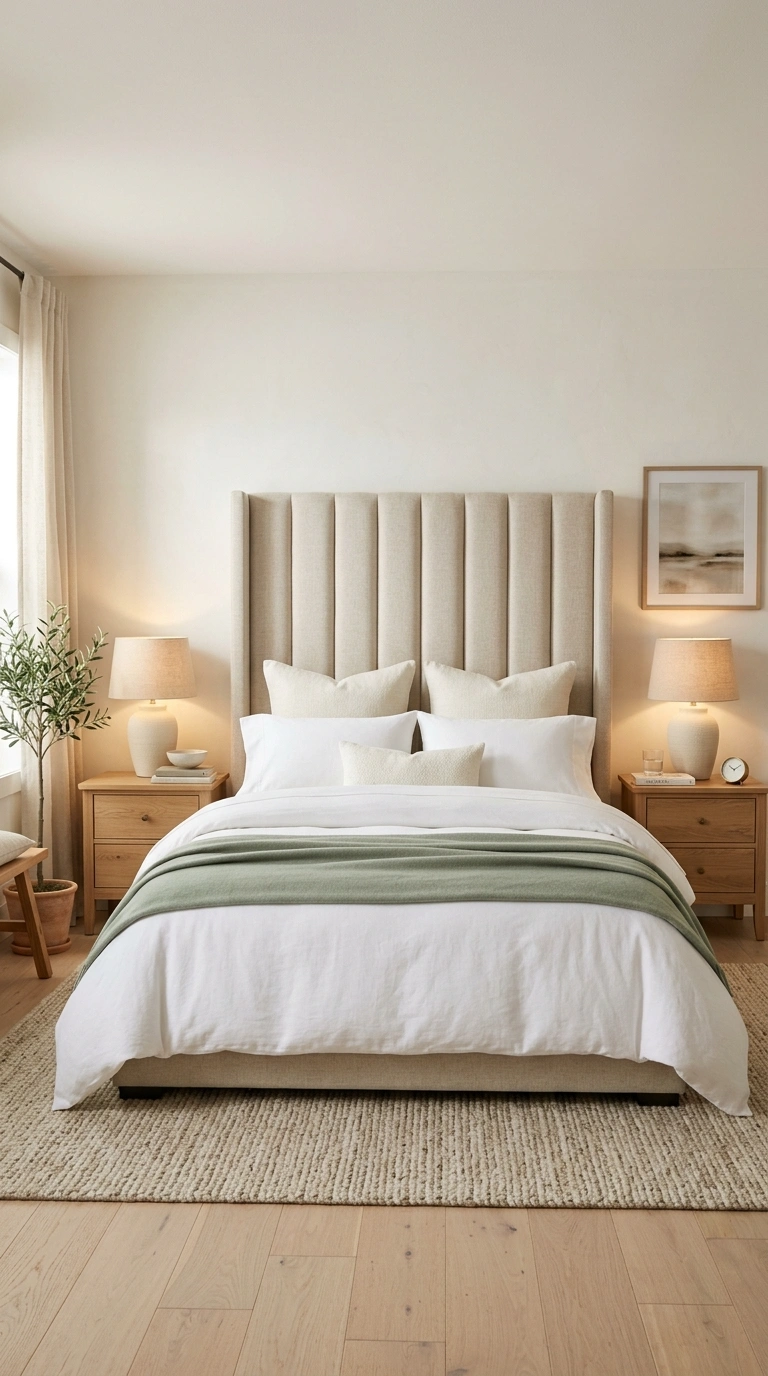
A headboard anchors the whole room, and a bed without one always looks unfinished no matter how nice the bedding is. An upholstered style in oatmeal linen, soft camel, or dusty olive adds height, texture, and a cushioned spot for reading. Choose a headboard that rises at least twenty-four inches above the mattress so it reads as a true focal point. Channel-tufted and gently curved shapes feel current, while wingback styles make the bed feel more enclosed and cozy. If a new headboard is not in the budget, mount two large framed prints or a row of vertical wood slats Behind the bed instead. Both tricks create the same visual weight for far less money. Quick tip: center the headboard on the wall, not the window, and the entire room will immediately feel more balanced.
3. Layer Your Bedding Like a Stylist
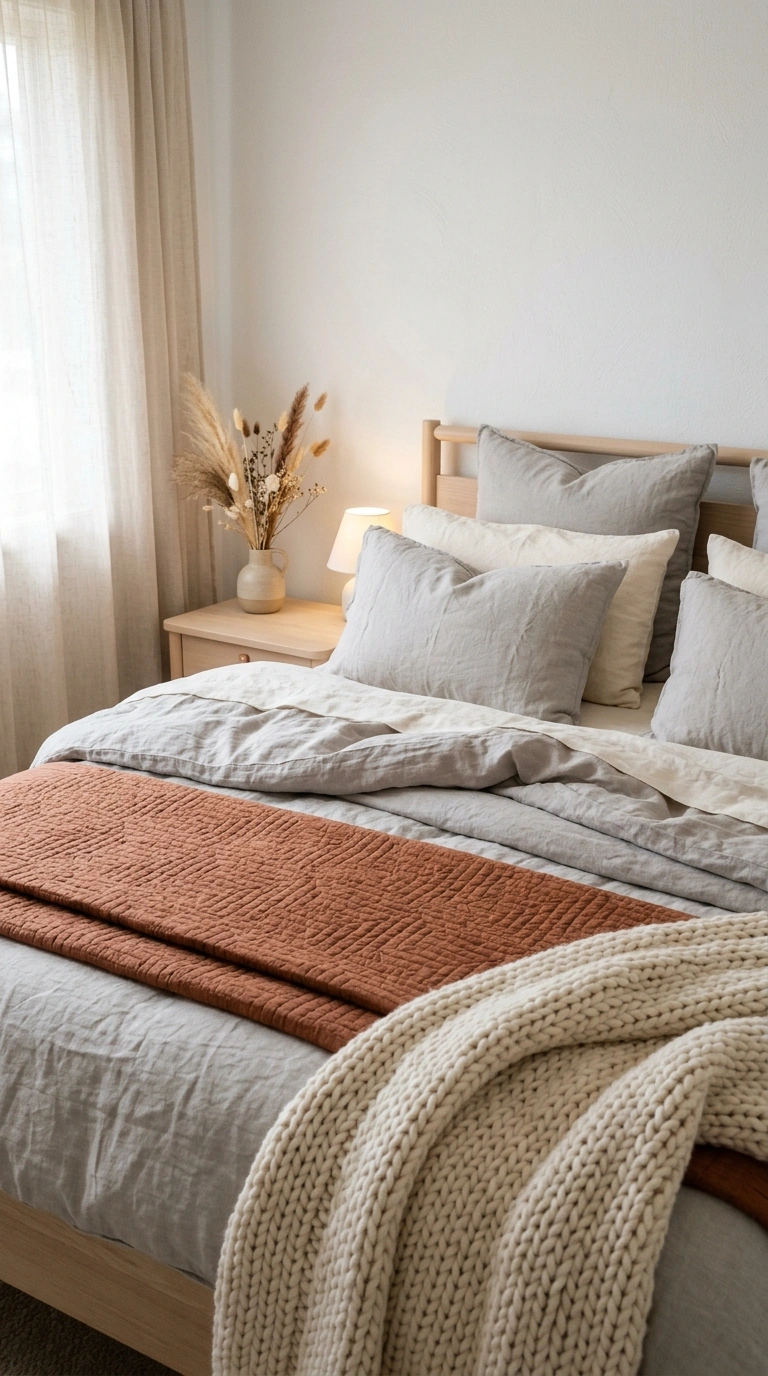
Layered bedding is the Secret behind every bedroom photo you have ever saved. Start with crisp white or warm ivory sheets, then add a duvet in washed linen or cotton percale. Fold a quilt or matelassé coverlet across the lower third of the bed in a second tone, like clay, sage, or soft stone gray. Finish with a chunky knit or waffle-weave throw draped casually off one corner, never folded into a stiff rectangle. The mix of smooth, rumpled, and nubby textures makes the bed look inviting even in plain colors. Stick to three colors total so the layers read calm rather than busy. Quick tip: size up your duvet insert by one size, because a queen insert inside a king cover creates that full, cloud-like look stylists chase in every photo shoot.
4. Hang Curtains Higher and Wider
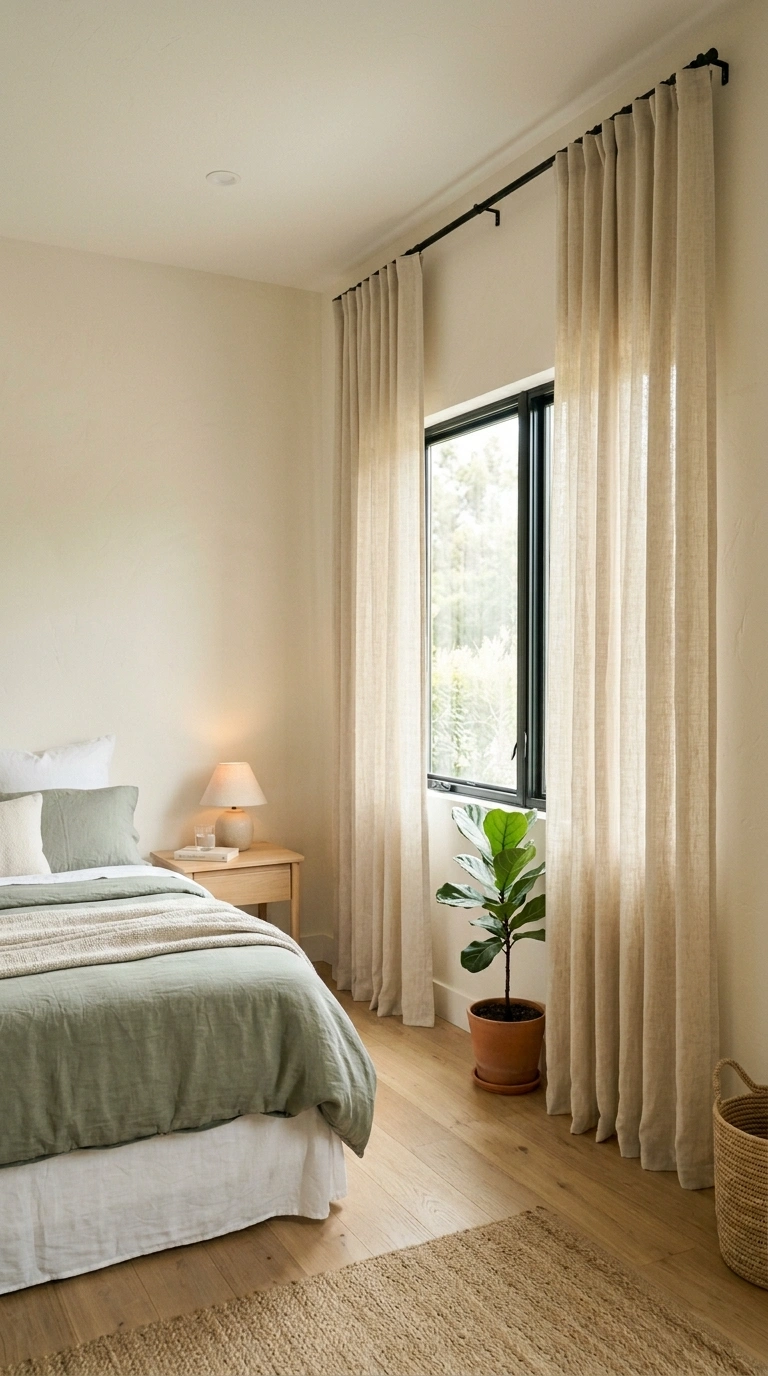
Curtain placement changes the size of your bedroom more than the curtains themselves. Mount the rod four to six inches below the ceiling, not at the top of the window frame, and extend it eight to twelve inches past each side. The window suddenly looks taller and wider, and the whole wall gains height. Choose panels long enough to kiss the floor, because curtains that stop short make ceilings feel lower. Soft materials like linen, cotton, or a linen blend in warm ivory, flax, or muted sage drape beautifully and filter daylight into a gentle glow. Double the fullness by using two panels per side if your budget allows it. Quick tip: steam your curtains while they hang, since wrinkled panels undo the polished effect faster than any other styling mistake in the room.
5. Trade Overhead Light for Bedside Lamps
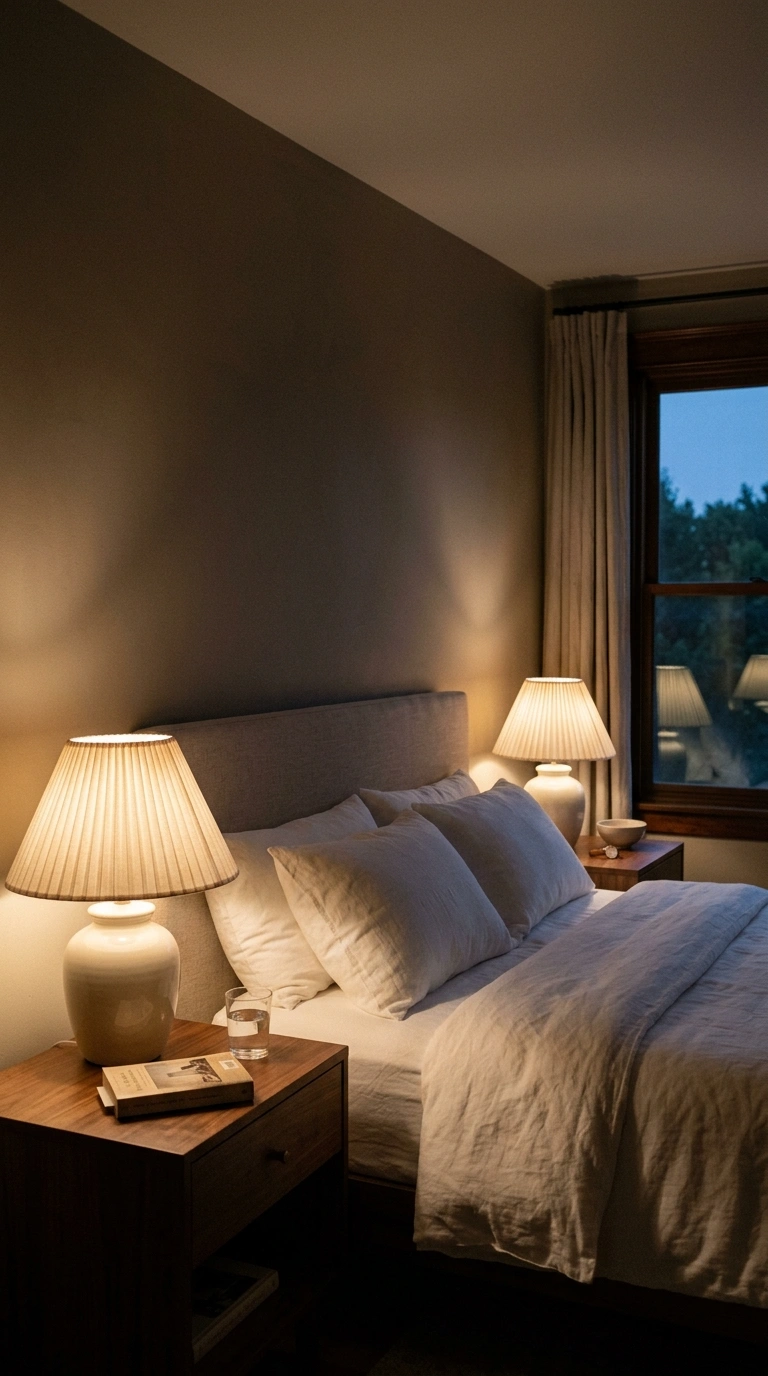
An overhead light flattens a bedroom, while two bedside lamps wrap it in soft, layered pools of glow. Place a lamp on each nightstand with shades at roughly seated eye level, so the light falls on your book instead of your face. Linen or pleated fabric shades diffuse the bulb and cast a warmer circle than glass or metal ones. Matching lamps create calm symmetry, while two different lamps in the same finish feel collected and relaxed. Ceramic bases in cream, rust, or olive add a soft color moment without committing to paint. Reserve the ceiling light for cleaning days only, and let the lamps run the evening mood. Quick tip: plug both lamps into smart plugs so one voice command or phone tap turns the whole room golden before you even walk in.
6. Bring In One Large Statement Plant
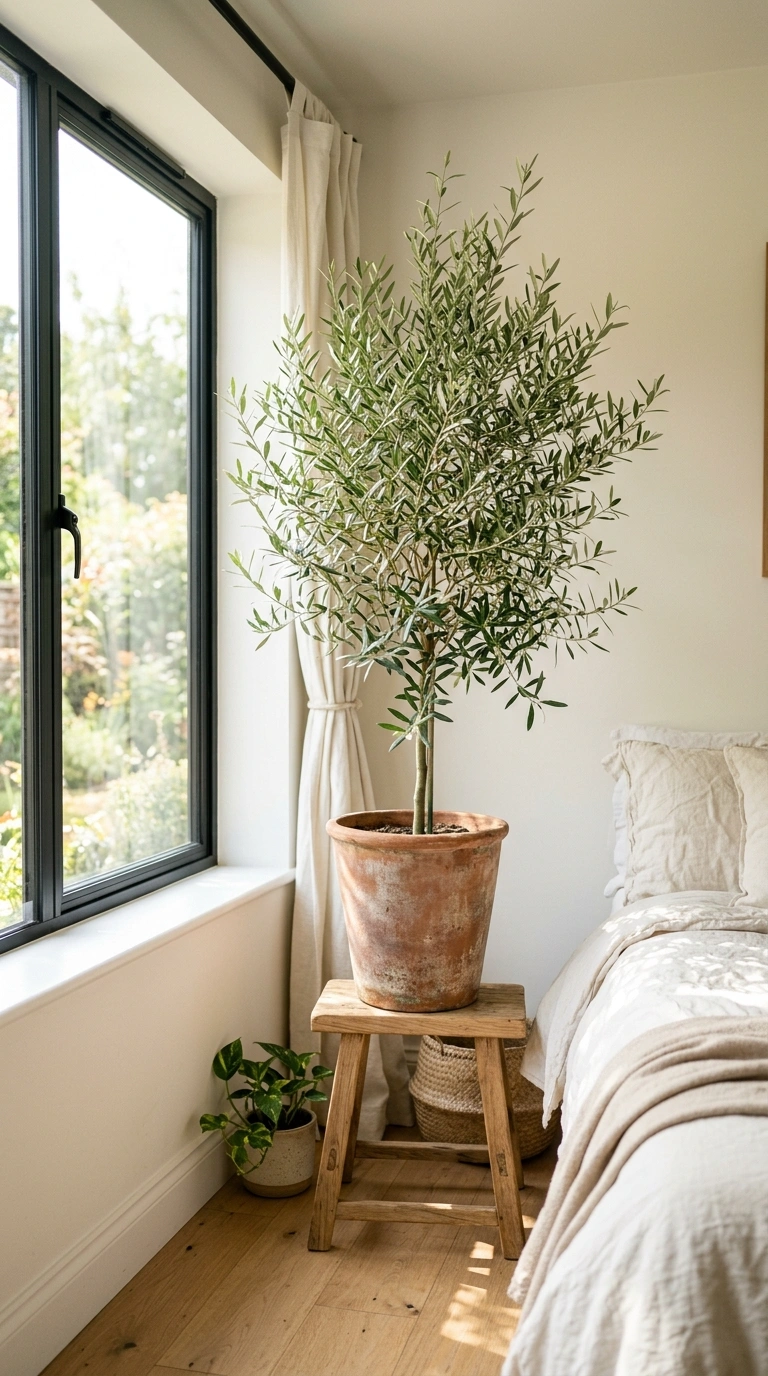
One tall plant does more for a bedroom corner than a whole shelf of small ones. A rubber plant, olive tree, or bird of paradise standing four to six feet tall fills empty vertical space and softens hard furniture lines. Place it in the corner that catches the most daylight, ideally beside the window but out of harsh afternoon sun. Choose a planter that matches your palette, like aged terracotta, ribbed cream ceramic, or a woven seagrass basket. The green reads as a living color accent and makes the whole room feel fresher and more cared for. If your light is poor, a quality faux olive tree fools nearly everyone. Quick tip: raise the plant on a low wooden stool or plinth, because that extra eight inches of height turns a plant into a true statement piece.
7. Anchor the Bed with a Bigger Rug
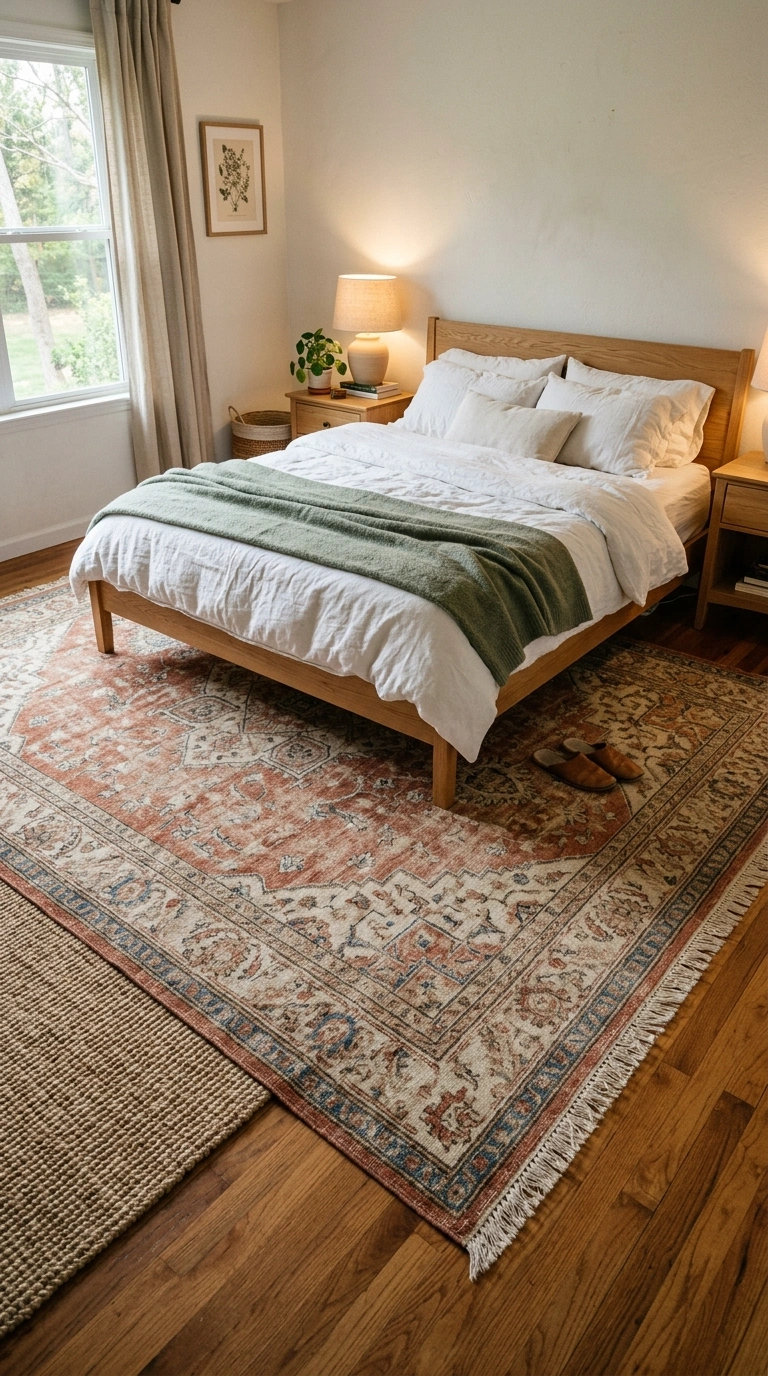
A rug that is too small chops a bedroom into awkward pieces, while the right size pulls everything together. Choose a rug large enough to extend eighteen to twenty-four inches beyond both sides and the foot of the bed. For a queen bed, that usually means an eight-by-ten rug placed two-thirds of the way under the frame, starting just below the nightstands. Soft, low-pile wool in warm ivory, faded terracotta, or a vintage-washed pattern feels gentle under bare morning feet. The rug defines the sleep zone, muffles sound, and adds a wide band of warmth across cold floors. Layering a smaller patterned rug over a large jute base adds even more texture. Quick tip: if a large rug strains the budget, place a generous runner along each side of the bed for the same soft landing.
8. Clear and Curate Your Nightstands
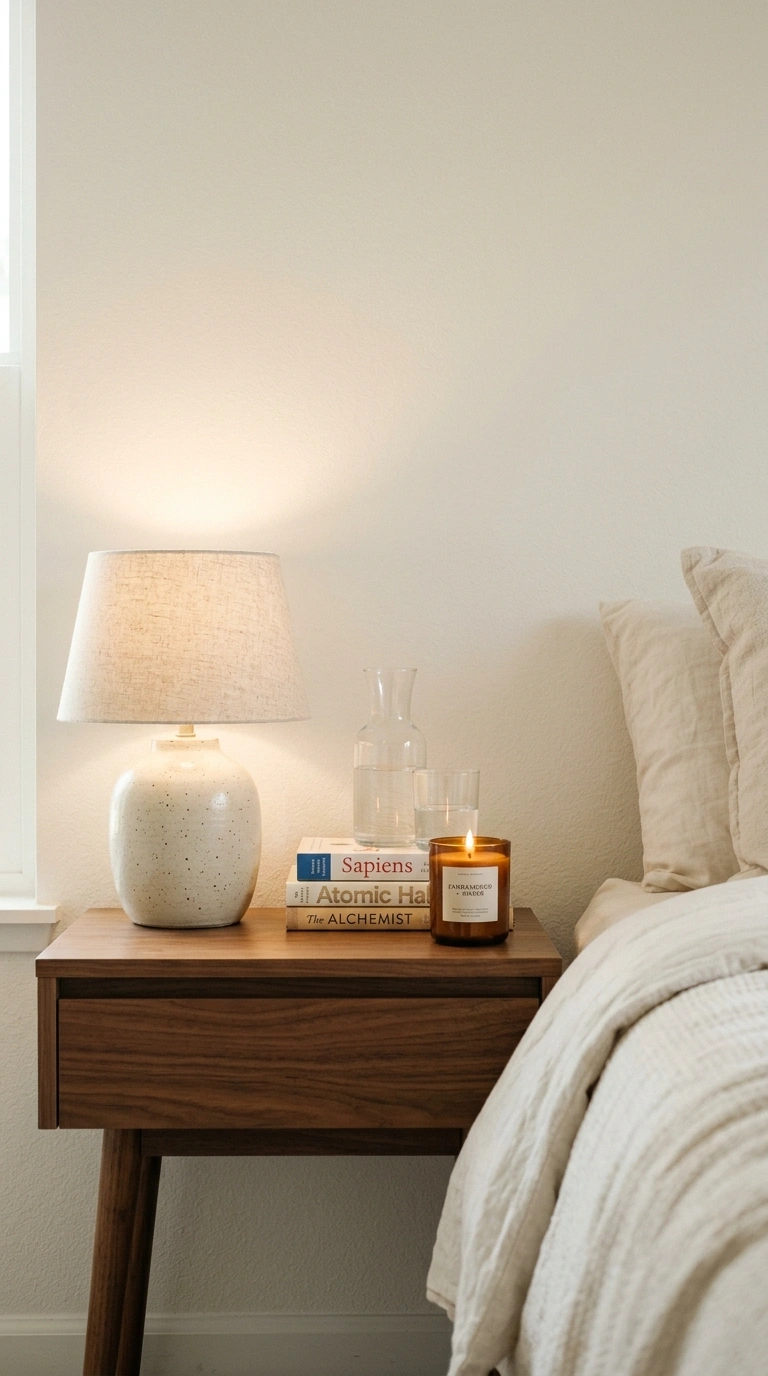
Nightstand clutter quietly ruins more bedrooms than bad furniture ever has. Clear everything off, then return only four things: a lamp, a small stack of two or three books, a carafe or glass, and one personal object like a candle or tiny vase. Store chargers, lip balm, and remotes inside the drawer on a small tray so they stay reachable but invisible. Vary the heights of what remains, because a tall lamp beside low books creates a pleasing little skyline. Wipe the surface weekly during sheet changes so the habit sticks without effort. The empty space left behind is the point, since visual quiet beside your pillow helps your mind settle at night. Quick tip: charge your phone across the room instead, which clears the cord mess and helps you stop scrolling in bed.
9. Paint or Limewash One Accent Wall
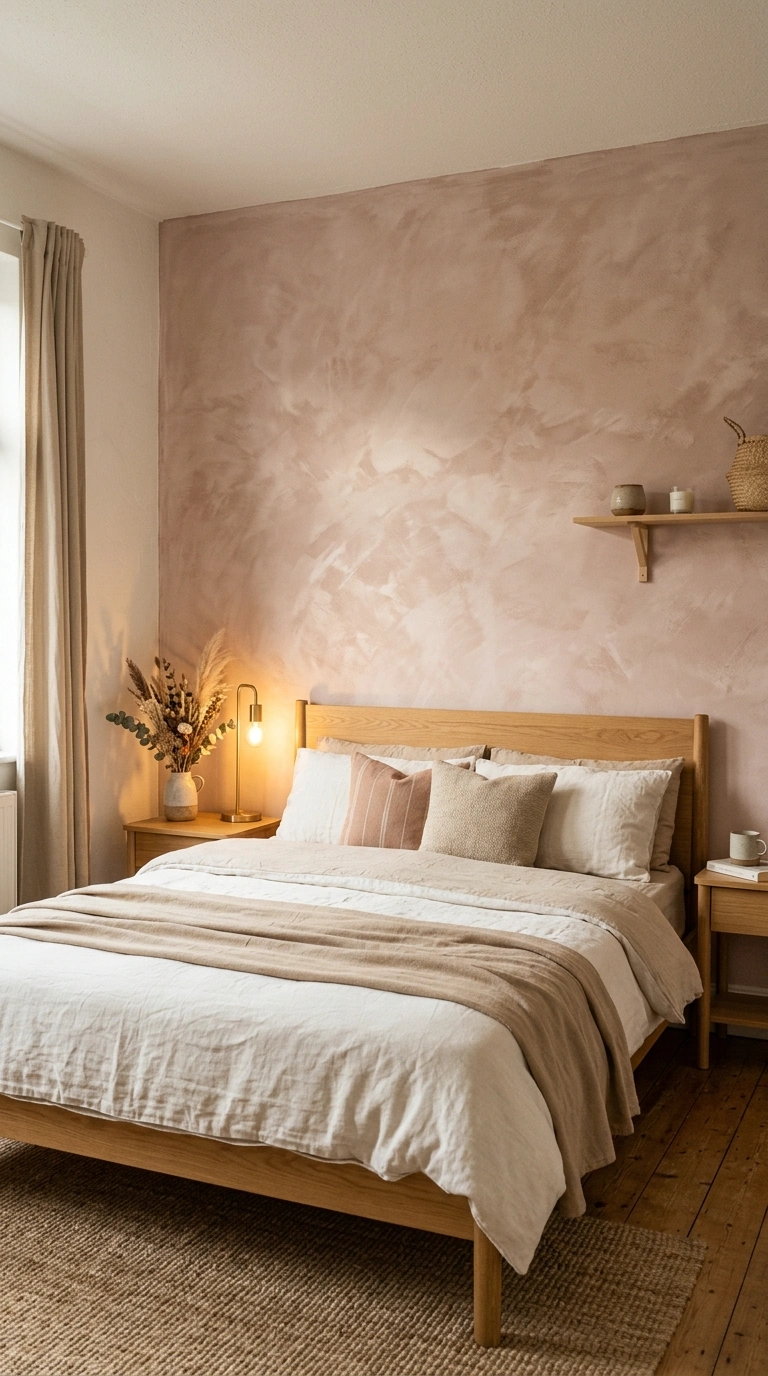
One painted wall changes a bedroom faster than any furniture purchase, and the wall behind the bed is the right one To Choose. Earthy, muted shades like clay pink, sage green, warm taupe, or deep teal frame the bed like a built-in headboard backdrop. For more depth, try a limewash finish, which leaves soft, cloudy brushstrokes that catch lamplight beautifully in the evening. Keep the other three walls a warm white so the color feels intentional rather than heavy. Sample the shade on a two-foot square first and watch it in morning, afternoon, and lamp light before committing. Most accent walls need only one quart of paint and a single afternoon. Quick tip: pull one small color from your existing bedding or rug, because a wall that echoes the textiles always looks professionally planned.
10. Place a Mirror to Double Your Light
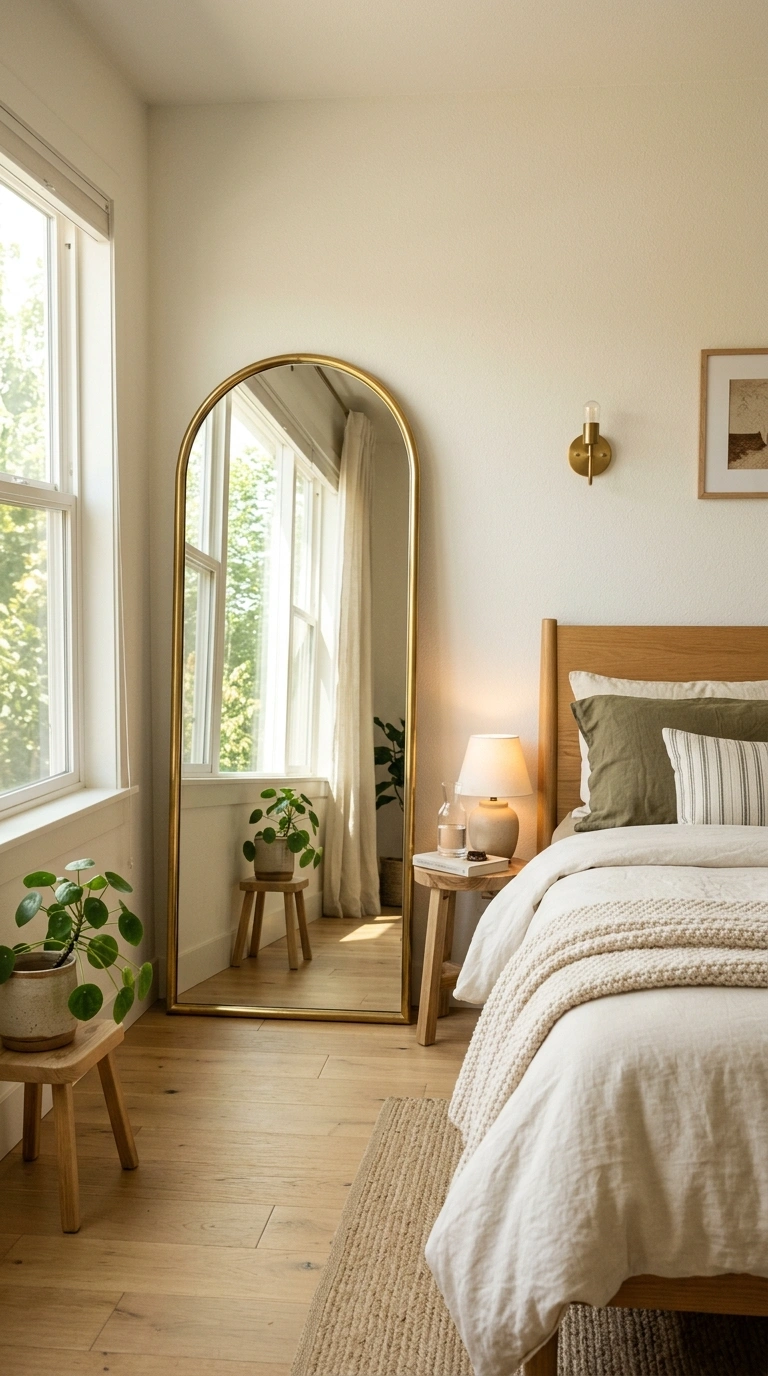
A well-placed mirror borrows daylight and bounces it deeper into the room, which makes a small bedroom feel noticeably bigger. Hang or lean the mirror on the wall adjacent to the window, angled to catch the light, rather than directly opposite the bed. A tall leaning floor mirror in an arched brass or slim black frame adds height and doubles as a dressing mirror. Above a dresser, a round mirror softens all the straight lines of the furniture below it. The reflection adds depth the way a window would, so even a windowless wall gains a sense of openness. Avoid mirror placements that reflect clutter, since the mirror doubles whatever it faces. Quick tip: leaning a floor mirror requires no drilling, which makes this one of the best renter-friendly upgrades on this whole list.
11. Hang One Oversized Piece of Art
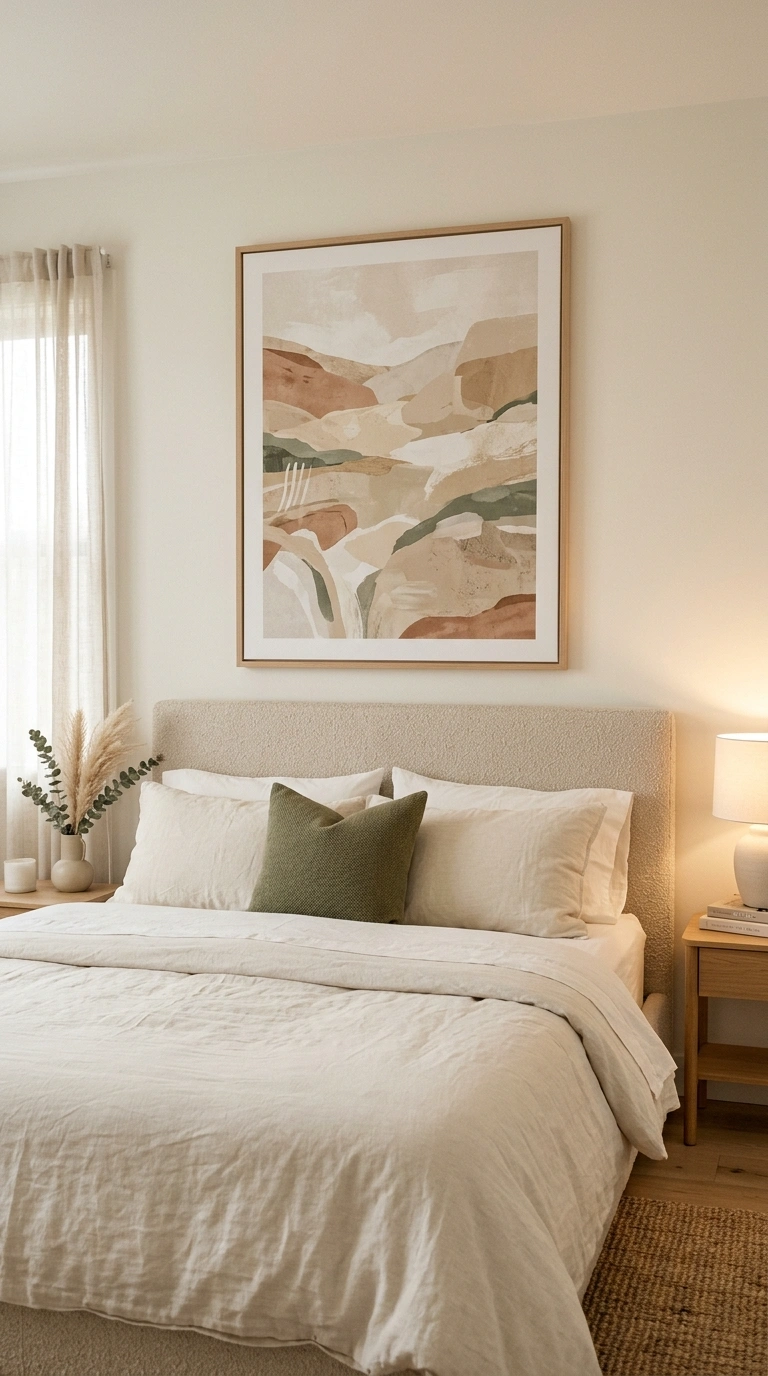
One large piece of art calms a bedroom in a way that a scattered gallery wall rarely does. Choose a print, canvas, or textile at least three feet wide and hang it so its center sits about fifty-seven inches from the floor. Soft, low-contrast subjects work best for sleep spaces, like abstract landscapes, muted botanicals, or tonal line drawings in clay, sand, and sage. A thin oak or brass frame keeps the piece feeling light on the wall. Above the bed, the art should span roughly two-thirds the width of the headboard for proper scale. Oversized prints cost little when you buy a digital download and print it at a local shop. Quick tip: a framed fabric piece, like a vintage scarf or small quilt, adds texture that flat paper art cannot match.
12. Rework Your Pillow Arrangement
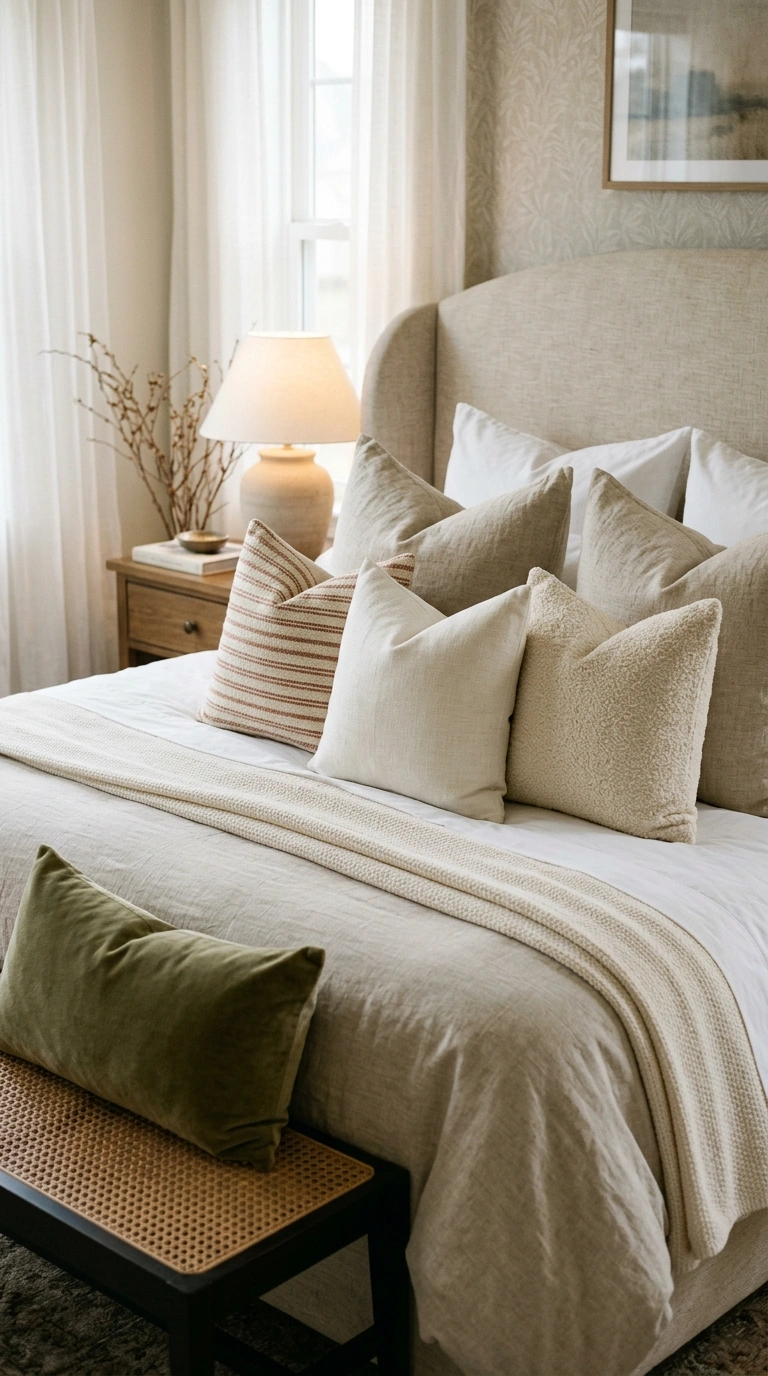
Pillows are the jewelry of the bed, and the right arrangement takes about ninety seconds each morning. Start with your two sleeping pillows laid flat, then stand two euro shams, the large square ones, against the headboard in a linen texture. Add one or two accent pillows in front, mixing a stripe, a solid, and one tactile fabric like bouclé or washed velvet. Stop there, because more than five or six pillows tips a bed from styled into fussy. Stick to your room’s three-color palette so the stack feels intentional, like clay, ivory, and olive. A single lumbar pillow stretched across the front reads modern and takes even less effort. Quick tip: karate-chop the top of each accent pillow once, since that soft dent instantly gives the bed that relaxed, designer-styled finish.
13. Add Hidden Storage Under the Bed
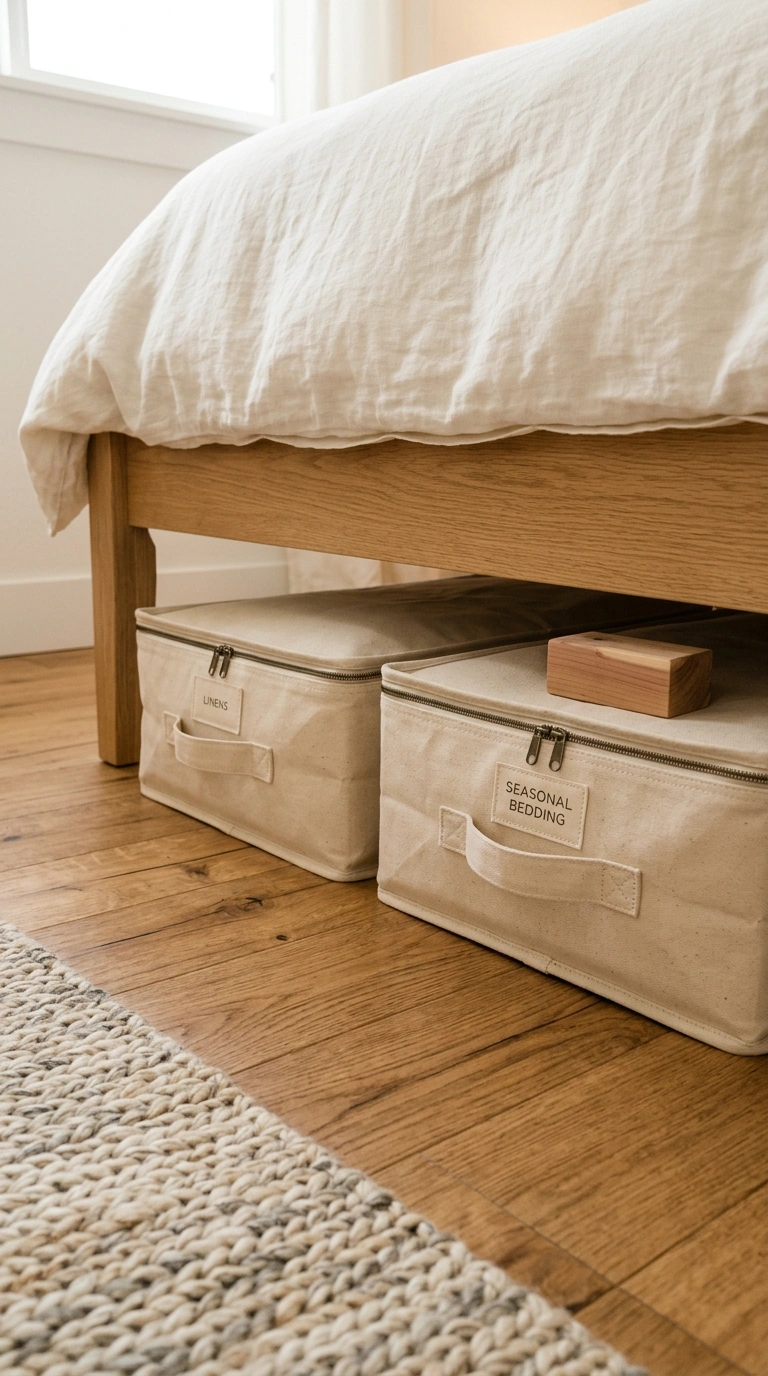
The space under your bed can swallow an entire closet’s worth of off-season clutter once you organize it properly. Use low rolling bins or zippered canvas cases to store sweaters, spare bedding, and shoes you wear twice a year. Choose matching containers in white or natural canvas so accidental glimpses still look tidy. If your frame sits too low, a set of three-inch bed risers creates instant storage height and disappears behind a bedskirt or a long duvet drop. Clearing that hidden zone lets you empty your visible shelves, and the whole room breathes easier with less on display. Label each bin on the side facing out so winter swaps take minutes. Quick tip: add a cedar block to each bin, which protects wool and leaves your stored layers smelling fresh next season.
14. Layer In a Signature Scent
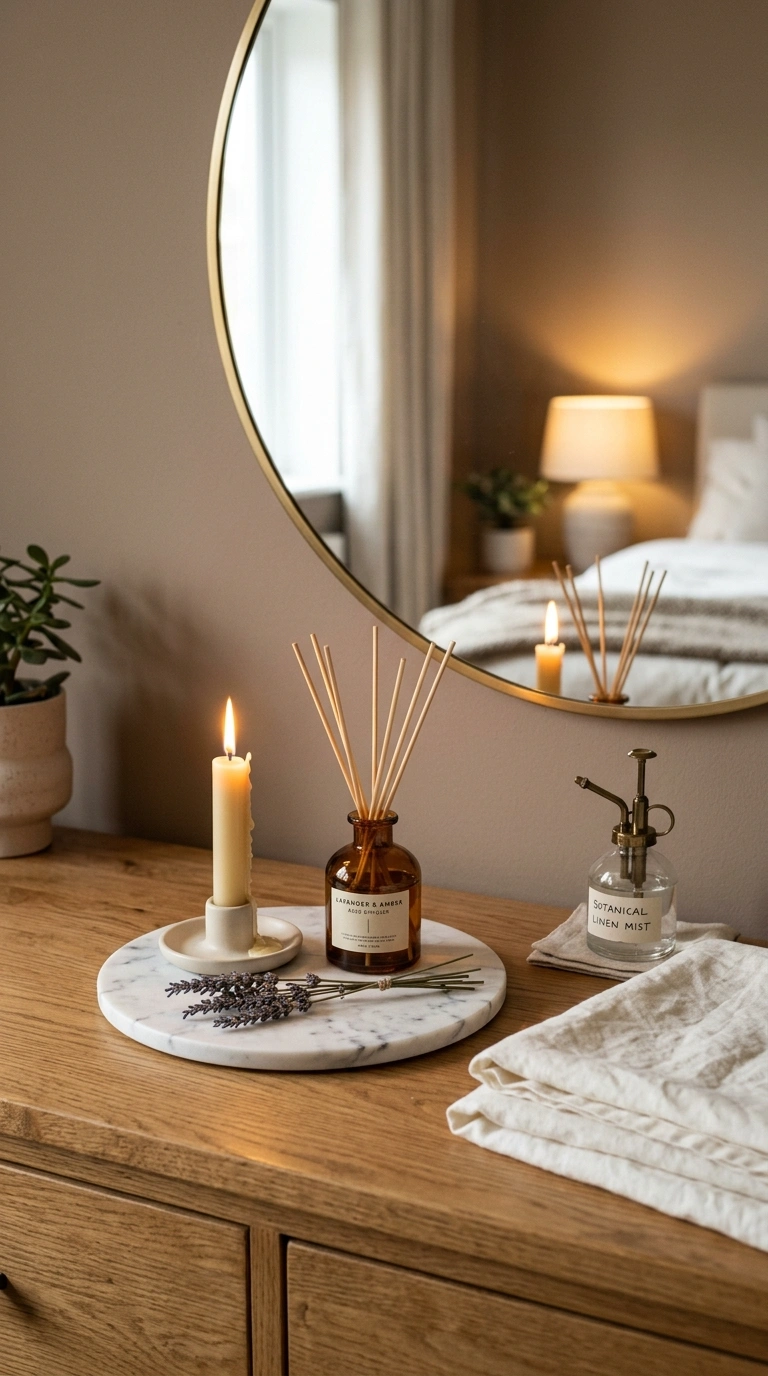
Scent is the one change guests notice before they can name what is different. Choose a single calming fragrance family for the bedroom, like lavender and cedar, fig, or warm amber, and repeat it across the room. A reed diffuser on the dresser works all day without flame, while a candle on the nightstand turns evenings into a ritual. Spritz a linen spray lightly across the sheets when you make the bed, and the fragrance greets you again at night. Keep the scent soft, since a bedroom should whisper rather than announce. Replace diffuser reeds by flipping them once a week to refresh the throw. Quick tip: match your scent to your palette, because earthy rooms suit cedar and amber while airy white rooms feel right with linen, cotton, and fig.
15. Swap the Hardware on Your Dresser
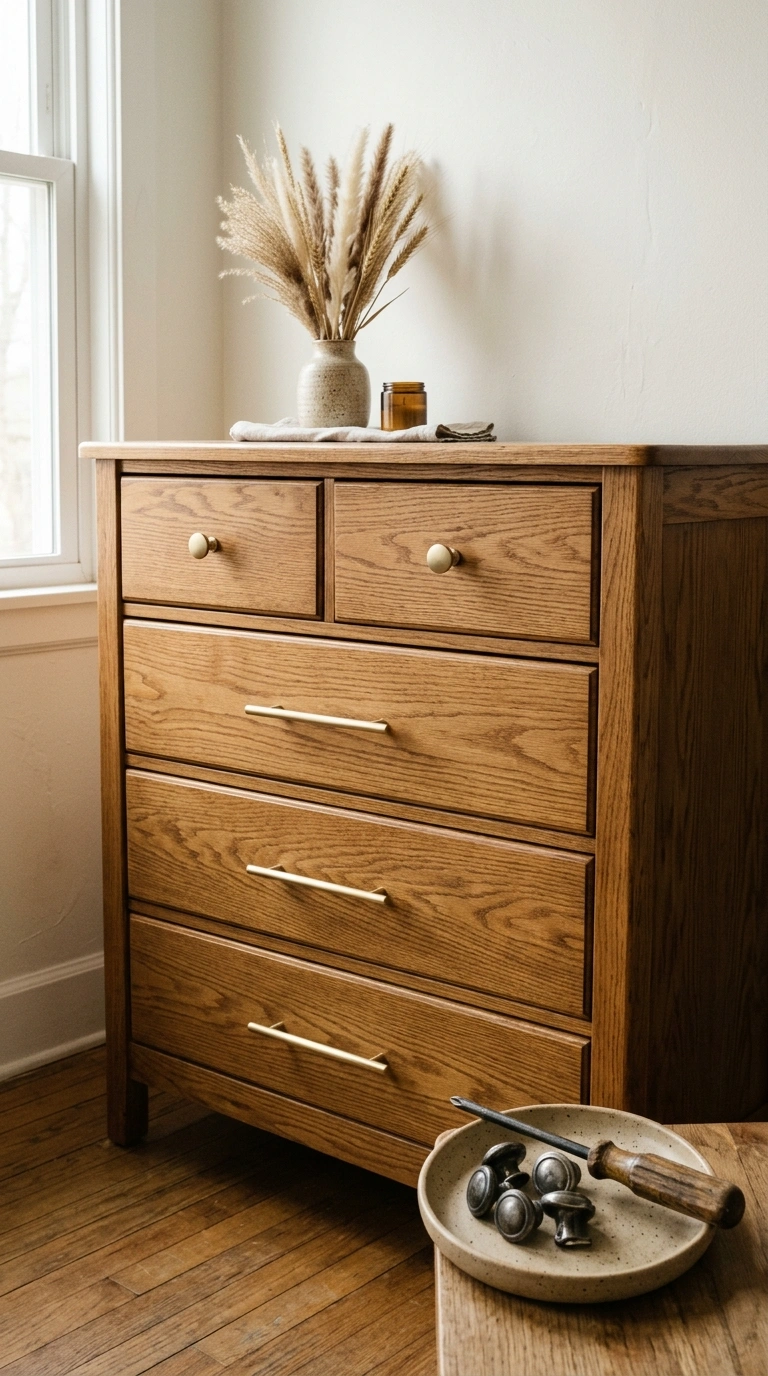
New knobs and pulls make a tired dresser look custom for the price of a pizza. Unscrew the old hardware, measure the hole spacing on pulls, and order replacements in brushed brass, matte black, or aged bronze. Brass warms up white and oak furniture, while matte black sharpens painted pieces in deeper colors. Mixing knob shapes on different drawers, like round on top and bar pulls below, adds a furniture-maker detail people notice up close. The swap takes fifteen minutes with a single screwdriver and changes the piece more than a full coat of paint would. Save the original hardware in a labeled bag if you rent or may resell the piece. Quick tip: order one sample knob first and hold it against the drawer in daylight, since metal finishes photograph differently than they look in person.
16. Add a Bench at the Foot of the Bed
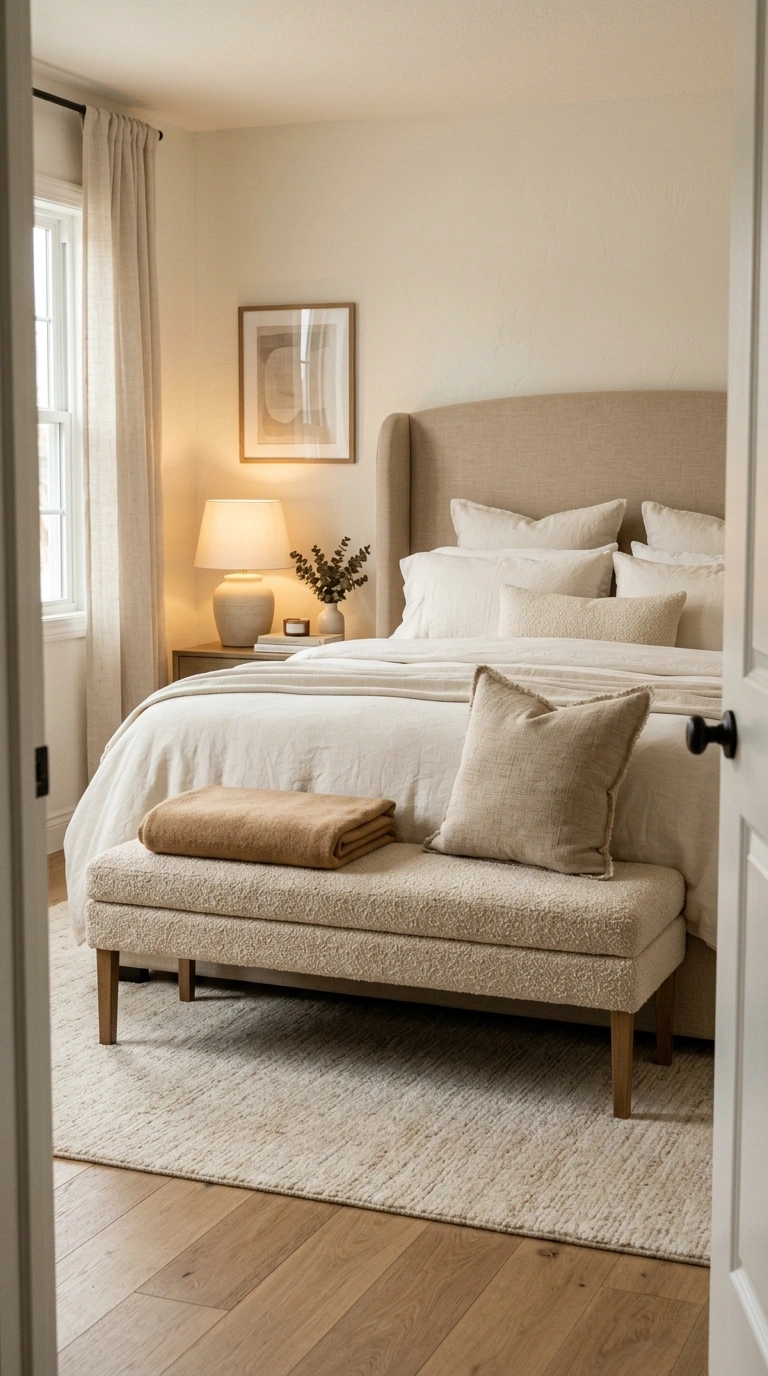
A bench at the foot of the bed adds function and finishes the room like a final sentence. It gives you a spot to sit while dressing, a landing place for tomorrow’s clothes, and a perch for the folded throw. Choose a bench slightly narrower than the bed, upholstered in oatmeal bouclé, caramel leather, or woven cane for texture. In small rooms, a slim backless style keeps the walkway open while still adding that layered, finished look. A storage bench earns double duty by hiding extra blankets inside the seat. The horizontal line at the foot of the bed visually grounds the whole arrangement, especially under a tall headboard. Quick tip: two small matching stools work in place of a bench and slide apart whenever you need extra seating elsewhere in the house.
17. Hide Every Visible Cord
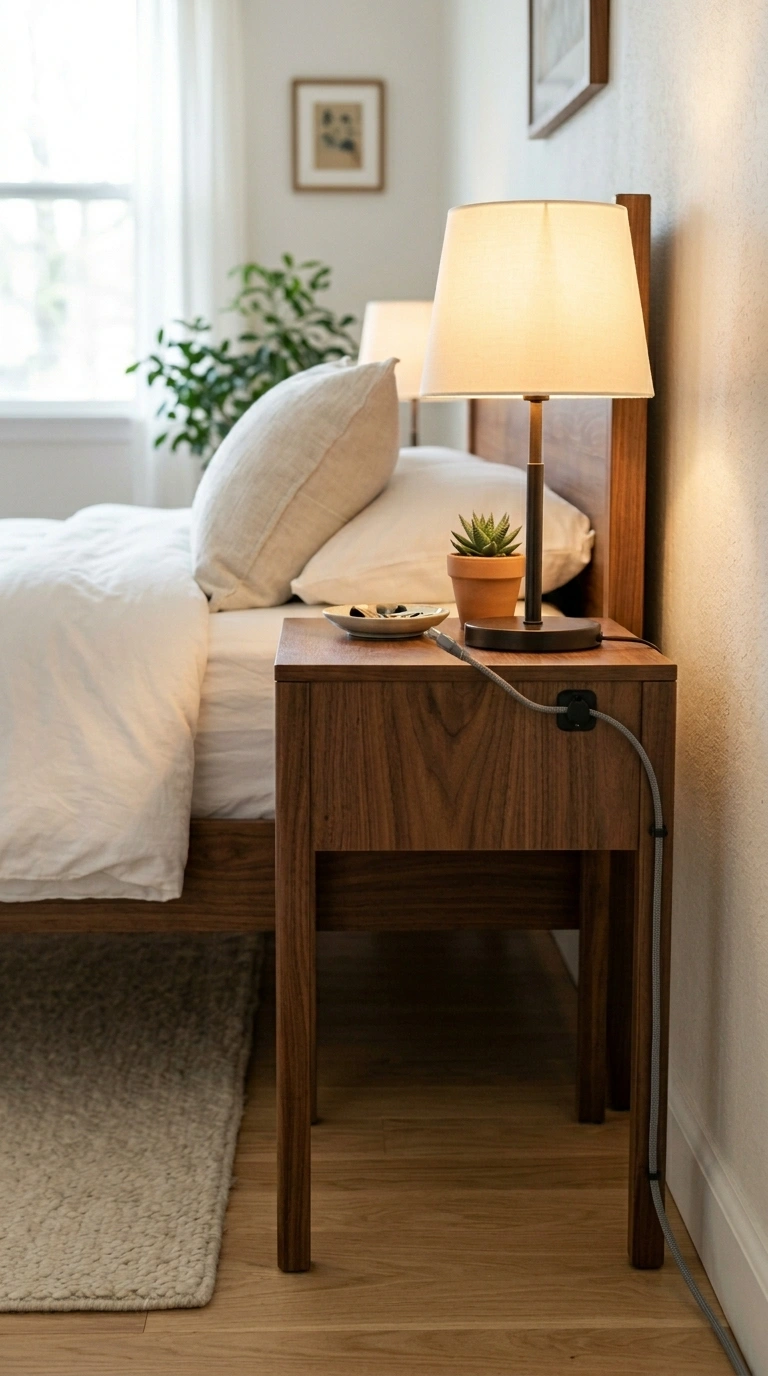
Cords are the clutter nobody admits to seeing, yet they undo every other styling effort in the room. Walk the perimeter and trace each cable from the lamps, chargers, and any screen, then commit twenty minutes to making them disappear. Adhesive cord clips run wires down the back of nightstand legs, while a fabric cord sleeve bundles several cables into one tidy line. A small cable box on the floor swallows the power strip and its tangle completely. Choose clips and sleeves in a color that matches the furniture so they vanish into the background. Once the cords disappear, surfaces look cleaner without removing a single object. Quick tip: stick one adhesive clip on the back edge of your nightstand to hold the charger cable, so it never slithers to the floor again.
18. Layer Sheers Behind Blackout Curtains
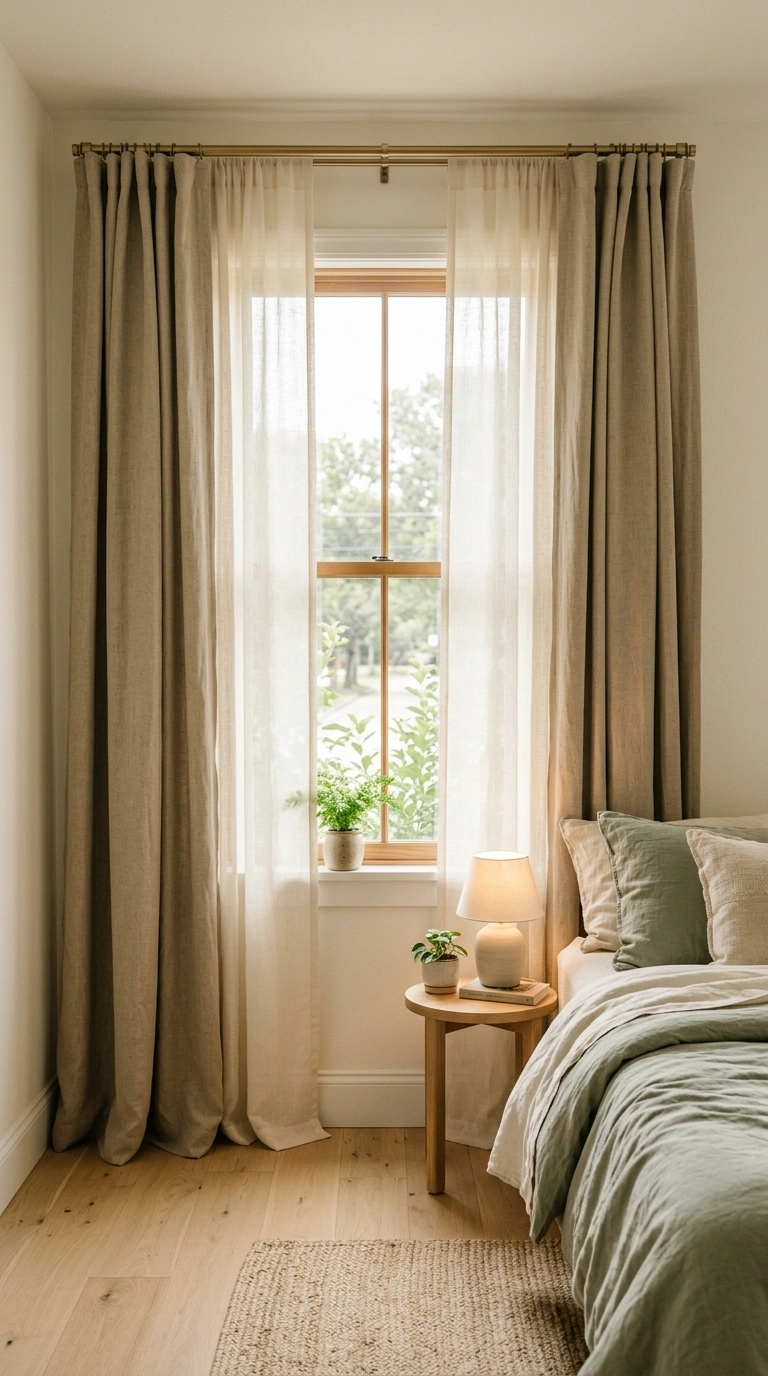
Double curtain layers give you both dreamy daylight and true darkness, which single panels can never manage alone. Install a double rod, then hang sheer white or ivory panels on the inner track and blackout curtains in flax, sage, or warm taupe on the outer one. During the day, close only the sheers, and the room fills with a soft, glowing privacy that makes every photo look better. At night, the blackout layer drops the room into deep, sleep-friendly darkness and blocks streetlight glare. The two layers also add fullness, so windows look dressed and intentional even when fully open. The combination quiets street noise more than one panel ever could. Quick tip: choose blackout panels with a woven face fabric rather than shiny rubber-backed ones, since they hang in softer, more natural folds.
19. Style Your Dresser Top in Three Zones
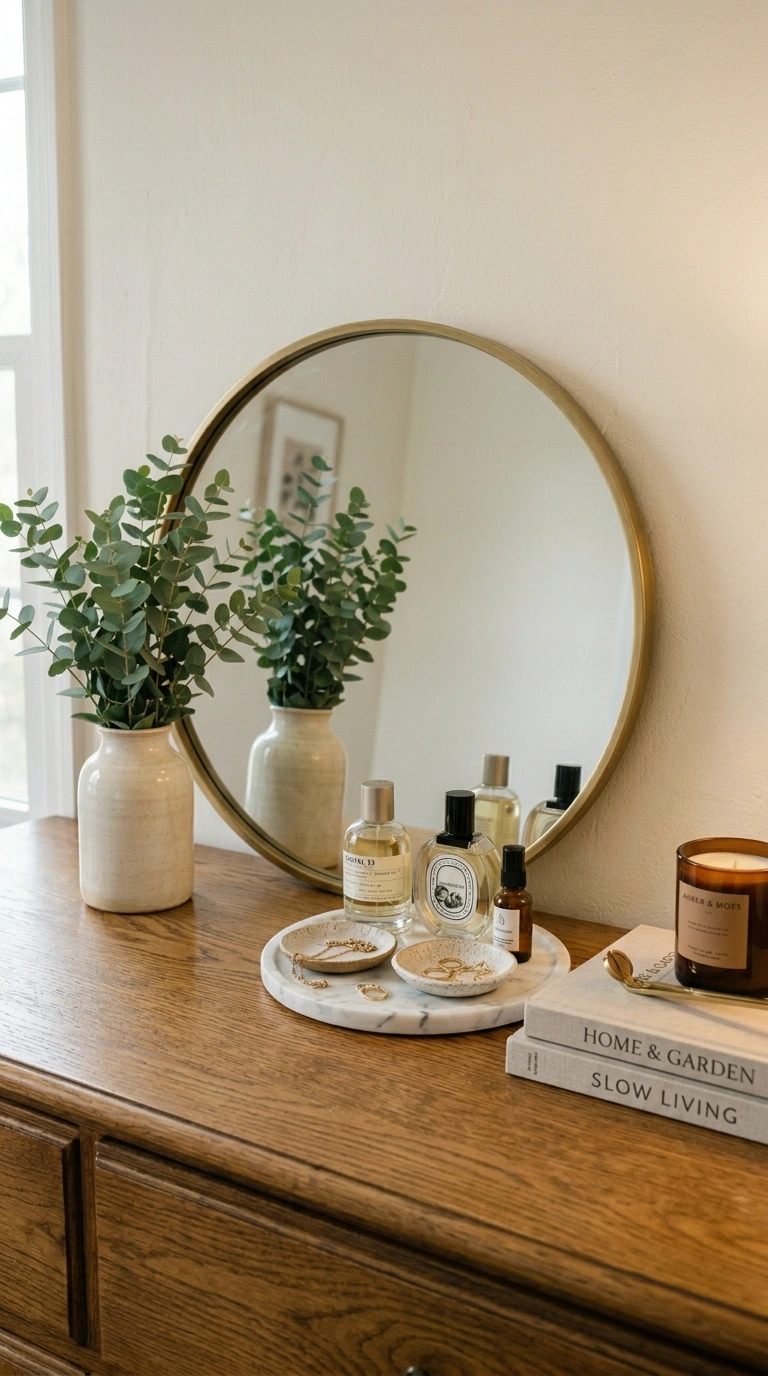
The dresser top is the second-largest surface in the room, and styling it well makes everything around it look intentional. Divide the surface into three zones: one tall element, one functional cluster, and one organic touch. Lean or hang a mirror or large art piece as the tall anchor, then group a tray with perfume, jewelry, and a small dish on one side. Finish with something alive or natural, like a vase of eucalyptus, a small lamp, or a stack of two books topped with a candle. Keep at least one-third of the surface completely empty, since breathing room reads as calm and expensive. Repeat your room’s colors in small doses across the three zones. Quick tip: corral every small item on a single tray, because one contained cluster always beats five scattered objects.
Final Thoughts
A better bedroom rarely arrives in one big purchase. It builds through warm 2700K bulbs, a taller curtain rod, a calmer nightstand, and a bed layered like a stylist made it. Start with the free changes first, like clearing surfaces and rearranging pillows, then spend small where it counts most, on lighting and textiles. Each step stacks on the last, and within a few weekends the room photographs like the ones you save. Pick three of these small bedroom changes to try this week, and pin your favorites to Pinterest so your next upgrade is already planned and waiting. The best bedroom is the one you actually enjoy walking into every single night.
FAQs
Q1: How can I make my bedroom look better without buying furniture?
A1: Start with the free and cheap changes: swap in warm 2700K bulbs, clear your nightstands, hide visible cords, and rearrange your pillows with euro shams in back. These small bedroom changes improve lighting and visual calm, which matter more than new furniture. Most people see a clear difference in a single afternoon.
Q2: What is the cheapest way to update a bedroom?
A2: Replacing your light bulbs with warm dimmable 2700K versions costs the least and changes the most. After that, new dresser hardware, a quart of accent-wall paint, and a linen spray each stay under twenty-five dollars. Stacked together, these updates create a full budget bedroom makeover for under one hundred dollars.
Q3: What size rug should go under a queen bed?
A3: An eight-by-ten foot rug is the standard choice for a queen bed. Slide it two-thirds of the way under the frame, starting just in front of the nightstands, so it extends about two feet beyond each side and the foot. A rug smaller than six-by-nine usually looks undersized and floats awkwardly in the room.
Q4: How many pillows should be on a styled bed?
A4: Five to six pillows is the sweet spot for a queen or king bed. Use two sleeping pillows in back, two euro shams standing against the headboard, and one or two accent pillows in front. A single lumbar pillow can replace the accents for a cleaner, more modern look.
Q5: What color makes a bedroom feel calm?
A5: Muted, earthy tones feel calmest in a bedroom: sage green, warm taupe, clay pink, soft stone gray, and warm ivory all work well. Keep contrast low and repeat the same two or three colors across walls, bedding, and decor. Pair any palette with warm 2700K lighting, since cool bulbs make even calm colors feel harsh.